

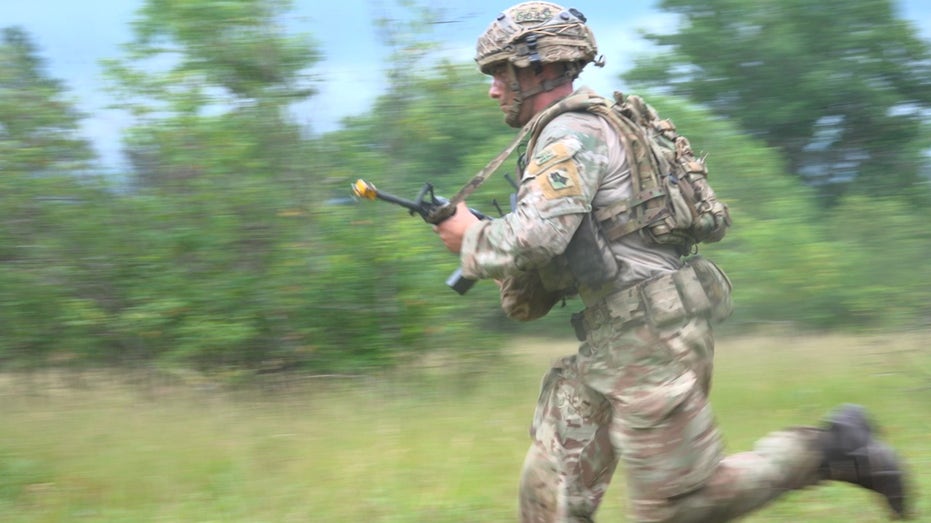

More than 9,000 service members are participating in Northern Strike 26-2, one of the largest reserve-component readiness exercises in the United States. The exercise is taking place in northern Michigan and includes troops from 36 states and territories, along with participants from five international partners. Training is focused on adapting combat operations, logistics and technology to a rapidly changing battlefield. Northern Strike 26-2 is scheduled to continue through Aug. 14, 2026.
Held twice a year since 2012, the exercise is described by officials as the largest in its history. It combines live-fire operations, joint training, international cooperation and experimentation with emerging capabilities across land, air, space and cyber domains.
| 1) | A record-scale reserve readiness exercise |
| 2) | Training across land, water and military domains |
| 3) | Preparing troops and support units for deployment |
| 4) | Testing drones, autonomy and battlefield innovation |
| 5) | Using exercises to accelerate combat readiness |
A record-scale reserve readiness exercise
Northern Strike 26-2 is bringing together more than 9,000 service members in northern Michigan during August 2026. The participants represent 36 states and territories and five international participants, making the event a broad test of reserve-component readiness and allied cooperation.
The exercise began in 2012 and is held twice each year. David Kennedy, a public affairs officer with the Michigan National Guard, said the summer iteration is the largest since the exercise began. Its scale allows military units to rehearse complex missions in a setting designed to approximate the demands of a major operation.
Training across land, water and military domains
Northern Michigan provides more than 200,000 acres of training land, as well as access to the Great Lakes and capabilities involving air, space and cyber operations. Tanks, Paladin howitzers and infantry units are taking part in combat training, including practice attacks and live-fire missions.
The exercise also brings together multiple branches of the military and international forces. Brig. Gen. Ravindra Wagh of the Michigan National Guard said lessons from conflicts around the world, including the war in Ukraine, are influencing the way troops prepare.
“This is a place where you can test and innovate,” Wagh said.
The combined environment is intended to help soldiers, sailors, airmen and Marines learn how to operate alongside allies and partners before they may need to do so in a real conflict.
Preparing troops and support units for deployment
Training extends beyond frontline combat formations. Units responsible for supply, maintenance and daily support are also practicing how to sustain forces during operations. The 445th Quartermaster Company, for example, operates shower and laundry services for troops in the field.
Capt. Kelson, the company’s commander, said those services provide logistical support and help maintain the morale of personnel conducting combat training. The exercise therefore tests the systems required to keep forces supplied, rested and operational.
Pfc. William Flores of a unit from Trenton, New Jersey, described Northern Strike as preparation for a possible deployment.
“This is like a practice run. So when we do get deployed, if we do get deployed, we are ready,” Flores said.
Testing drones, autonomy and battlefield innovation
Nearly 90 industry partners are participating in Northern Strike, according to Wagh. Their involvement gives military units an opportunity to work with developing systems before those capabilities could be encountered in combat.
The technologies being explored include autonomous resupply systems and drones that can deliver blood by air. Other drones can hover over a battlefield, assess casualties and transmit information so medical resources can be directed to locations where they are most needed.
Three-dimensional printing is also being used to produce parts and adapt equipment in the field. Wagh said capabilities that once seemed unlikely to appear near the front lines are now being tested during the exercise.
Using exercises to accelerate combat readiness
Military leaders say the speed of technological and tactical change requires forces to test new ideas quickly. Northern Strike provides a controlled environment in which units can assess equipment, refine procedures and identify problems before facing similar conditions during combat.
The exercise also allows international and domestic units to practice interoperability, meaning their personnel and systems must work together across different organizations. That process is intended to improve coordination and produce forces that are more capable of responding to changing battlefield conditions.
Wagh said the goal is for participating units to leave the exercise with a higher level of readiness and greater ability to operate in complex environments.
| Number | Key Point |
|---|---|
| 1 | More than 9,000 service members are participating. |
| 2 | Participants come from 36 states and territories and five international partners. |
| 3 | Training includes live-fire operations, logistics and joint combat missions. |
| 4 | Drones, autonomous resupply and 3D printing are being tested. |
| 5 | Northern Strike 26-2 continues through Aug. 14, 2026. |
Summary
Northern Strike 26-2 is using northern Michigan’s large training areas and multi-domain capabilities to prepare thousands of U.S. and allied service members for a changing battlefield. By combining live-fire missions, sustainment training and emerging technology trials, the exercise is designed to improve interoperability and operational readiness before troops face those challenges in combat.
Frequently Asked Questions
What is Northern Strike 26-2?
It is a large reserve-component military readiness exercise held in northern Michigan and conducted twice a year.
How many service members are participating?
More than 9,000 service members are taking part, representing 36 states and territories and five international participants.
What technologies are being tested?
The exercise includes autonomous resupply, drones for blood delivery and casualty assessment, and three-dimensional printing for producing parts and adapting capabilities.
When does the exercise end?
Northern Strike 26-2 is scheduled to continue through Aug. 14, 2026.
