

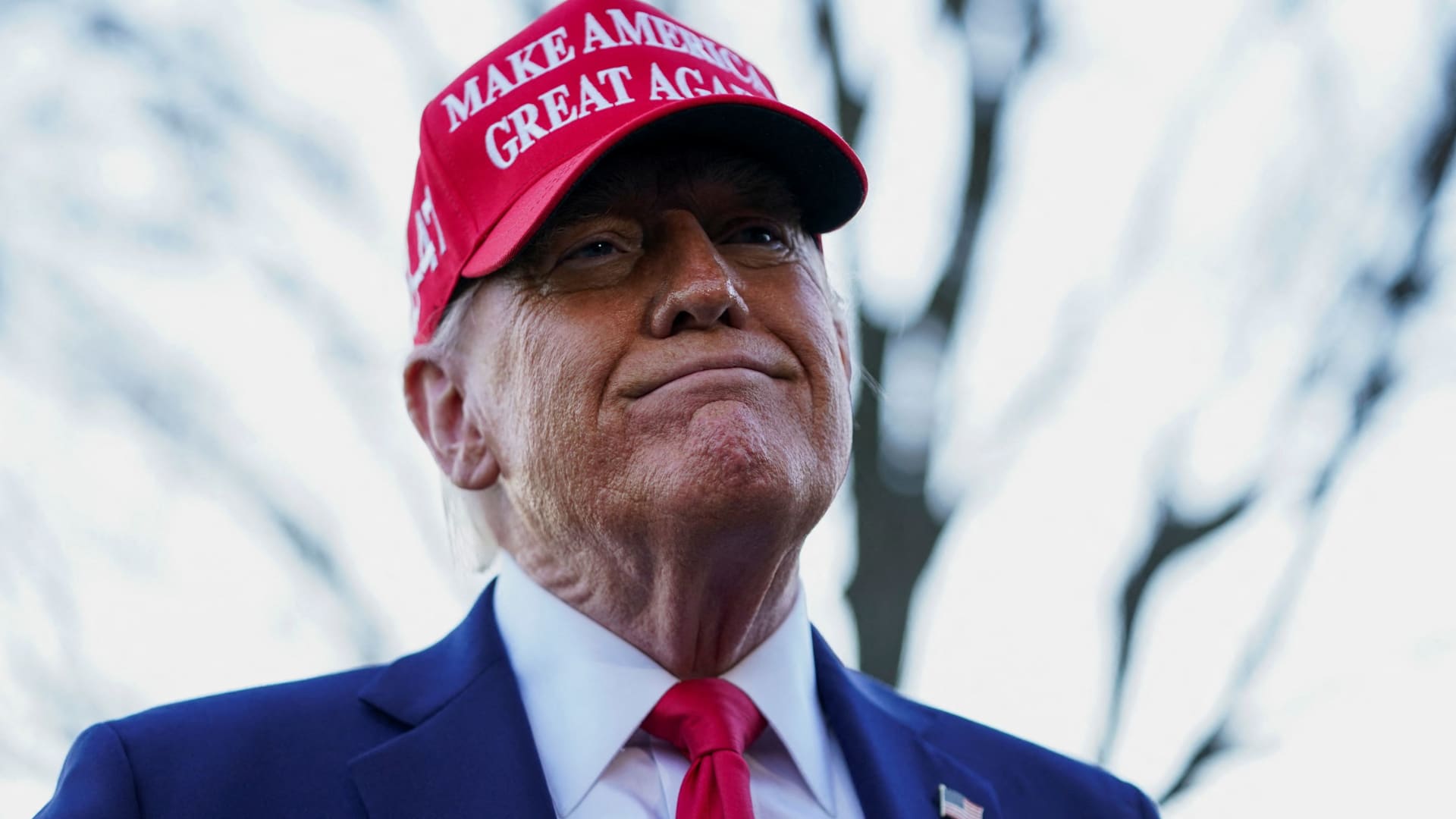

U.S. importers and consumers are bracing for the impact of newly implemented tariffs as President Donald Trump leverages emergency economic powers to impose substantial financial measures on imports from Canada, Mexico, and China. Effective immediately, a 25% tariff has been placed on products from these countries, with an additional 10% levy particularly affecting Chinese goods. Experts warn that this sudden shift in trade policy will quickly escalate costs for consumers, with projections indicating an annual increase of nearly $930 per household due to these changes.
| Article Subheadings |
|---|
| 1) Initial Tariff Impacts on U.S. Trade |
| 2) The Use of Emergency Economic Powers |
| 3) Challenges in Collecting Tariffs |
| 4) The Broader Effects on Consumers |
| 5) Future Implications and Legal Challenges |
Initial Tariff Impacts on U.S. Trade
As of Tuesday, substantial tariffs have come into effect, marking a significant shift in the trade landscape involving America’s major trading partners. The 25% tariff imposed on imports from Canada and Mexico alongside a 10% tariff on Chinese imports is expected to have immediate repercussions. Imports from these countries constituted around 40% of the United States’ total commerce in goods during 2024, totaling an estimated $2.2 trillion. Approximately $840 billion of this amount originated from trade with Mexico, $762 billion from Canada, and $582 billion from China, highlighting the breadth of the tariffs’ reach.
Experts have underscored the urgency with which these tariffs will be felt across the economy, noting that for instance, the cost of importing $100,000 worth of limes from Mexico would inflate by $25,000 due to the tariffs. The financial burden falls squarely on U.S. companies, traders, and consumers who will face an immediate increase in prices for many everyday goods. Capture of these increased costs at the border signals a fundamental shift in American trade policy where tariffs now aim for quick financial impacts rather than belated adjustments as seen in traditional tariff impositions.
The Use of Emergency Economic Powers
The invocation of the International Emergency Economic Powers Act (IEEPA) provides the Trump administration with a legal framework to impose such tariffs swiftly and decisively. Traditionally, this law has been utilized to impose sanctions against foreign dictators or national security threats, but in a distinct departure from precedent, the Trump administration cites the illicit fentanyl trade and immigration issues at the southern border as justifications for this broad application of the law.
Industry observers are closely watching the implications this may have on future executive authority concerning trade. The ability to impose tariffs under the guise of national security raises questions around the limits of presidential power in economic matters, as pointed out by experts in trade legalities. As Trump expands the definition of “unusual and extraordinary” foreign threats, there is potential for legal challenges that could destabilize the foundation on which these tariffs are imposed.
Challenges in Collecting Tariffs
Despite the immediate establishment of these tariffs, logistical challenges arise in their implementation and collection. The de minimis rule, historically allowing for low-value international shipments worth $800 or less to enter the U.S. tariff-free, poses complications for customs and enforcement agencies. This exemption has allowed a new wave of e-commerce shipments direct from foreign sellers, complicating collection efforts for even small-scale imports.
Over 1.3 billion of these low-value shipments were processed in the U.S. during 2024 alone. However, the Trump administration’s efforts to begin collecting tariffs on these de minimis imports have been met with significant disruption, affecting postal services and acquiring the necessary infrastructure and personnel to manage the increase in volume of shipments. The U.S. Postal Service briefly suspended delivery of parcels from China and Hong Kong amidst the chaos, highlighting the operational difficulties resulting from abrupt tariff imposition.
The Broader Effects on Consumers
Consumers can expect to shoulder the financial repercussions of these tariffs as the costs of importing goods rise sharply. Retail leaders warn that increases in food prices, particularly for produce imported from Mexico, could manifest within days as businesses recalibrate pricing structures to accommodate the additional tariffs. Estimates suggest that American households could see an increased expenditure of nearly $930 annually due solely to the tariffs involving Mexico and Canada.
With the expectations of soaring prices, U.S. shoppers are poised for a potentially challenging financial landscape that might distort household budgets and spending patterns. Some experts predict that unless alternative sourcing strategies emerge, American consumers will grapple with the consequences of an increasingly insular American trade policy.
Future Implications and Legal Challenges
The widespread repercussions of these tariffs are not just restricted to immediate financial burdens on consumers and businesses; they raise important questions about future trade policy and executive reach. As the administration pushes the envelope of presidential authority, trade and legal experts are gearing up for potential legal battles over the legality of utilizing national security laws for tariff imposition. Additionally, the feasibility of sustaining such tariffs amid mounting objections both domestically and internationally remains uncertain.
The Trump administration’s unprecedented actions provoke a critical examination of how emergency powers are utilized and the potential ramifications for global trade dynamics. Critics warn that the long-term effects could incite retaliatory measures from foreign governments destabilizing established trade relationships and further complicating America’s role in the international economic landscape. The interplay of these developments will be crucial as the effects of these tariffs continue to unfold.
| No. | Key Points |
|---|---|
| 1 | New tariffs of 25% on imports from Canada and Mexico, and 10% from China are now in effect. |
| 2 | The tariffs are estimated to cost U.S. households an additional $930 annually. |
| 3 | Emergency economic powers have been invoked to implement these tariffs quickly. |
| 4 | Logistical challenges in collecting tariffs from low-value imports are significant. |
| 5 | The long-term implications may foster retaliatory actions from trade partners. |
Summary
The immediate imposition of tariffs under President Trump’s emergency powers signals a potentially transformational shift in U.S. trade policy. While designed to protect national interests, these measures carry substantial financial implications for consumers and businesses alike. As the administration maneuvers through uncharted territory in tariff implementation, both the economic impacts and the legal ramifications remain subjects of important scrutiny and debate moving forward.
Frequently Asked Questions
Question: What are the new tariffs imposed by the U.S. government?
The U.S. government has imposed a 25% tariff on imports from Canada and Mexico, alongside a 10% tariff on goods from China, affecting various consumer products and imports.
Question: How will these tariffs impact American consumers?
American consumers are likely to see an increase in prices for many goods, with estimates suggesting households could incur an additional cost of approximately $930 annually due to the new tariffs.
Question: What is the reason behind invoking emergency economic powers?
Emergency economic powers were invoked under the International Emergency Economic Powers Act, allowing the administration to swiftly impose these tariffs based on claims of national security threats related to trade issues and other factors.
