

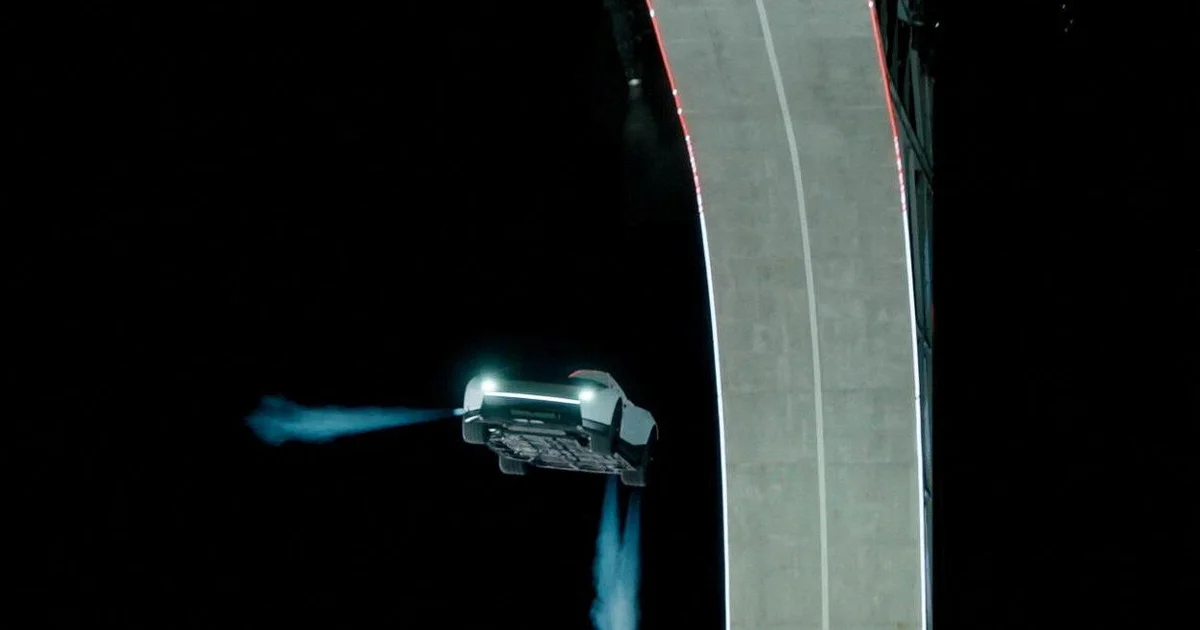

The introduction of Tesla’s much-anticipated “Roadster Rocket,” a vehicle touted as a flying car, has raised significant questions about safety regulations and oversight. Elon Musk, CEO of both Tesla and SpaceX, described the new model as a remarkable fusion of automotive and aerospace engineering, yet many challenges persist. Uncertainties regarding its approval for public roads and airspace regulation have emerged, reflecting the complexity of intersecting transportation sectors.
| Article Subheadings |
|---|
| 1) Overview of Tesla’s New Roadster Rocket |
| 2) Technical and Regulatory Challenges |
| 3) Oversight Agencies and Their Roles |
| 4) The Future of Flying Cars |
| 5) Expert Opinions and Public Sentiment |
Overview of Tesla’s New Roadster Rocket
On October 15, 2026, Tesla unveiled the Roadster Rocket at a highly publicized event in Waco, Texas. Described by Elon Musk as a “flying car,” this innovative vehicle boasts cutting-edge technology, including “ultra high-pressure air tanks.” Musk emphasized the collaboration between the leading automotive and aerospace industries, positioning the Roadster Rocket as a game-changer in the transportation landscape. However, despite the excitement surrounding its debut, production is not set to commence until 2028, marking a delay that blends anticipation with skepticism about its feasibility.
Tesla’s website outlines that while a non-flying version of the Roadster is available for reservation with a $5,000 deposit, the flying model will be exclusive and offered by invitation only. This raises further questions about the intended market and practical applications of a vehicle that claims to bridge the gap between driving and flying. As consumers await further details, the Roadster Rocket holds potential not just for revolutionizing personal transportation but also for shaping future developments in the automotive industry.
Technical and Regulatory Challenges
The introduction of flying cars introduces a myriad of technical and regulatory challenges that must be addressed before they can safely operate. Currently, the flying car sector grapples with a range of technological hurdles, including the development of reliable flight systems and the integration of various transportation modalities. Basic functionality must be proven through rigorous testing, particularly in a field where both performance and safety standards are paramount.
Regulatory boundaries further complicate the picture. Tesla’s flying model is not yet authorized for public road use, indicating that essential safety certifications and compliance with existing vehicle laws remain outstanding. The National Highway Traffic Safety Administration (NHTSA) typically oversees vehicle safety, yet it relies on manufacturers like Tesla for initial safety certifications. Musk’s ambitious vision for the Roadster Rocket requires more than just innovative technology; it necessitates overcoming significant regulatory barriers to ensure public safety and confidence.
Oversight Agencies and Their Roles
Identifying which agencies will provide oversight for the Roadster Rocket is a complex issue. The NHTSA generally has jurisdiction over automobile safety regulations; however, its approach may differ with a vehicle that operates both on roads and in the air. Should the Roadster Rocket successfully transition into light aircraft operations, regulatory responsibilities may shift to the Federal Aviation Administration (FAA), which governs all aspects of civil aviation.
In a statement, the NHTSA reaffirmed its commitment to safety:
“While the vehicle may appear to defy the laws of physics, the manufacturer must ensure that it does not defy applicable Federal Motor Vehicle Safety Standards and drivers must obey all local traffic laws. NHTSA will continue to monitor the situation and won’t hesitate to act to protect the driving public.”
Meanwhile, the FAA has clarified its position, stating that “the Tesla vehicle does not meet the FAA definition of an aircraft,” thus emphasizing the unique challenges faced by hybrid transportation models.
The Future of Flying Cars
The concept of flying cars is often depicted in science fiction, but the Roadster Rocket signifies a tangible step toward that dream. As Tesla prepares to demonstrate the vehicle’s capabilities, opinions on the viability of flying cars vary widely among experts. Many acknowledge the innovative technology but remain cautious about its practical implementation and integration into existing transportation infrastructure.
The Roadster’s innovative demo highlighted its potential, featuring a launch from an inclined ramp that illustrated the vehicle’s aerial capabilities. However, the event also served to remind observers of just how far the industry must go to ensure safe and reliable aerial transportation. Future advancements in drone technology, battery life, and overall safety standards will be critical. The successful launch and acceptance of flying vehicles depend not only on technical proficiency but also public acceptance, both in terms of safety and functionality.
Expert Opinions and Public Sentiment
Public response to the Roadster Rocket has been mixed, blending enthusiasm with skepticism. Some celebrate the innovation and see it as a potential solution to urban congestion and transportation inefficiencies. Yet, there are valid concerns regarding safety, noise pollution, and regulatory compliance. The significant investment associated with the vehicle also raises questions about its accessibility and practical uses.
Industry experts have expressed varied opinions on Musk’s ambitious vision. Some highlight the potential benefits of flying cars, including reduced travel time and lower traffic congestion; others caution that the technology should not rush into the market without comprehensive safety assessments and public engagement efforts. The broader implications of flying cars encompass not only technical and regulatory hurdles but also societal and cultural adaptations that must accompany such a disruptive innovation.
| No. | Key Points |
|---|---|
| 1 | Tesla’s Roadster Rocket is anticipated to enter production in 2028. |
| 2 | Technical and regulatory challenges pose significant barriers to the launch of flying cars. |
| 3 | Oversight for vehicle safety currently resides with the NHTSA, while potential aircraft regulations fall under the FAA. |
| 4 | Public perception of flying cars is mixed, with debates about safety, potential benefits, and practical applications. |
| 5 | The successful introduction of flying cars will require public acceptance alongside technological advancement. |
Summary
The unveiling of Tesla’s Roadster Rocket represents a pivotal moment in the evolution of personal transportation, intertwining the realms of automotive engineering and aerospace technology. However, the path to making flying cars a reality is fraught with challenges. Technical hurdles, regulatory oversight, and public perception continue to play critical roles in determining the feasibility of such vehicles. As industry leaders like Elon Musk push the boundaries of innovation, ongoing conversations about safety and policy will shape the future of transportation for years to come.
Frequently Asked Questions
Question: What is the Roadster Rocket?
The Roadster Rocket is Tesla’s new vehicle, described by CEO Elon Musk as a “flying car” equipped with advanced technology. It aims to integrate automotive and aerospace engineering, although it is currently not approved for public use.
Question: What are the regulatory challenges for flying cars?
Flying cars face regulatory challenges pertaining to safety certifications, compliance with existing vehicle laws, and potential oversight by both the NHTSA and the FAA. Ensuring public safety is a primary concern.
Question: When will the Roadster Rocket be available for consumers?
The Roadster Rocket is expected to enter production in 2028, with a non-flying version currently available for reservation. The flying model, however, will be offered by invitation only.
