

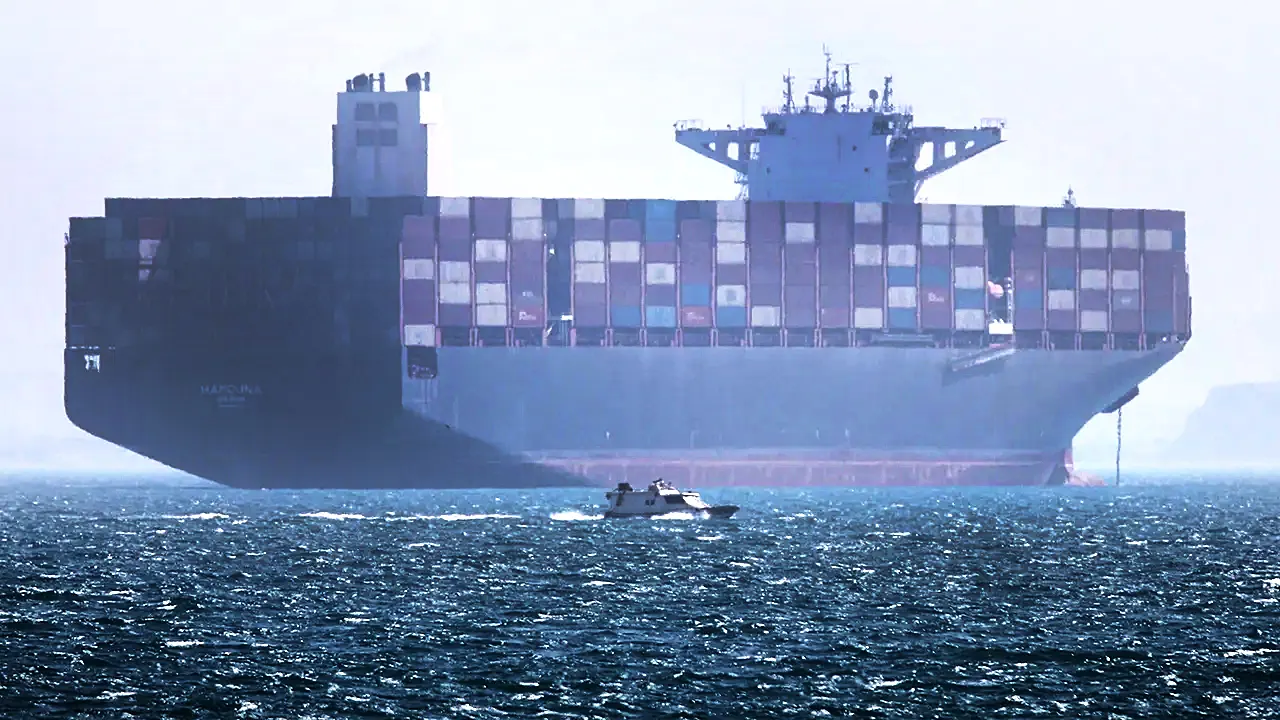

Tensions between the United States and Iran continue to influence maritime traffic through the crucial Strait of Hormuz, where vessel transits have hit astonishing lows in the wake of ongoing conflict. More than five months into the war, recent reports indicate that traffic has diminished to approximately 90% below pre-conflict levels, leading operators to consider alternate routes. Even as the U.S. claims control over the strategic waterway, Iranian officials argue that access is still constrained by their conditions. The current situation poses significant challenges to global trade routes, particularly for oil transit, and highlights the geopolitical stakes at play within this vital maritime corridor.
| Article Subheadings |
|---|
| 1) Major Declines in Maritime Traffic |
| 2) Insights from Industry Experts |
| 3) U.S. and Iranian Claims of Control |
| 4) The Human Impact and Risks |
| 5) Observations on Oil Flows and Future Outlook |
Major Declines in Maritime Traffic
The Strait of Hormuz, a vital maritime route that facilitates nearly a fifth of the world’s oil supply, has witnessed a sharp decline in vessel traffic. According to reports from the United Kingdom Maritime Trade Operations (UKMTO), transit traffic through this crucial waterway has fallen to alarming levels, now estimated at approximately 90% below pre-conflict baselines. This worrisome trend has persisted despite a brief resurgence in late June, suggesting that shipping operators are favoring alternate routes to navigate the heightened risks posed by ongoing tensions, including projectile attacks and increasing enforcement activities.
As operators reconsider their routes, the Northern route is emerging as a more favorable option, reflecting the contributing factors of security concerns and the heightened threat perception in the region. The overall decline in maritime traffic not only impacts transportation and logistics but also has broader repercussions on global energy prices and economic stability.
Insights from Industry Experts
Industry experts are weighing in on the implications of reduced traffic through the Strait of Hormuz. John Stawpert, Marine Director at the International Chamber of Shipping, highlighted that while vessel traffic has significantly diminished, it is not entirely halted. Stawpert explained that shipping patterns tend to fluctuate cyclically in response to ceasefires and conflicts, with a brief uptick in traffic typically occurring during periods of reduced hostilities. However, this positive trend often quickly reverses as ceasefires break down, leading to renewed fears and decreased shipping activity.
In the face of ongoing mining threats and security risks in Persian Gulf waters, operational challenges continue to mount for shipping companies. Stawpert emphasized that a substantial resolution requires a credible ceasefire that reassures all parties involved, bolstered by the dismantling of the Iranian threat and the lifting of U.S. restrictions that limit navigation safety. Without these conditions in place, the existing stalemate is likely to persist, further damaging maritime commerce in the region.
U.S. and Iranian Claims of Control
Amidst the ongoing tensions, both U.S. and Iranian officials are exchanging claims regarding control over the Strait of Hormuz. President Donald Trump, in a series of posts on Truth Social, asserted that the United States has established “total control” over the waterway, claiming a naval blockade that he described as a “Wall of Steel.” He characterized Iran as a diminished military power with no viable defense capabilities, suggesting that they pose little threat to maritime navigation.
Conversely, Iranian authorities assert that their influence over the strait remains intact. The Iranian Persian Gulf Strait Authority has firmly stated that U.S. claims of an open waterway do not reflect reality, insisting that the strait remains blocked until Iran’s conditions are met. Seyed Abbas Araghchi, the Iranian Foreign Minister, criticized U.S. assessments as fundamentally flawed, labeling them as “fake intelligence” and cautioning against underestimating Iran’s capabilities.
The Human Impact and Risks
The significant decline in maritime traffic raises not only concerns about economic ramifications but also poses real dangers to human life at sea. Stawpert reminded the public that crew members aboard vessels traversing the Strait of Hormuz are facing substantial risks. With heightened military presence and ongoing threats of conflict, the safety of those on board is jeopardized, intensifying fears about the long-term implications for seafarers in the region. Many shipping companies are compelled to implement stricter safety protocols and risk assessments, thus primarily impacting the operational costs and logistics.
Moreover, the psychological stress of operating in such high-risk areas influences the decisions made by maritime operators. Expert interpretations underline the need for humanitarian considerations alongside strategic military maneuvers to ensure safe passage through these waters, underscoring crucial operational realities in the face of an uncertain geopolitical landscape.
Observations on Oil Flows and Future Outlook
Despite the turmoil in the Strait of Hormuz, some positive developments have been noted in terms of oil flows. Chris Wright, the U.S. Energy Secretary, reported that the average daily oil flow out of the strait has reached nearly 9 million barrels, complemented by additional resources flowing through newly upgraded pipelines. This surge signals resilience in the oil export sectors, though significant challenges remain in maintaining uninterrupted transit through such a volatile region.
The coordination between U.S. military forces and regional allies has played a vital role in sustaining oil ship movements, despite significant security anxieties. Wright also pointed out the complexities surrounding maritime logistics, often understated by private businesses due to untracked movements. The reality defined by these shifts emphasizes the precarious balance between regional stability and the critical need for maintaining global energy supplies amidst rising tensions.
| No. | Key Points |
|---|---|
| 1 | Vessel traffic through the Strait of Hormuz has fallen dramatically to 90% below pre-conflict levels. |
| 2 | Experts warn about the cyclical nature of maritime activity, linked to ceasefires and hostilities. |
| 3 | Both U.S. and Iranian officials claim control over the strategic waterway, reflecting ongoing tensions. |
| 4 | Safety risks for seafarers are exacerbated by the current geopolitical climate in the region. |
| 5 | Despite tensions, oil flows out of the Strait have shown resilience, averaging nearly 9 million barrels a day. |
Summary
The situation in the Strait of Hormuz represents a complex interplay of geopolitical tensions, shipping dynamics, and global energy needs. With vessel traffic significantly reduced and ongoing threats complicating safe navigation, maritime operators face tough choices to mitigate risk. The divergent claims of control from the U.S. and Iran illustrate the continued volatility and uncertainty of the region, raising alarms about the future of trade routes critical to the global economy. Collaborative efforts among international stakeholders could help alleviate tensions and secure safe passage, but the road ahead remains fraught with challenges.
Frequently Asked Questions
Question: Why has vessel traffic through the Strait of Hormuz decreased?
Vessel traffic has significantly decreased due to ongoing tensions between the U.S. and Iran, along with heightened security risks and projectile attacks that have made many shipping operators wary of navigating the area.
Question: What role do international experts play in assessing maritime safety?
International experts analyze maritime traffic and safety, providing insights on operational risks, helping shipping companies make informed decisions about navigation routes, and advocating for measures that ensure the safety of seafarers.
Question: How are oil flows being maintained despite tensions in the region?
Despite geopolitical tensions, the flow of oil is being maintained through coordinated efforts between the U.S. military and Gulf allies, which helps ensure that shipping routes remain operable for oil transport.
