

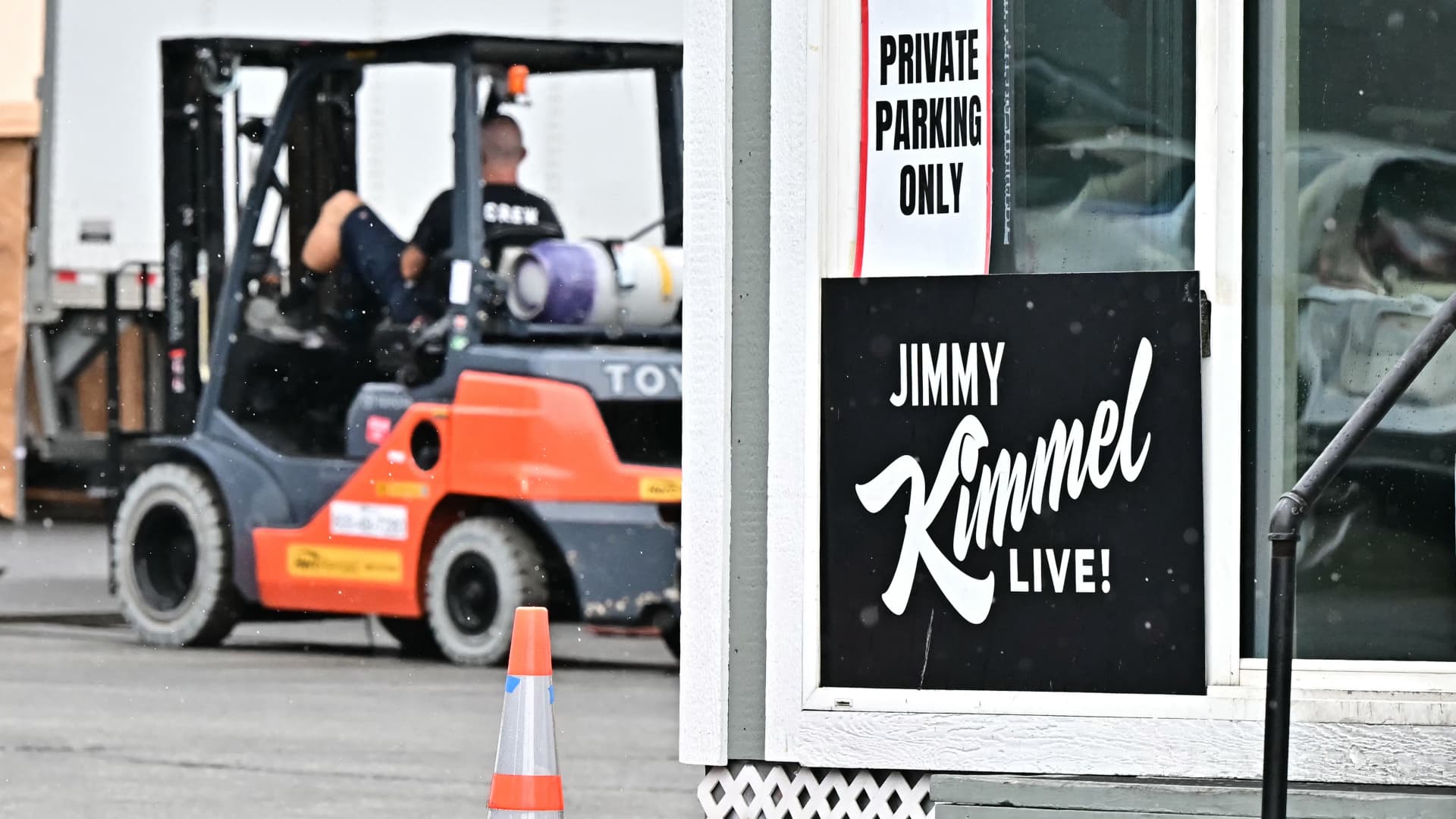

In a significant move, Disney has decided to withdraw the “Jimmy Kimmel Live!” show from ABC, spotlighting governmental control over media broadcasts. The announcement follows comments by President Donald Trump regarding potential revocations of broadcast licenses for networks he perceives as biased against him. This situation escalated when Federal Communications Commission (FCC) Chair Brendan Carr echoed similar sentiments, bringing renewed scrutiny to the rights and responsibilities of broadcasters in America.
| Article Subheadings |
|---|
| 1) Understanding Broadcast Licenses and Their Importance |
| 2) Authority of Trump and the FCC in License Revocation |
| 3) Consequences of License Revocation for Major Networks |
| 4) The Pressure of Media Consolidation |
| 5) The Future of Broadcast Television |
Understanding Broadcast Licenses and Their Importance
Broadcast licenses serve as a crucial framework for media networks, including well-known entities like ABC, CBS, NBC, and Fox. To operate and air programming, these networks must secure spectrum licenses from the federal government, specifically from the FCC. This regulatory requirement ensures that they are delivering free, over-the-air services accessible to any viewer equipped with an antenna. However, with the evolution of media consumption, today’s viewers often access this content through subscription-based services and streaming platforms, rather than traditional antennas.
Historically, broadcast networks have been recognized for their diverse programming—ranging from local news and live sports to sitcoms and late-night shows, including “Jimmy Kimmel Live!” Despite shifting viewing habits, the underlying model for broadcasting remains relatively stable. License holders, such as Nexstar Media Group and Sinclair, are tasked with using the airwaves responsibly, which, according to FCC regulations, includes programming that addresses local community needs and issues. This responsibility underscores the interplay between government regulation and media content.
Authority of Trump and the FCC in License Revocation
The crux of the current discourse is the authority possessed by the FCC under President Trump’s administration to revoke broadcasting licenses. During a recent CNBC interview, Brendan Carr emphasized that comments made by talk show host Jimmy Kimmel could mislead the public and potentially breach the public interest standards set for broadcasters. Carr’s remarks echoed Trump’s claims that mainstream networks exhibit overt bias against him, citing that a substantial percentage of media coverage is negative.
This situation is not without precedent; past administrations have invoked the potential for license revocations based on claims of journalist bias or misrepresentation. Trump’s recent statements have served to amplify such concerns, along with calls from officials to impose more stringent measures on networks. The legal ramifications of license revocation are complex, requiring a formal investigation and the opportunity for the network to respond. Ultimately, this reflects a broader tension between political influence and media freedom in the United States.
Consequences of License Revocation for Major Networks
Should the government determine that a major network like ABC or NBC is not serving the public interest, the implications could be severe. The immediate result of a revoked license would mean the affected local stations would cease broadcasting, effectively going dark in their respective markets. For example, during the fallout of Kimmel’s suspension, Nexstar and Sinclair chose to preempt the show instead of airing it, demonstrating a willingness to comply with potential FCC scrutiny.
Radio and TV license revocation processes are extensive and typically involve frequent legal challenges. Experts in communications law, like Professor Roy Gutterman, note that most discussions around license violations revolve around issues like children’s programming, content cuts, or obscenity, rather than political criticism. Trump’s administration, however, has attempted to leverage this process to address perceived political injustices, marking a potentially dangerous precedent in U.S. media history.
The Pressure of Media Consolidation
Another critical aspect of this ongoing scenario is the consolidation of local television stations, particularly amid heightened pressures following Trump’s election. Before the controversies surrounding Kimmel and Trump’s comments, Nexstar had already announced its intention to merge with Tegna, a growing competitor. Such mergers significantly alter the broadcasting landscape and raise questions about ownership caps that have traditionally restrained large media corporations.
As these consolidation efforts unfold, media organizations eye opportunities for expansion, seeking to adapt to shifts in viewership trends precipitated by the rise of streaming services. With many viewers cancelling traditional pay-TV subscriptions, financial sustainability for broadcasters is increasingly precarious. Consequently, government regulation and the potential for policy changes by the FCC emerge as decisive factors in shaping the future of the media landscape.
The Future of Broadcast Television
Broadcasters face an uncertain future as the ecosystem surrounding traditional television continues to evolve. While free over-the-air services remain valuable, the rising tide of subscriptions and streaming options presents formidable competition. Industry stakeholders and government policymakers must navigate the dual pressures of maintaining public interest and ensuring a viable business model.
The FCC has been scrutinizing ownership rules, with Brendan Carr promoting deregulation and a shift away from traditional ownership safe-guards that may enable further consolidation without the prevalence of public interest considerations. Consequently, broadcasters are scrambling to adapt to the transformed media environment, all while battling against political undertones that threaten their operational licenses. As these dynamics play out, the fate of beloved television programs and their networks hangs in the balance.
| No. | Key Points |
|---|---|
| 1 | Disney has pulled “Jimmy Kimmel Live!” from ABC, reflecting tensions in broadcasting. |
| 2 | The FCC holds authority to revoke broadcast licenses based on public interest issues. |
| 3 | Revocation consequences include local stations effectively ceasing to operate. |
| 4 | Media consolidation may further complicate license regulation and public interest obligations. |
| 5 | The future of broadcast television remains uncertain amidst evolving viewer preferences and government regulations. |
Summary
The current landscape of broadcasting in America is marked by the interplay of political influence and the responsibilities of media networks. With Disney’s decision on “Jimmy Kimmel Live!” and Trump’s comments on broadcast licenses, the focus has shifted to how these dynamics will shape future regulations. As local television consolidates, the pressures mount for networks to adapt their business models while contending with the potential for government intervention. Ultimately, the ongoing changes could redefine how audiences consume media in the years to come.
Frequently Asked Questions
Question: What does it mean for a network to serve the public interest?
Serving the public interest means that the network must air content that addresses the needs and problems of the local community it serves. The FCC mandates that broadcasters operate within this framework to maintain their licenses.
Question: Can the FCC revoke a broadcaster’s license at any time?
While the FCC has the authority to revoke licenses, it is not a simple process. It typically requires a formal investigation and a demonstration that the broadcaster is not serving the public interest, which can involve legal challenges.
Question: How does media consolidation affect broadcast licenses?
Media consolidation can complicate the regulation of broadcast licenses, as fewer companies own more stations. This raises concerns about the diversity of viewpoints and the ability of the networks to uphold public interest standards amid profit-driven motives.
