

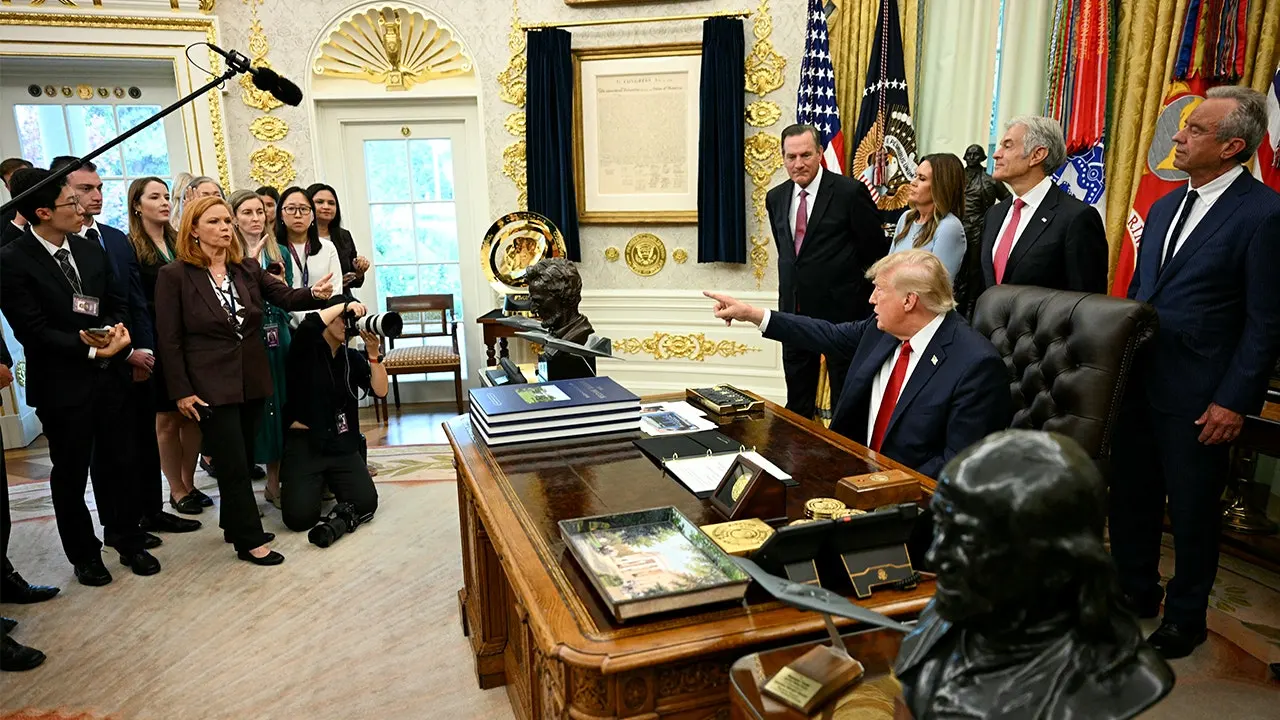

The ongoing legal battle between President Donald Trump and several major media outlets has intensified following his ban on journalists from CNN, MSNBC, and Politico from White House premises. Announced on a Friday, Trump’s prohibition spurred the affected media organizations to file a lawsuit seeking an injunction against the ban. Legal experts and First Amendment advocates indicate that this case could potentially challenge the constitutional boundaries of press access to government officials.
| Article Subheadings |
|---|
| 1) Trump’s Media Ban: The Announcement |
| 2) Legal Perspectives on First Amendment Rights |
| 3) Media Reactions and Legal Actions |
| 4) Implications for the White House Press |
| 5) The Public Interest in Free Press Access |
Trump’s Media Ban: The Announcement
On a Friday afternoon, President Donald Trump made headlines after announcing a ban affecting journalists from CNN, MSNBC, and Politico, prohibiting them from entering the White House grounds. The motivation behind the ban was articulated by the President himself via a post on TRUTH Social, where he accused these outlets of disseminating “fake news.” The implications of such a move have sparked significant concern and discussion around the balance between executive power and press freedoms in America.
In a statement that drew ire and support in equal measure, Trump expressed that the employees of these outlets should not be allowed on White House property as he believed they were publishing lies about his administration. Trump’s remarks underscored a contentious relationship with the press, especially given that the outlets he targeted are often critical of his policies and statements.
Legal Perspectives on First Amendment Rights
Following Trump’s announcement, legal experts began to weigh in on the ramifications of such a ban. Aaron Terr, director of public advocacy for the Foundation for Individual Rights and Expression (FIRE), opined that the ban is likely to face substantial legal challenges rooted in the First Amendment. “The Trump administration will not fare well in court because its action here is blatantly unconstitutional,” Terr stated.
The crux of the legal argument lies in established precedents stating that once a government opens its doors to the press, it cannot discriminate against reporters based on their coverage or viewpoints. Terr emphasized that revoking access based on critical reporting is equivalent to a retaliatory act against protected speech, something that is fundamentally at odds with the First Amendment.
Media Reactions and Legal Actions
In response to the ban, the affected media outlets swiftly filed a lawsuit against Trump, seeking a temporary injunction to overturn the prohibition. The lawsuit aims to restore the press credentials of the journalists affected by the ban. This legal action is significant not only as a defense against executive overreach but also as an assertion of the constitutional right to a free press.
On a broader front, other media organizations, including Fox News, ABC News, CBS News, and NBC News, expressed solidarity with the affected networks, indicating that they would not replace CNN during the coverage of White House events, further highlighting the collective stance against restrictions on journalistic inquiry.
Implications for the White House Press
The implications of Trump’s media ban extend far beyond the immediate context, raising concerns about the future of press access to government officials. Experts argue that such actions could establish dangerous precedents that threaten the inherent protections of journalists to hold power accountable. This situation, if left unchallenged, may set a standard for future administrations to selectively discriminate against outlets based on their reporting.
The White House Correspondents’ Association (WHCA) has strongly condemned the administration’s actions, stressing the importance of protecting press freedoms. WHCA’s president criticized the ban, stating that it violates First Amendment rights and risks the integrity of the public’s right to access information about their government.
The Public Interest in Free Press Access
The controversy surrounding the ban brings to light the critical role that a free and independent press plays in democracy. The public has a legitimate interest in receiving accurate and diverse perspectives about its government. As articulated by various media leaders, no administration should impose restrictions on a news outlet simply because it disapproves of its reporting style or content.
Moreover, the ramifications of restricting access could be far-reaching, impacting not only the aforementioned organizations but also potentially extending to any news outlet in the future. The American public relies on journalists to provide oversight and transparency, underscoring the necessity of maintaining press freedoms as a cornerstone of democratic governance.
| No. | Key Points |
|---|---|
| 1 | President Trump has banned CNN, MSNBC, and Politico from White House grounds. |
| 2 | Legal experts predict that the ban could face significant First Amendment challenges. |
| 3 | Affected media organizations filed a lawsuit seeking to restore their access to the White House. |
| 4 | Other media organizations have expressed solidarity with the banned outlets. |
| 5 | The ban raises concerns over the implications for press freedom and public access to information. |
Summary
The ban instituted by President Trump against certain media outlets underscores the ongoing tension between the executive branch and the press. As the legal battle unfolds, it poses critical questions about First Amendment rights and the standards of freedom of the press in America. The outcome of the lawsuit and subsequent public discourse on press access can set a significant precedent influencing the relationship between government and media for years to come.
Frequently Asked Questions
Question: Why did President Trump impose a media ban?
President Trump imposed the media ban in response to what he termed as “fake news” from CNN, MSNBC, and Politico, citing that their reporting was misleading and questioned the outlets’ professionalism.
Question: What legal action has been taken against Trump’s media ban?
CNN, MSNBC, and Politico have jointly filed a lawsuit seeking a temporary injunction to lift the media ban, arguing that it violates their First Amendment rights to freely access government information.
Question: What are the implications of this media ban for future administrations?
If the media ban is upheld, it could set a dangerous precedent for future administrations, allowing them to selectively restrict access to the press based on ideological criteria, which may ultimately threaten press freedoms in the United States.
