

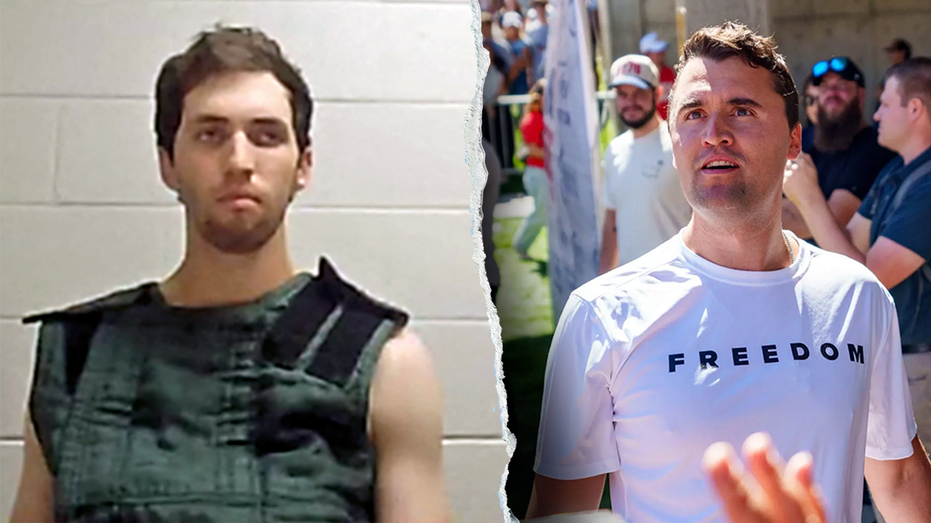

Tyler Robinson will stand trial in the killing of conservative activist Charlie Kirk after a Utah judge found prosecutors presented enough evidence to proceed on all seven charges. Judge Tony Graf also ruled that prosecutors may continue seeking the death penalty. Robinson pleaded not guilty after the preliminary hearing ruling on Tuesday, September 1, 2026. The case is scheduled to return to court on October 23 for a status conference, when a trial date could be set.
| 1) | Preliminary hearing sends the case toward trial |
| 2) | Death penalty eligibility remains in dispute |
| 3) | The charges and alleged shooting |
| 4) | Courtroom disputes and family response |
| 5) | Next hearing and possible trial schedule |
Preliminary hearing sends the case toward trial
Judge Tony Graf ruled in Utah’s 4th District Court in Provo after a preliminary hearing that prosecutors had established probable cause on every charge. The ruling means the case can proceed to trial, not that the prosecution has proved guilt beyond a reasonable doubt. Tyler Robinson pleaded not guilty during an arraignment held immediately after the judge’s decision.
Graf said the evidence, viewed in the light most favorable to the prosecution, supported a reasonable belief that Robinson was the person who shot and killed Charlie Kirk. He emphasized that the higher standard of proving the case beyond a reasonable doubt will apply at trial.
“Whether the state can prove the aggravating circumstance beyond a reasonable doubt remains for trial. Count one is bound over for trial,” Judge Tony Graf said.
Death penalty eligibility remains in dispute
The judge allowed prosecutors to continue pursuing the death penalty by finding probable cause for an allegation that the victim was specifically targeted. That finding permits the capital sentencing enhancement to remain part of the case as it advances.
Graf made clear that the ruling did not decide whether prosecutors will ultimately prove the aggravating circumstance. That issue will be tested during the trial, where the state will face the beyond-a-reasonable-doubt standard. The death penalty therefore remains possible, but no final sentencing decision has been made.
The charges and alleged shooting
Robinson faces seven charges: aggravated murder; felony discharge of a firearm causing serious bodily injury; two counts of obstruction of justice; two counts of witness tampering; and committing a violent offense in the presence of a child. The aggravated murder and firearm counts are first-degree felonies. The obstruction counts are second-degree felonies, the witness-tampering counts are third-degree felonies, and the offense involving a child is a Class A misdemeanor.
Charlie Kirk, 31, was shot and killed on September 10, 2025, while speaking at an outdoor Turning Point USA event at Utah Valley University in Orem, Utah. Prosecutors allege that Robinson fired the fatal shot from an elevated position overlooking the crowd. The charges remain allegations, and Robinson is presumed innocent unless proven guilty in court.
Courtroom disputes and family response
The ruling followed a separate dispute over whether cameras should remain in the courtroom. After arguments held privately and later in open court, Graf denied the defense request to remove them. Robinson’s attorneys had cited intense publicity and concerns about online gambling tied to the outcome of the case. Cameras may remain under restrictions established in the judge’s courtroom decorum order.
An attorney for Kirk’s family, Jeff Neiman, asked the court to avoid unnecessary delays while recognizing Robinson’s constitutional right to a fair trial. He also objected to comments made by defense attorney Richard Novak about Kirk.
“The defendant is entitled to a fair trial, and he must be given one. But nothing more is owed,” Jeff Neiman told the court. “We ask that it do so swiftly.”
Kirk’s family later described the decision as an important step in its pursuit of justice nearly a year after his death. The family said the case carries a continuing emotional burden, particularly for Kirk’s children, and called for a transparent and timely process.
Next hearing and possible trial schedule
Tyler Robinson is ordered to appear on October 23, 2026, at 1 p.m. local time for a status conference. A trial date could be established at that hearing. Jeff Neiman specifically asked the judge to set a date so Kirk’s family would know when the case is expected to move forward.
The next stage will involve preparing the seven-count case for trial while the court addresses scheduling and other procedural matters. The death penalty question will also remain subject to the evidence and legal arguments presented as the proceedings continue.
| Number | Key Point |
|---|---|
| 1 | The judge ordered Robinson to stand trial on all seven charges. |
| 2 | Prosecutors can continue seeking the death penalty based on the victim-targeting allegation. |
| 3 | Robinson pleaded not guilty after the preliminary hearing ruling. |
| 4 | The next court appearance is scheduled for October 23, 2026. |
Summary
The Utah court’s probable-cause ruling moves the case against Tyler Robinson toward trial while preserving prosecutors’ ability to seek the death penalty. Robinson remains presumed innocent, and the allegations will have to be proven at trial. The court may set a trial date during the October 23 status conference.
Frequently Asked Questions
What did the judge decide?
Judge Tony Graf ordered Tyler Robinson to stand trial on all seven charges after finding sufficient probable cause.
Can prosecutors still seek the death penalty?
Yes. The judge found probable cause for the victim-targeting allegation, allowing the capital sentencing enhancement to remain in the case.
When is Robinson due back in court?
Robinson is scheduled to appear on October 23, 2026, at 1 p.m. local time for a status conference. A trial date could be set then.
