

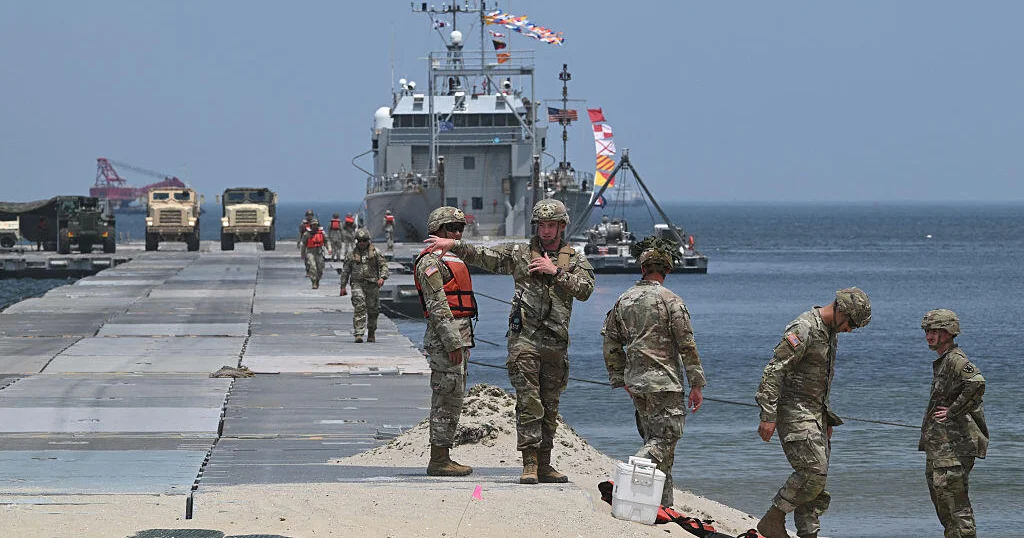

In a significant adjustment to military operations, the South Korean and U.S. armed forces have agreed to shorten their joint exercises following a directive from the U.S. government. This change, which comes shortly after President Trump requested cuts to the drills, has raised concerns among military experts about potential impacts on the combat readiness of U.S.-South Korean forces. The adjustments are aimed at preserving essential training while responding to diplomatic overtures involving North Korea.
| Article Subheadings |
|---|
| 1) Details of the Military Drills Adjustment |
| 2) Background on Ulchi Freedom Shield Exercises |
| 3) Implications for U.S.-South Korea Alliance |
| 4) North Korea’s Reaction and Position |
| 5) Future of U.S.-North Korea Relations |
Details of the Military Drills Adjustment
In a coordinated effort, the South Korean military and U.S. defense officials announced the decision to cut back on their joint military exercises, specifically the Ulchi Freedom Shield initiatives. This decision comes after President Trump directed Defense Secretary Pete Hegseth to substantially reduce the drills, which began earlier this week and were originally planned for an extended period. The exercises, which are designed to enhance the readiness of both nations in terms of regional threats, will now conclude one week earlier than originally scheduled. Through this adjustment, officials have stated that essential training objectives will still be met, with some live training events canceled and others converted into simulations to preserve readiness while accommodating political sensitivities.
Background on Ulchi Freedom Shield Exercises
The Ulchi Freedom Shield exercises serve as a critical component of the military collaboration between the United States and South Korea, primarily aimed at preparing for potential security threats, particularly from North Korea. Historically, these drills combine both computer simulations and field training to ensure effective defense strategies. The current iteration began on Monday and will last for a total of 11 days, despite the early termination order. Given the nature of the exercises, they have attracted scrutiny and condemnation from North Korea, which perceives them as rehearsals for invasion. The overall goal of these drills is to strengthen the allies’ capabilities to respond to any aggressions and maintain stability in the region, especially in the face of North Korea’s expanding military prowess.
Implications for U.S.-South Korea Alliance
Experts express concerns about the ramifications of reducing the military exercises between the U.S. and South Korea on readiness and deterrence capabilities. As the alliance between the two nations has been a cornerstone of regional security—a partnership forged during the Korean War from 1950 to 1953—the downsizing of drills could signify a shift in defense posture that might embolden adversaries. Military analysts argue that while the intent behind scaling down the exercises is to foster diplomacy, it consequently raises questions about the preparedness of U.S. and South Korean troops to respond effectively in times of heightened tensions. The Joint Chiefs of Staff of South Korea have acknowledged this shift and stated that discussions will continue to focus on achieving the objectives of their combined defense strategy moving forward.
North Korea’s Reaction and Position
In response to the decisions regarding the military drills, North Korea has expressed its strong opposition through state media outlets. The Korean Central News Agency (KCNA) has labeled the U.S.-South Korean military exercises as “frantic” and “extremely dangerous,” promising to counter any perceived hostilities. Despite the reduction in exercises, the regime under leader Kim Jong Un has not engaged in direct discussions, suggesting a disinclination to embrace the diplomatic overtures put forth by the U.S. administration. Analysts note that Kim’s military readiness, bolstered by advancements in his nuclear arsenal, positions North Korea to maintain a hardline stance, likely demanding substantial concessions from the U.S. before negotiating further on denuclearization or other diplomatic efforts.
Future of U.S.-North Korea Relations
The trajectory of U.S.-North Korea relations remains complex, particularly in light of President Trump’s attempts to engage Kim through high-profile summits that took place between 2018 and 2019. However, following protracted disagreements over sanctions, the dialogue came to a standstill, creating an atmosphere of uncertainty. Experts believe that until a clear framework for negotiations is established, particularly regarding North Korea’s denuclearization, any gestures towards improving diplomatic ties may yield little progress. The focus must shift to creating an environment conducive for talks, which may involve reassessing military exercises and diplomatic concessions, but with cautious optimism among analysts regarding the likelihood of North Korea’s willingness to engage meaningfully amidst ongoing tensions.
| No. | Key Points |
|---|---|
| 1 | The U.S. and South Korea have agreed to shorten their joint military exercises following a request from President Trump. |
| 2 | Ulchi Freedom Shield exercises, initiated to enhance military readiness, are now scheduled to conclude one week earlier than planned. |
| 3 | There are concerns that the reduction of drills may impact U.S.-South Korea defense readiness and their long-standing alliance. |
| 4 | North Korea has condemned the joint military activities, claiming they represent a threat and pledging to counteract the perceived aggressions. |
| 5 | The future of U.S.-North Korea relations is uncertain, with ongoing demands for denuclearization remaining a pivotal issue for negotiations. |
Summary
The recent decision to reduce the scope and duration of U.S.-South Korean military exercises underscores the delicate balance between maintaining military readiness and fostering diplomatic relations with North Korea. As these adjustments come into effect amidst shifting geopolitical dynamics, the implications for regional security and the longstanding alliance between South Korea and the United States remain to be seen. While the intention may be to lay a foundation for dialogue, experts caution that decreased military exercises could inadvertently embolden North Korean adversarial behavior, making it imperative for both nations to remain vigilant in their defense strategies.
Frequently Asked Questions
Question: What prompted the reduction of the military drills?
The reduction was primarily prompted by a directive from President Trump, who sought to scale back exercises in light of diplomatic relations with North Korea.
Question: What are Ulchi Freedom Shield exercises?
Ulchi Freedom Shield exercises are joint military drills conducted by the U.S. and South Korea, focusing on enhancing their preparedness to address regional threats, particularly from North Korea.
Question: How might the shortening of drills affect U.S.-South Korea military readiness?
Experts believe that reducing the scope and duration of these exercises could potentially weaken the combat readiness of U.S. and South Korean forces, thereby impacting their defensive capabilities against regional threats.
