

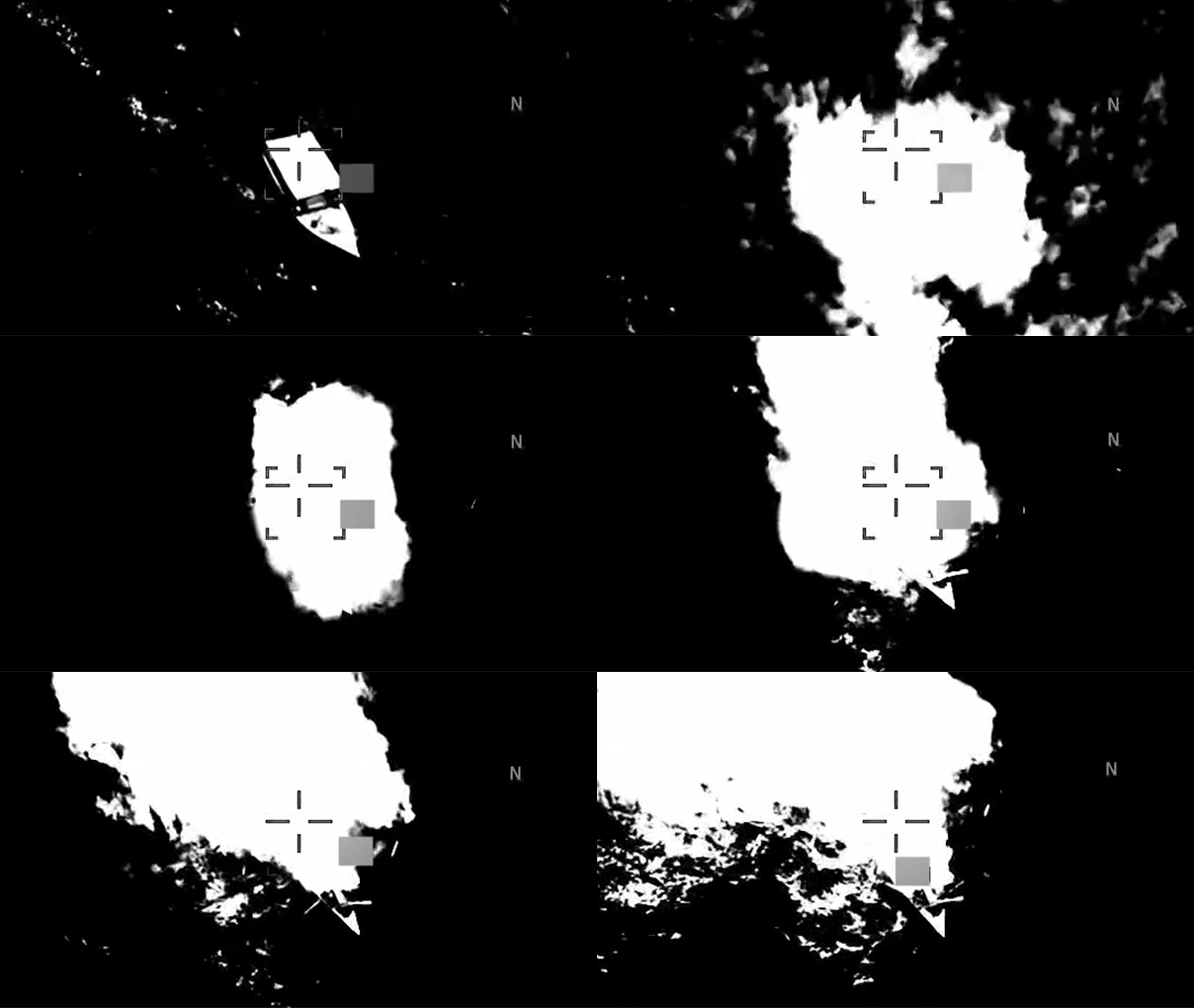

U.S. forces destroyed a suspected drug-smuggling vessel in the Eastern Pacific on Sept. 9, killing three alleged narco-traffickers, according to the Department of War. The strike was conducted by Joint Task Force Western Hemisphere under the direction of U.S. Southern Command after intelligence reportedly linked the vessel to drug trafficking. It was the latest operation in a widening campaign against cartel networks and maritime trafficking routes.
The operation came as the Trump administration intensified military and diplomatic efforts to disrupt the movement of illegal narcotics toward the United States. Officials said the campaign has included dozens of strikes, surveillance of suspected smuggling boats and proposed cooperation with governments in Latin America.
| 1) | Eastern Pacific vessel targeted in latest strike |
| 2) | Intelligence cited as basis for the operation |
| 3) | Operation Southern Spear expands its maritime campaign |
| 4) | Commanders describe a broader cartel crackdown |
| 5) | Regional cooperation remains part of the strategy |
Eastern Pacific vessel targeted in latest strike
The Sept. 9 operation took place in the Eastern Pacific along a maritime route that U.S. officials identify as being used for narcotics trafficking. Joint Task Force Western Hemisphere carried out the strike under the direction of U.S. Southern Command. The attack destroyed the suspected smuggling vessel and killed three people described by officials as narco-traffickers.
The department did not publicly provide further details about the vessel, the type of weapons used or the identities of those killed. The strike followed other attacks on boats suspected of transporting drugs in waters off Latin America.
Intelligence cited as basis for the operation
Officials said intelligence had linked the vessel to active narcotics trafficking before the strike. In a public statement, the Department of War said the information confirmed the vessel’s involvement in narco-trafficking and that the operation killed three alleged narco-traffickers.
“Confirmed intelligence revealed the vessel’s active involvement in narco-trafficking.”
The statement gave no additional information about the intelligence collection process or whether narcotics were recovered from the vessel. Earlier Pentagon imagery released in 2025 showed suspected drug boats at sea, including a vessel carrying packages that appeared to be bundles of narcotics.
Operation Southern Spear expands its maritime campaign
Operation Southern Spear began with its first operation on Sept. 2, 2025. The Pentagon said the campaign had conducted 67 strikes by late August. The latest Eastern Pacific attack therefore forms part of a sustained effort rather than an isolated operation.
The campaign has focused on vessels allegedly moving drugs through established maritime routes. A reported Aug. 25 strike in the Caribbean killed four alleged smugglers aboard a fast boat. Days earlier, the U.S. military said two people had been killed in an attack on a vessel in the Eastern Pacific, which was described as the first reported strike there in more than two months.
Commanders describe a broader cartel crackdown
U.S. military leaders say the purpose of the operations is to disrupt trafficking networks, force smugglers to change their methods and prevent narcotics from reaching American communities. Francis L. Donovan, who leads Joint Task Force Western Hemisphere, said the task force would continue pursuing cartel organizations.
“We will hunt, disrupt, and defeat these narco-terrorist networks.”
The administration has characterized the campaign as part of an armed conflict with cartels. Donald Trump has argued that attacks are necessary to stop drugs from reaching the United States and contributing to fatal overdoses. Officials have not disclosed a complete public accounting of the campaign’s civilian or operational consequences.
Regional cooperation remains part of the strategy
The administration is also seeking agreements that could expand joint operations onto land in Latin America. War Secretary Pete Hegseth said during an August visit to Panama that Colombia, Guatemala and Honduras had agreed to permit U.S. joint operations against criminal groups on their territory. Guatemala denied that an agreement had been reached, while Ecuador began similar missions with the United States in March.
Pentagon press secretary Kingsley Wilson said the campaign had disrupted trafficking networks, prompted changes in smuggling tactics and removed people the department described as dangerous narcotics traffickers. The maritime strikes and proposed land cooperation show that Washington’s strategy combines military action, intelligence operations and partnerships with regional governments.
| Number | Key Point |
|---|---|
| 1 | Three alleged narco-traffickers were killed in the Sept. 9 Eastern Pacific strike. |
| 2 | Officials said intelligence tied the destroyed vessel to drug trafficking. |
| 3 | Operation Southern Spear had recorded 67 strikes by late August. |
| 4 | The campaign includes maritime attacks and planned regional cooperation. |
Summary
The Eastern Pacific strike reflects the Trump administration’s continuing effort to use military force against vessels suspected of supporting cartel trafficking. U.S. officials say intelligence justified the operation and that repeated attacks are disrupting smuggling networks. The campaign is also expanding through discussions with Latin American governments, although some reported agreements remain disputed.
Frequently Asked Questions
What happened in the Eastern Pacific?
U.S. forces destroyed a suspected drug-smuggling vessel on Sept. 9, killing three people whom officials described as alleged narco-traffickers.
Which U.S. units conducted the operation?
Joint Task Force Western Hemisphere carried out the strike under the direction of U.S. Southern Command.
What is Operation Southern Spear?
It is a U.S. campaign targeting suspected cartel trafficking networks. The Pentagon said it had conducted 67 strikes by late August after beginning operations in September 2025.
Is the campaign limited to maritime operations?
No. The administration is also pursuing cooperation with Latin American governments for joint operations against criminal groups on land, although the status of some reported agreements is contested.
