

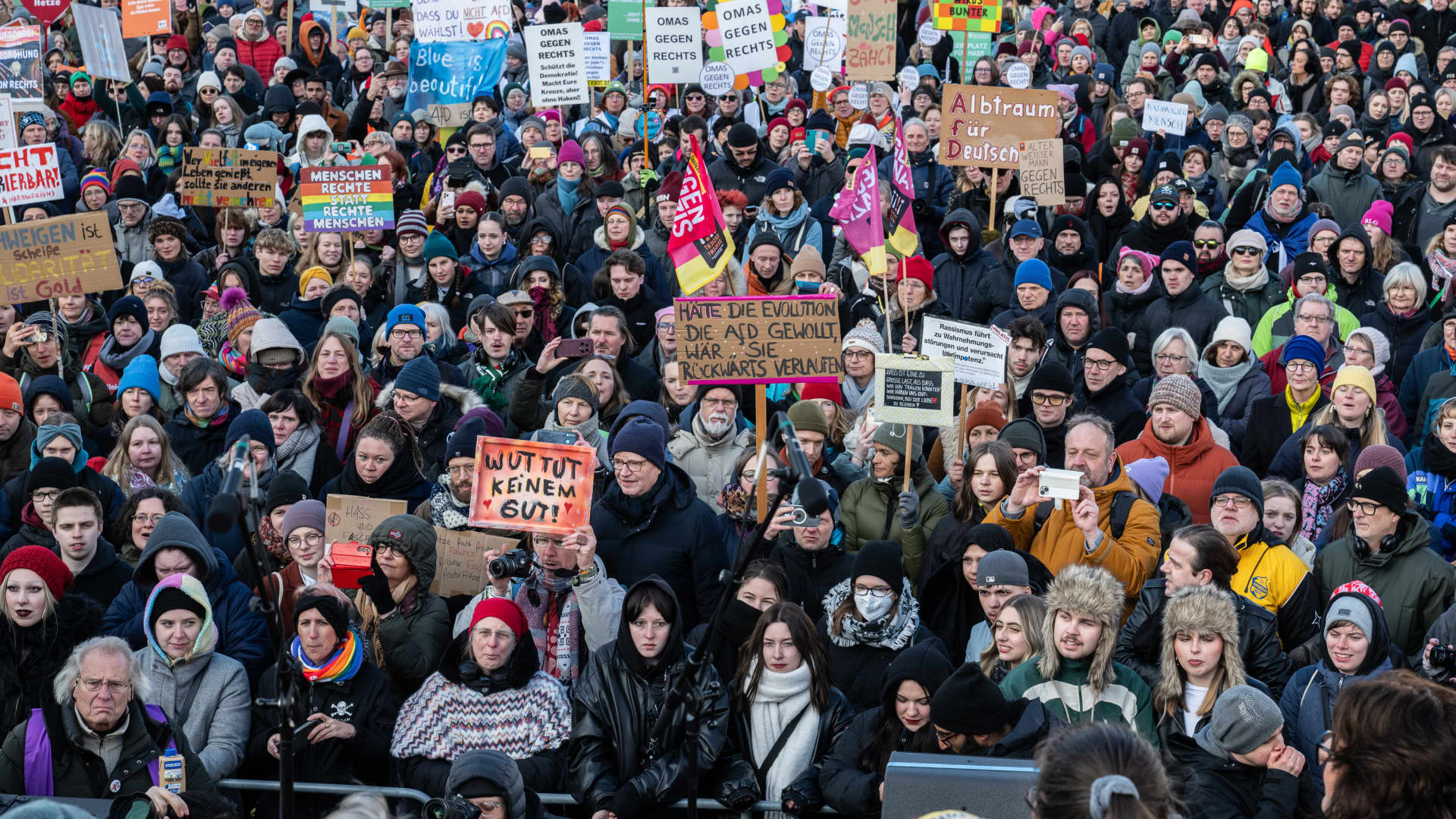

Berlin experienced significant political upheaval following the recent federal election held on February 16, 2025. Centrist parties, including the Social Democratic Party (SPD), faced substantial losses as voters shifted towards both extremes of the political spectrum. The far-right Alternative für Deutschland (AfD) recorded impressive gains, solidifying its position as a dominant force in German politics, while the far-left Die Linke also saw a surprising resurgence.
| Article Subheadings |
|---|
| 1) Centrist Parties Suffer Setbacks in Election |
| 2) Surge of Support for Extreme Parties |
| 3) Migration Debate Influences Voter Behavior |
| 4) Demographics and Geography at Play |
| 5) Future Implications for German Politics |
Centrist Parties Suffer Setbacks in Election
In the recent federal elections, Germany’s central political factions faced a daunting challenge. The Social Democratic Party (SPD), led by former Chancellor Olaf Scholz, secured only 16.4% of the vote, marking the party’s worst-ever electoral performance. This decline was a stark contrast to the Christian Democratic Union (CDU) and the Christian Social Union (CSU), which managed to collectively garner 28.5%, albeit still falling below the critical 30% threshold. Scholz described the result as a “bitter” defeat and a wake-up call for centrist parties who must reevaluate their platforms and strategies to respond effectively to the evolving political landscape.
The repercussions of this electoral outcome are profound. The SPD’s performance underscores a growing disconnect between mainstream political agendas and the concerns of voters, a gap that many political analysts believe could deepen if left unaddressed. The preliminary results suggested that many traditional SPD voters have shifted their allegiance, contributing to a significant transformation in Germany’s political dynamics. Political observers now emphasize the urgent need for centrist parties to re-engage with their electorate to regain lost ground.
Surge of Support for Extreme Parties
The election saw surprising gains for fringe parties, with the far-right AfD doubling its previous vote share to exceed 20%, thus securing a position as the second-largest faction in the German Parliament. This shift reflects a noteworthy trend in voter behavior where dissatisfaction with the establishment has driven many to seek alternatives on the political extremes. Observers, including Carsten Nickel from Teneo, pointed out that this situation serves as a stark reminder to centrist parties of the pressing need to tackle pressing national issues or risk facing even greater electoral challenges in the future.
In addition to the AfD’s rise, the far-left Die Linke party’s unexpected support surged to 8.8% of the vote, a significant increase from its previous 4.9% in the last election. A few weeks prior to the election, analysts had doubts about Die Linke’s ability to pass the 5% threshold necessary to enter parliament. The notable success of both extreme parties indicates a fragmentation of the German political landscape, which is likely to usher in a “new normal,” altering the country’s governance and policy-making processes.
Migration Debate Influences Voter Behavior
A primary factor behind the success of these extreme parties was the contentious debate surrounding migration. The discourse on migration intensified during the electoral campaign, with several prominent parties leveraging incidents of violent crime associated with migrants to advocate for stricter immigration controls. Holger Schmieding, chief economist at Berenberg, articulated that the polarizing nature of the migration issue served to galvanize supporters for both Die Linke, which advocates for open borders, and the AfD, which promotes stringent controls.
The political narrative surrounding immigration has deeply influenced voter sentiment, indicating a broader concern regarding national security and social cohesion. Thousands of voters, particularly those disillusioned with traditional approaches, were attracted to parties that provided bold rhetoric on immigration reform. This evolution suggests that the mainstream political discourse may need to engage more substantively with the aspirations and fears of the electorate, especially in a climate where immigration remains a hot-button issue.
Demographics and Geography at Play
Analyzing the electoral results through the lens of demographics and geography reveals intriguing insights. Affluent regions, primarily urban centers, leaned towards centrist parties, while voters in economically distressed areas significantly supported the AfD, particularly in East Germany. The AfD’s effective use of social media to engage younger voters has proven especially fruitful; many young individuals gravitate towards them as a source of alternative political expression.
Data further indicates that Die Linke emerged as the preferred party among 18 to 24-year-olds, capturing nearly a quarter of their votes. This demographic engagement is critical, as it highlights the shifting political allegiances among younger generations who may drive future electoral outcomes. The geographic distribution of the votes emphasizes the need for a nuanced understanding of regional dynamics as they increasingly influence party strengths across Germany.
Future Implications for German Politics
Looking ahead, the trajectory of Germany’s political future remains uncertain. Observers caution that unless mainstream parties undertake substantial reforms to regain their voter base, the growing significance of extreme parties could result in a radical reshaping of the political landscape. Schmieding stressed the imperative for centrist parties to come together and effectively address pivotal issues such as economic disparities and immigration policy if they aim to mitigate the influence of the more extreme factions.
The possibility of coalition governments facing extreme parties cannot be underestimated. Though mainstream parties have largely ruled out alliances with the AfD, the sentiment among voters can shift rapidly. Political analysts fear that further missteps by the centrist coalition—expected to include the CDU-CSU and the SPD—could inadvertently fortify the standing of extreme parties, eventually paving the way for their enhanced role in government.
| No. | Key Points |
|---|---|
| 1 | Centrist parties, particularly the SPD, faced historic lows in the recent German federal elections. |
| 2 | The far-right AfD emerged as the second-largest party, doubling its previous electoral support. |
| 3 | The far-left Die Linke also saw a significant increase in votes, reflecting a shift toward political extremes. |
| 4 | Debates surrounding migration have intensified voter engagement with extreme parties. |
| 5 | Youth demographics have shown increasing support for both Die Linke and the AfD. |
Summary
The recent federal election in Germany marks a significant turning point in the nation’s political landscape, highlighting growing discontent with centrist policies and the rise of extreme parties. With the SPD recording its worst results to date and the right-wing AfD solidifying its status, the implications for future governance and electoral strategies will be critical. As Germany navigates this evolving political reality, the focus will undoubtedly shift toward addressing pressing issues such as immigration and economic disparity. The outcomes of the election underscore the need for all political factions to recalibrate their strategies to meet the aspirations of a changing voter demographic.
Frequently Asked Questions
Question: What were the election results for the SPD?
The Social Democratic Party (SPD) recorded its worst-ever electoral result, capturing only 16.4% of the vote in the recent federal elections.
Question: How did the AfD perform in the elections?
The far-right Alternative für Deutschland (AfD) doubled its previous vote share, securing over 20%, making it the second-largest party in Germany’s parliament.
Question: Why did extreme parties gain support?
Extreme parties, including the AfD and Die Linke, gained support primarily due to the heated debate surrounding migration and the appeal to voters disillusioned with centrist parties.
