

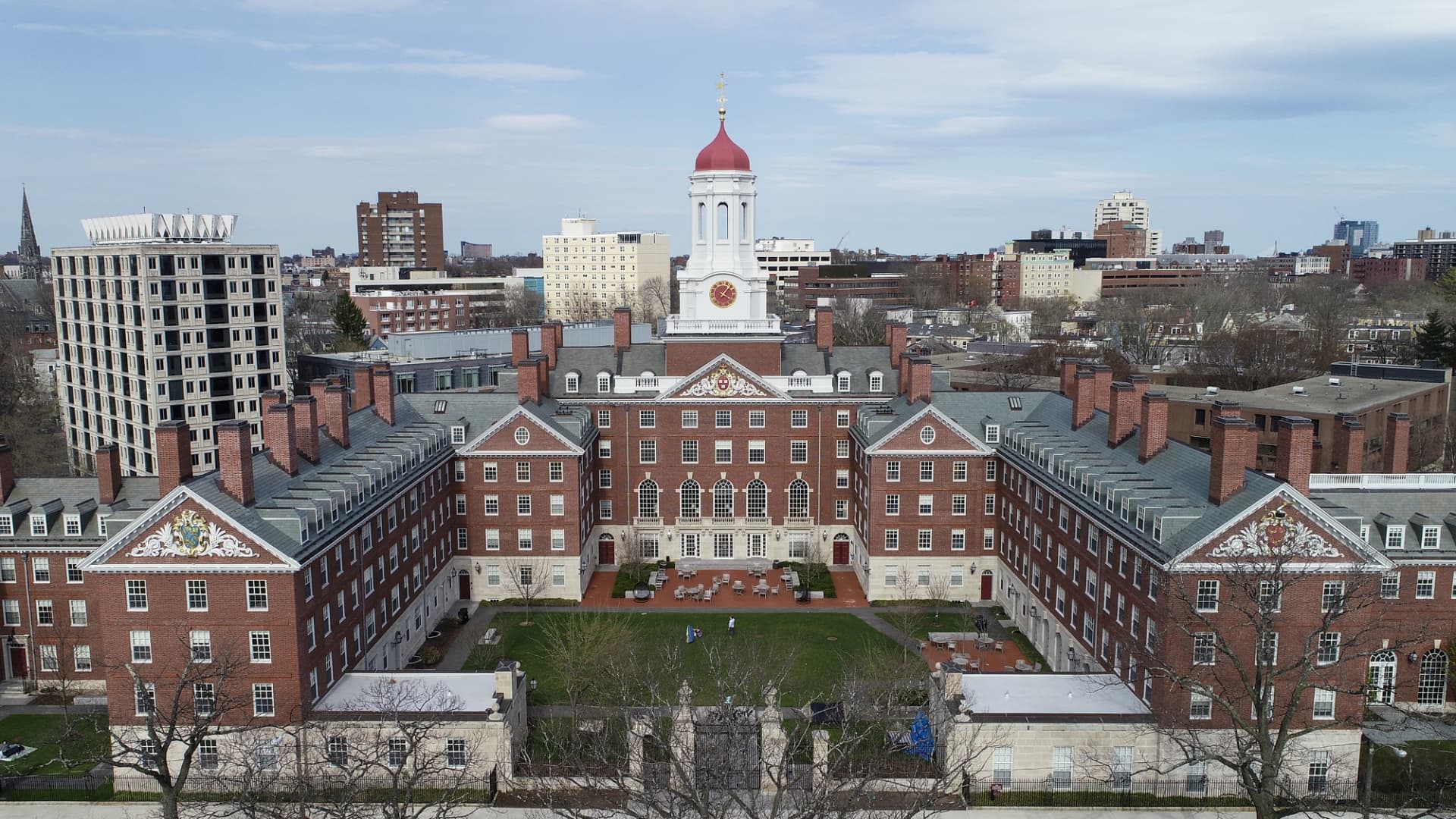

Harvard University is currently embroiled in a significant battle with the Trump administration, which has resulted in the freezing of substantial federal funding, posing a threat to its long-standing financial stability. In a bold move, President Alan Garber announced that the university would not comply with government demands concerning a controversial audit of its students and faculty related to “viewpoint diversity.” With the administration seeking to revoke Harvard’s tax-exempt status—an action that could critically undermine the institution’s financial resources—the situation has garnered intense scrutiny. The university’s remarkable endowment of nearly $52 billion adds a complex layer to the ongoing confrontation and raises vital questions about the implications for higher education in America.
| Article Subheadings |
|---|
| 1) Harvard’s Standoff with the Trump Administration |
| 2) Implications of Revoking Tax-Exempt Status |
| 3) Understanding Harvard’s Massive Endowment |
| 4) The Nature of University Endowments |
| 5) Steps Being Taken to Secure Financial Stability |
Harvard’s Standoff with the Trump Administration
In an unprecedented move, Alan Garber, the president of Harvard University, publicly announced that the institution would not comply with the Trump administration’s demands for a “viewpoint diversity” audit of its students and faculty. This announcement was made on April 14, 2023, amidst a brewing conflict that has escalated over fears related to academic freedom and institutional autonomy. The administration’s request has primarily focused on a purported need to ensure diverse political viewpoints within academic settings, a move that many, including Harvard officials, argue infringes on the First Amendment rights of educational institutions.
In the wake of Harvard’s refusal, the federal government has inflicted immediate financial repercussions by freezing $2.2 billion in multi-year grants and an additional $60 million in multi-year contracts. This drastic measure serves as a stark warning of the financial consequences that could result from non-compliance with the Trump administration’s demands. Furthermore, the internal dynamics at Harvard showcase a university caught between political pressures from the federal government and its commitment to uphold principles of academic freedom.
As the situation continues to develop, Harvard’s historical position as the nation’s wealthiest university further complicates the narrative. The administration views its tax-exempt status as a political tool it can leverage against Harvard, arguing on social media that the institution should be taxed as a “political entity.” Meanwhile, Harvard has steadfastly contended that the government’s actions violate the established norms that have long guaranteed university autonomy.
Implications of Revoking Tax-Exempt Status
The potential revocation of Harvard’s tax-exempt status by the Internal Revenue Service (IRS) poses grave implications not only for the university but also for the broader landscape of higher education in America. If the IRS follows through with this recommendation, the impacts would be severe, affecting the university’s ability to operate effectively and conduct its educational mission. The benefits of being recognized as a nonprofit institution include tax-deductible donations, tax-free investments, and the potential to attract significant philanthropic support.
Recent estimates place the value of Harvard’s tax benefits at over $465 million, a significant annual amount that funds various programs and supports its students. The financial ramifications of losing tax-exempt status would likely flow through to diminished financial aid opportunities, cutbacks in essential medical research programs, and even lost prospects for future innovations. A spokesperson for Harvard indicated that the university believes the government lacks a legal basis for such drastic action, suggesting a commitment to challenge any unlawful attempts to rescind its nonprofit designation.
The IRS has historically been cautious when it comes to challenging universities’ tax status, with very few institutions losing such standing. Such actions typically hinge on whether the institution engages in significant political activities, a claim that the university disputes. A Harvard spokesperson articulated that governmental attempts to undermine its tax status constitute “an unlawful use of this instrument” and warned of the dire consequences such actions could inflict on higher education as a whole.
Understanding Harvard’s Massive Endowment
Central to the ongoing conflict is Harvard’s endowment, valued at nearly $52 billion, which represents an extraordinary asset for funding educational and research initiatives. This endowment is significant not only for its financial heft but also in its implications for the university’s ability to weather financial storms. With an average of $2.1 million in endowed funds per student, Harvard’s financial resources dwarf those of many universities. The historical accumulation of such wealth has legally and socially rendered Harvard a critical player in American higher education.
Established in 1636, Harvard has had nearly four centuries to cultivate its assets, which include robust financial support from donors. Historically, the university has received substantial contributions, including $368 million to its endowment in 2024 alone. While the average donation may be modest, the influential alumni network and their significant philanthropic efforts play a crucial role in bolstering the endowment’s growth.
The management of Harvard’s investments has evolved over the years, with a notable pivot towards adopting riskier assets in pursuit of higher yields. This investment strategy, which began in the early 1950s, has allowed the university to expand its financial base significantly, enabling it to fund expansive research projects and comprehensive student aid programs. Harvard’s latest annual report shows substantial allocations to private equity and hedge funds, diversifying its portfolio beyond traditional bonds and equities.
The Nature of University Endowments
Despite their considerable size, university endowments, including Harvard’s, should not be misconstrued as easily accessible funds. In practical terms, these endowments consist of a myriad of funds dedicated to specific purposes as dictated by donors, such as professors’ salaries, research funding, and student scholarships. Of the universe of approximately 14,600 separate funds that makeup Harvard’s endowment, around 80% are earmarked for specific uses, which complicates the notion of liquidating assets to address immediate budgetary concerns.
In light of this reality, Harvard distributed $2.4 billion last fiscal year, with 70% of these funds directed according to donor stipulations. As noted by experts, navigating the complexities of donor restrictions means university administrators often lack the flexibility to utilize endowment funds as they wish. While some argue that these constraints are impediments, others emphasize that allocated funds primarily support missions that institutions would ordinarily pursue regardless, ensuring that academic standards are maintained.
Steps Being Taken to Secure Financial Stability
In the face of impending financial pressures stemming from the federal funding freeze and potential changes to its tax status, Harvard is taking proactive steps to ensure fiscal stability. Recent reports indicate that the university has temporarily halted hiring and will not admit graduate students who were placed on waiting lists for the upcoming fall semester. These austerity measures signal a serious, calculated response to financial uncertainty.
In addition to expenditure cuts, Harvard has also sought to raise capital through bond issuance. Plans are underway to issue $750 million in taxable bonds due September 2035, complementing the $244 million in tax-exempt bonds issued earlier in the year. The issuing of bonds aligns with a broader trend among leading universities, such as Princeton and Colgate, to augment their financial reserves amid an increasingly challenging higher education climate.
Despite these initiatives, credit rating agency Moody’s retains an optimistic outlook on Harvard’s borrowing capabilities, maintaining its top-tier AAA rating. Nevertheless, the outlook for the broader higher education sector has shifted to negative, reflecting growing concerns about financial literacy and administrative responses to evolving market conditions.
| No. | Key Points |
|---|---|
| 1 | Harvard University is facing a funding freeze from the federal government over non-compliance with the administration’s demands. |
| 2 | The administration has suggested revoking Harvard’s tax-exempt status, which could critically affect its financial resources. |
| 3 | Harvard’s endowment is valued at nearly $52 billion, allowing it significant financial leverage. |
| 4 | University endowments have various restrictions imposed by donors, limiting how the funds can be utilized. |
| 5 | Harvard is implementing measures such as hiring freezes and bond issuance to secure its financial stability. |
Summary
The conflict between Harvard University and the Trump administration underscores the growing tension surrounding academic freedoms and governmental oversight in higher education. As financial pressures mount due to frozen federal funding and potential changes to its tax status, Harvard’s significant endowment and its implications for funding strategies will continue to be at the forefront of this ongoing saga. This volatile situation not only affects one of America’s premier educational institutions but also sets a precedent that could influence the role of financial autonomy in academia as a whole, potentially inviting a broader reevaluation of how universities engage with external political bodies.
Frequently Asked Questions
Question: What is the significance of Harvard’s tax-exempt status?
Harvard’s tax-exempt status provides it with various financial benefits, including tax-deduction eligibility for donors and exemption from certain taxes. Losing this status could severely impact the university’s financial capabilities.
Question: How does Harvard’s endowment compare to other universities?
Harvard’s endowment is among the largest in the world, valued at nearly $52 billion, which allows it substantial financial flexibility compared to many other institutions that may struggle with similar financial pressures.
Question: What measures is Harvard taking in response to potential financial instability?
In light of potential financial instability, Harvard has instituted hiring freezes, denied admissions to certain graduate students, and is exploring revenue generation through bond issuance to bolster its financial position.
