

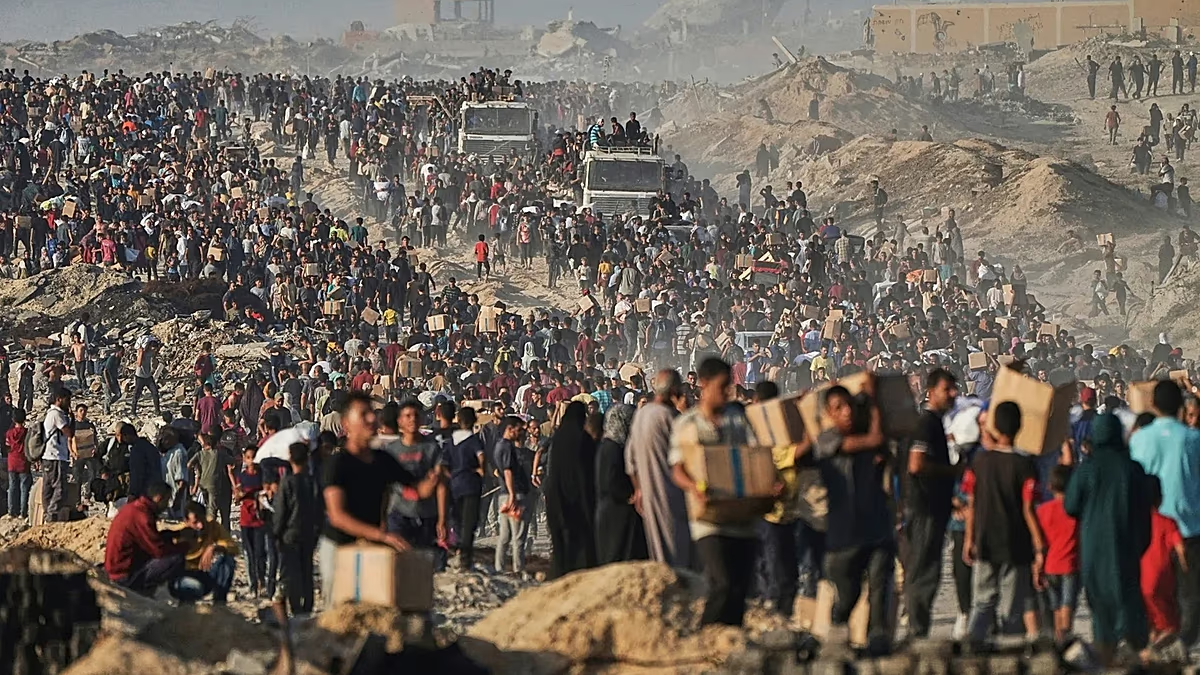

In a pressing move, the United Nations’ humanitarian aid coordination office has announced a significant reduction in its funding appeal for 2026, reflecting a stark decline in support from Western governments. The UN Office for the Coordination of Humanitarian Affairs (UNOCHA) revealed on Monday that they are seeking $33 billion to assist around 135 million individuals grappling with crises stemming from wars, climate disasters, and food shortages. As global challenges intensify, officials express concern over shrinking contributions, calling for both immediate action and long-term adjustments in the face of growing humanitarian needs.
| Article Subheadings |
|---|
| 1) Funding Shortfalls and Humanitarian Needs |
| 2) Specific Appeals and Regional Crises |
| 3) Impact of Global Security and Economic Pressures |
| 4) Calls for Reform in Humanitarian Aid Delivery |
| 5) The Push for Increased Awareness and Action |
Funding Shortfalls and Humanitarian Needs
The UN’s latest appeal highlights a distressing trend in humanitarian funding, as it seeks to gather $33 billion for the upcoming year. The current year’s funding has plummeted to only $15 billion, the lowest level observed in a decade. This drastic drop poses severe implications for millions relying on international support, especially as the number of people in dire need has surged dramatically. As Tom Fletcher, the head of OCHA, pointed out, 2025 marked a year plagued by hunger, health crises, and severe funding cuts, which have hindered humanitarian efforts significantly. Even with substantial global challenges, the appeal indicates that there is an urgent need for renewed commitment from donor nations.
Specific Appeals and Regional Crises
Among the major areas of concern identified by OCHA are the Palestinian territories, Sudan, and Syria. The request for $4.1 billion for the Palestinians aims to address urgent needs amidst ongoing conflict and instability. Similarly, Sudan, facing the world’s largest displacement crisis, is allocated a proposed $2.9 billion, which reflects the desperate situation of millions affected by violence and humanitarian disasters. Additionally, a request for $2.8 billion focuses on Syria, a country still reeling from the consequences of years of civil war. The increasing displacement and suffering in these regions exemplify the urgent demand for a robust international response in humanitarian aid.
Impact of Global Security and Economic Pressures
Donor fatigue has emerged as a critical concern, influenced by various factors including global security threats and economic pressures in wealthier countries. The lingering effects of an assertive Russian stance and lackluster economic performance in Europe have led to strained government budgets. Amidst these circumstances, OCHA officials recognize that many governments face competing priorities that challenge their ability to sustain aid funding. As observed by Fletcher, while defense spending reached $2.7 trillion last year, humanitarian aid funding remains significantly lower. This stark contrast emphasizes the pressing need for a reevaluation of global budget priorities, as humanitarian needs continue to swell.
Calls for Reform in Humanitarian Aid Delivery
In response to current challenges, Fletcher has called for a “radical transformation” in the delivery of humanitarian aid. His remarks about reducing bureaucratic hurdles aim to enhance efficiency and empower local organizations to play a more significant role in response efforts. As the humanitarian landscape evolves, ensuring that aid reaches those most in need remains a priority for OCHA. Fletcher’s calls for reform highlight the importance of adaptability in a field that is often about rapid response to emergencies, maximizing both the impact of funds and the efficacy of aid organizations amidst growing complexities.
The Push for Increased Awareness and Action
Fletcher also emphasizes the critical need to raise awareness about humanitarian crises and push for increased action from the global community. His statements call for collective responsibility and action, insisting that the humanitarian sector cannot afford to be complacent. The images and stories of suffering around the world must be brought to the forefront to galvanize public and government support. He seeks not only to secure funding but also to inspire a renewed determination to assist those in desperate situations, channeling the anguish of humanitarian workers into decisive aid action.
| No. | Key Points |
|---|---|
| 1 | The UN is reducing its funding appeal for 2026 to $33 billion due to decreased contributions. |
| 2 | Specific funding requests target urgent crises in the Palestinian territories, Sudan, and Syria. |
| 3 | Donor fatigue is attributed to global security threats and economic pressures in Europe. |
| 4 | Calls for reform seek to enhance efficiency and empower local organizations for better aid delivery. |
| 5 | Fletcher urges for increased awareness and action to galvanize support for humanitarian crises. |
Summary
The reduction in the UN’s funding appeal for 2026 is a critical indicator of the shifting dynamics in global humanitarian support. As various regions face acute crises characterized by conflict, environmental disasters, and health emergencies, the call for reformed, efficient, and increased aid delivery has never been more urgent. The plea for financial backing reflects the ongoing struggles of millions worldwide depending on external assistance while underscoring the need for collective responsibility in addressing the humanitarian challenges of our time.
Frequently Asked Questions
Question: Why has the UN reduced its funding appeal for 2026?
The UN has reduced its appeal due to a significant drop in support from donor nations, particularly Western governments, which has led to the lowest funding levels in a decade.
Question: Which regions are most affected by the current humanitarian crises?
The most affected regions include the Palestinian territories, Sudan, and Syria, where funding appeals aim to address urgent needs amidst ongoing conflicts and disasters.
Question: What reforms are the UN advocating for in humanitarian aid delivery?
The UN is advocating for a “radical transformation” in aid delivery by reducing bureaucracy, increasing efficiency, and empowering local organizations to improve the effectiveness of humanitarian efforts.
