

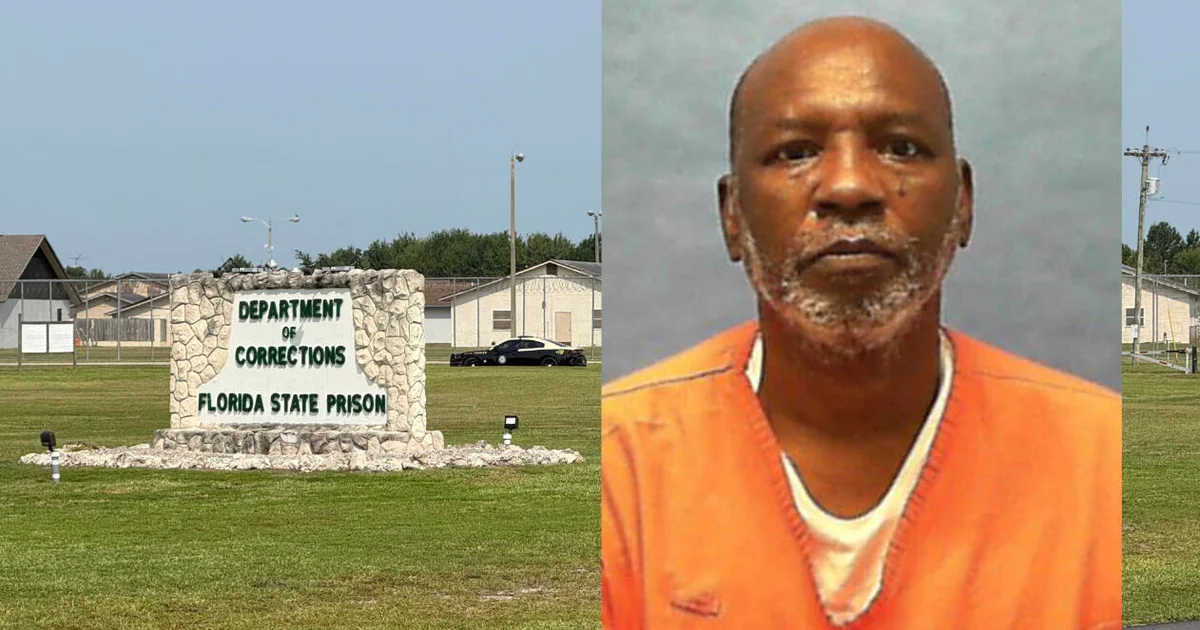

The state of Florida executed its 18th inmate of the year, marking a significant milestone under Governor Ron DeSantis’ administration, known for its rigorous stance on capital punishment. William Reaves, aged 77, faced lethal injection at Florida State Prison for the murder of Indian River County Deputy Richard Raczkowski in 1986. This surge in executions places Florida at the forefront of the national debate surrounding the death penalty, with an aging population of death row inmates posing ethical questions about capital punishment.
| Article Subheadings |
|---|
| 1) Details of the Execution |
| 2) The Crime at the Heart of the Case |
| 3) Legal Proceedings and Appeals |
| 4) Florida’s Position on Capital Punishment |
| 5) Future of Executions in Florida |
Details of the Execution
On Tuesday evening, Florida executed William Reaves by lethal injection at 6:12 p.m. He was pronounced dead shortly after the procedure began. Reports indicated that after the injection was administered, Reaves exhibited signs of breathing before succumbing to the lethal drugs. The execution occurred at Florida State Prison, located near the town of Starke, underscoring the state’s aggressive approach to capital punishment under Governor Ron DeSantis.
Reaves’ execution represents Florida’s increased rate of capital punishment, which has gained attention nationwide. In 2022, the state recorded an unprecedented 19 executions, demonstrating its position as a leader in the implementation of the death penalty, outpacing other states. If an upcoming execution scheduled for November proceeds, Florida may tie with last year’s figure, raising broader questions about the future trajectory of capital punishment in the state.
The Crime at the Heart of the Case
The crime for which Reaves was convicted dates back to September 1986, when he shot Deputy Richard Raczkowski following a struggle over a firearm at a Vero Beach convenience store. Court records reveal that Raczkowski responded to a 911 call that Reaves had placed from a payphone, setting the stage for the tragic encounter. During an interaction between the two men, Reaves’ gun fell from his clothing, leading to a violent struggle for possession.
In the course of this altercation, Reaves regained control of the firearm, ultimately shooting Raczkowski four times as the deputy attempted to escape the dangerous situation. Despite efforts to save him, Raczkowski succumbed to his injuries, resulting in Reaves’ conviction for first-degree murder. Notably, the severity of the crime and the circumstances surrounding it have considerably colored public opinion on capital punishment in Florida, particularly concerning cases involving law enforcement officers.
Legal Proceedings and Appeals
Reaves faced a lengthy legal battle following his initial conviction in 1987. That conviction was later overturned by the Florida Supreme Court due to a conflict of interest in the prosecution, necessitating a retrial. In 1992, he was again convicted and sentenced to death, a decision that faced numerous appeals over the years. The Florida Supreme Court ultimately rejected Reaves’ final appeals just days before the execution, reflecting the steep obstacles faced by inmates seeking to overturn death sentences.
Reaves’ legal team argued against the lethality of Florida’s execution methods, which utilize a three-drug protocol comprising a sedative, a paralytic agent, and a drug intended to halt heart function. The court has previously dismissed challenges to this method, contrasting it with some other states that have opted for a single-drug approach. Additionally, defense attorneys brought forward evidence about Reaves’ veteran status, claiming his mental health was severely affected by service in the Vietnam War. The argument was bolstered by over 100 veterans who rallied in opposition to the execution, sending a letter to Governor DeSantis seeking clemency.
Florida’s Position on Capital Punishment
Florida has emerged as a national leader in respect to the frequency and number of executions carried out in recent years. The state’s legislative framework for capital punishment facilitates an aggressive application of the death penalty, emphasizing a commitment to what is termed “justice” for victims and their families. Governor DeSantis has publicly stated his intention to address the grievances of those awaiting justice, framing the execution of inmates as a necessary part of the process to heal the wounds left by violent crimes.
In the broader context of national trends, the state stands out not only for its sheer number of executions but also for the demographic profile of its death-row inmates. Reaves’ execution was particularly notable as he was the eighth inmate over age 70 to be executed in 2023, bringing attention to the age dynamics within the death penalty debate. Critics highlight ethical concerns surrounding executing elderly inmates, often questioning the morality and efficacy of capital punishment in an era of staunch discussions about criminal justice reform.
Future of Executions in Florida
Looking ahead, Florida’s execution protocol remains a focal point of controversy. An upcoming execution scheduled for November involving inmate Jesse Guardado, convicted of a drug-related homicide in 2004, may further elevate discussions regarding the trajectory of capital punishment in the state. The state recorded more than half of the 31 executions nationwide this year, signifying its prominent role in the conversation surrounding the death penalty in America.
As Florida approaches a potential record for executions in a single year, advocates for reform continue to press for changes to the system. They argue for a reevaluation of the death penalty’s wider societal impact and its alignment with evolving standards of human rights. The state’s leanings, characterized by a tough-on-crime perspective, indicate that the pace of executions may not only continue but potentially accelerate as policy decisions are made in the wake of Governor DeSantis’ tenure.
| No. | Key Points |
|---|---|
| 1 | Florida executed its 18th inmate, William Reaves, this year on Tuesday. |
| 2 | Reaves was convicted for the 1986 murder of Deputy Richard Raczkowski. |
| 3 | The execution noted the increasing rate of capital punishment in Florida. |
| 4 | Legal challenges to Reaves’ execution were largely unsuccessful. |
| 5 | Florida’s approach to capital punishment continues to generate national discussion and concern. |
Summary
The execution of William Reaves reflects the intensified application of the death penalty in Florida under Governor Ron DeSantis. With Florida setting a record number of executions, critical conversations arise regarding the ethics of capital punishment, especially concerning elderly inmates, and the larger implications for criminal justice reform in the state. As Florida continues to grapple with its death penalty policies, the outcome of future executions will likely shape ongoing national discussions about the future of capital punishment in America.
Frequently Asked Questions
Question: What is the basis for executing inmates in Florida?
In Florida, inmates may be sentenced to death for first-degree murder and other severe crimes, with the execution method typically being lethal injection.
Question: How many executions has Florida carried out in the year so far?
As of now, Florida has executed 18 inmates this year, placing it at the forefront of capital punishment in the United States.
Question: What challenges have been raised concerning the execution methods used in Florida?
Concerns have been raised about the three-drug lethal injection protocol used in Florida, with arguments surrounding its humane application and challenges to its efficacy, contrasting with states that utilize a single-drug method.
