

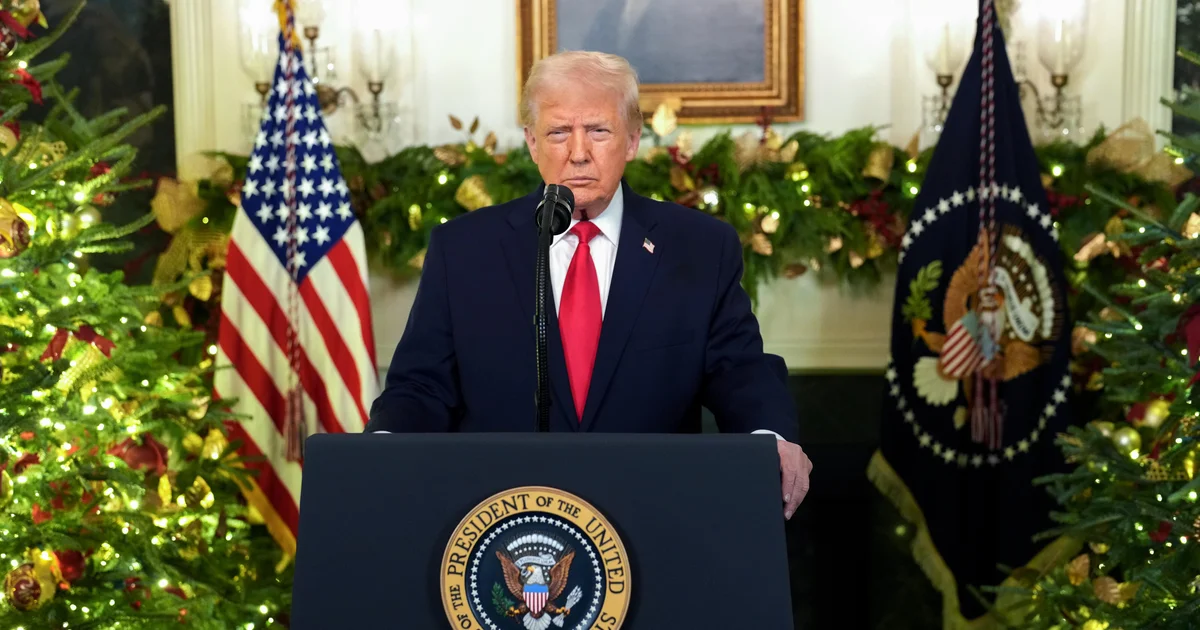

In a series of recent announcements, former President Donald Trump has outlined his views on various pressing national issues, including military support, economic conditions, and immigration. He proposed a new initiative dubbed “warrior dividends,” which promises $1,776 payments to military members ahead of the Christmas holiday. Additionally, he criticized President Joe Biden for his economic policies, claiming they have led the country to the “brink of ruin.” These statements come as Trump gears up for another presidential campaign, using these predictions and proposals to rally his base.
This latest speech also marked an unusual moment in Trump’s political routine, as year-end addresses have been uncommon for him. A recent poll indicates that public sentiment regarding economic conditions remains largely negative, despite Trump’s assertions that he is turning the tide. As such, both supporters and detractors are closely analyzing these statements as they hold significant implications for the upcoming election season.
| Article Subheadings |
|---|
| 1) Trump Unveils “Warrior Dividends” Amid Economic Turmoil |
| 2) Accusations Against Biden: Economy at the “Brink of Ruin” |
| 3) Immigration: Claims of Improved Border Security |
| 4) Year-End Speech: A Departure from Trump’s Norms |
| 5) Public Sentiment and Polling Insights |
Trump Unveils “Warrior Dividends” Amid Economic Turmoil
During his recent address, Donald Trump announced a plan to provide military service members with $1,776 as a form of “warrior dividends.” This initiative aims to show gratitude towards the armed forces around the festive season. The payments are set to be funded, in part, through revenue generated from tariffs. This announcement precedes the Christmas holiday, aiming to bolster the spirits of military families during this time of community and giving.
The proposed $1,776 payments serve multiple purposes: they express support for military personnel, serve as a political message to veterans, and provide a potential financial boost to families ahead of the holidays. Critics, however, may question the financial sustainability of this initiative, particularly in light of national debt and budgetary constraints. The context of this proposal is essential, as it reflects ongoing debates regarding military funding and support in a country still grappling with repercussions from economic challenges.
Accusations Against Biden: Economy at the “Brink of Ruin”
Trump did not shy away from criticizing President Joe Biden during his speech, asserting that Democrats have pushed the country close to economic despair. Citing high inflation rates, Trump claimed credit for having reduced prices during his administration, fundamentally attributing inflation’s recent trends to Biden’s policies. In reality, industry analysts point out that inflation has seen a 3% year-over-year change, substantially lower than the peak of 9.1% observed in 2022.
This claim serves as a hinge in Trump’s narrative strategy as he prepares for the upcoming election. By framing Biden’s presidency as economically detrimental, he hopes to galvanize his base and remind voters of the perceived economic stability under his leadership. Trump’s perspective underscores a critical element of his political strategy: using economic narratives to rally voter support, even amidst complex economic data that suggest fluctuations rather than straightforward declines.
Immigration: Claims of Improved Border Security
In his address, Trump also focused on immigration, characterizing his leadership as a turning point for American border security. According to Trump, he inherited a chaotic situation, describing it as “the worst border anywhere in the world.” He referenced the dramatic changes during his administration, claiming that he transformed this chaotic scenario into one of success. The former president’s narrative suggests significant strides in immigration policy during his tenure, which he claims were abruptly reversed under Biden’s administration.
The remarks on border security are pivotal, directly addressing concerns that resonate with segments of the electorate who value strict immigration control. Trump’s use of strong imagery and contrasting leadership styles serves to frame the immigration debate in stark terms, simplifying it for his audience. Following various policies aimed at curbing illegal immigration, his assertions serve not just as self-promotion but also as a litmus test for voters on a fundamentally polarized issue.
Year-End Speech: A Departure from Trump’s Norms
The timing and delivery of Trump’s recent speech are noteworthy, marking a rare occurrence in his communication style. Traditionally, year-end addresses have been infrequent for Trump, and his last formal address occurred in late November. The decision to engage in a year-end speech could indicate a strategic pivot, as Trump aims to present a comprehensive narrative to his supporters as he prepares for another run at the presidency.
Statements made during this speech suggest Trump seeks to capitalize on social and economic issues that could resonate with voters. His choice of delivering such an address demonstrates an awareness of the importance of wrapping up the year with strong messaging, particularly as he seeks to reassure his base of supporters heading into an election year.
Public Sentiment and Polling Insights
Polling data reveals a complex picture of public sentiment regarding economic conditions under Biden’s presidency. Throughout 2025, surveys indicated that approximately three-quarters of Americans believe their incomes are not keeping pace with rising inflation. Meanwhile, opinions on the overall condition of the economy remain tepid, with only 32% of respondents rating it as good. Furthermore, although half of Americans reported their financial situations positively, an equal number identified their conditions as poor, contributing to a mixed public perception of economic progress.
These findings are critical for both political parties as they shape campaign strategies. The discrepancy between subjective feelings about personal finance versus objective economic indicators points to the complexities in voter behavior. As the public appears increasingly dissatisfied, it raises critical questions regarding how voters may translate their experiences into votes in the 2026 elections. Understanding these sentiments will be essential for both Trump and Biden’s ongoing campaign messages.
| No. | Key Points |
|---|---|
| 1 | Trump proposes “$1,776 “warrior dividends” for military personnel ahead of the holidays. |
| 2 | Accusations against Biden include claims of leading the economy to the “brink of ruin.” |
| 3 | Trump boasts of significant improvements in border security during his administration. |
| 4 | Year-end speeches are uncommon for Trump, and this address marks a strategic pivot. |
| 5 | Polling reflects ongoing public dissatisfaction with the economy, with divided sentiments on personal finances. |
Summary
The recent declarations by Donald Trump highlight a multifaceted strategy as he prepares for another presidential campaign. By advocating for military members through proposed monetary support, criticizing the current administration’s economic performance, and showcasing past immigration policies, Trump aims to solidify his position among supporters. As polls indicate continued public dissatisfaction with financial conditions, Trump’s statements and proposals could resonate significantly with voters as the political landscape shifts in preparation for the upcoming election. Understanding the implications of these articulations will be pivotal for assessing both Trump’s political future and the broader U.S. electoral landscape.
Frequently Asked Questions
Question: What are “warrior dividends”?
“Warrior dividends” refer to the proposed $1,776 payments to military service members announced by former President Donald Trump, intended to show support before the holiday season.
Question: How does Trump view the current economic situation?
Trump believes that President Biden’s policies have brought the economy to the “brink of ruin,” attributing rising inflation and economic woes to his Democratic predecessors.
Question: Why are year-end speeches significant in political discourse?
Year-end speeches provide leaders an opportunity to reflect on achievements and challenges of the past year, solidifying their narratives and setting the stage for future objectives, particularly as elections approach.
