

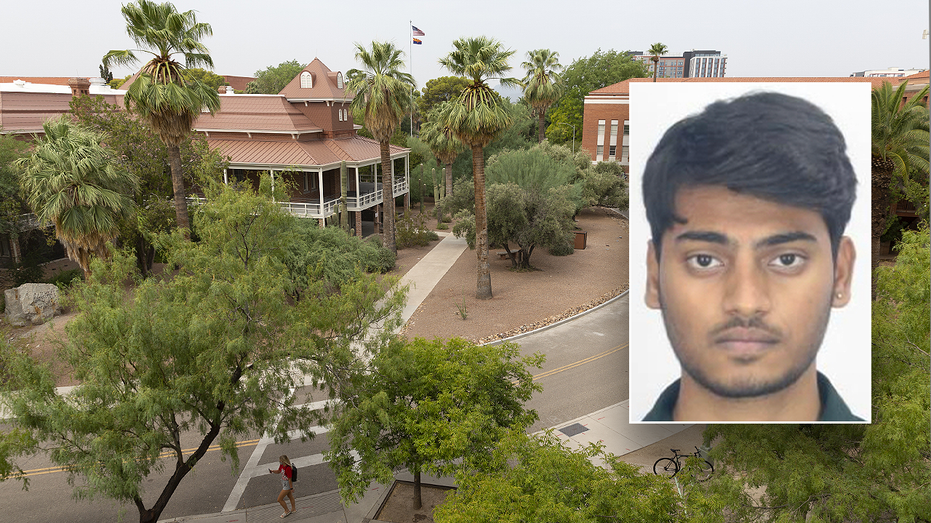

An Indian national accused of murdering his 19-year-old girlfriend in Tucson, Arizona, entered the United States on an F-1 student visa, according to federal law enforcement sources. Tucson police allege that Varun Batchigari, 20, strangled Julissa Salazar inside an off-campus apartment near the University of Arizona. Authorities say he later attempted to leave the country for India and was arrested in Germany after the FBI alerted local officials. U.S. authorities are now seeking his extradition to Arizona.
Investigators also allege that Batchigari took Salazar’s cellphone and credit cards and sent messages to her mother while pretending to be Salazar. The messages prompted relatives to request a welfare check, during which officers found Salazar’s body. The allegations remain subject to court proceedings.
| 1) | Visa entry and international arrest |
| 2) | Tucson murder investigation |
| 3) | Alleged efforts to conceal the killing |
| 4) | Prior allegations and personal difficulties |
| 5) | Immigration status and next steps |
Visa entry and international arrest
Federal law enforcement sources said Batchigari entered the United States through Los Angeles International Airport on Jan. 8, 2024, using an F-1 student visa. After the alleged killing in Tucson, authorities say he boarded a flight from Houston headed for India, with a planned layover in Germany.
The FBI notified German authorities, who arrested Batchigari during the journey. U.S. officials are working to return him to Arizona, where he faces a first-degree murder charge. The international arrest has made extradition a central part of the case’s next phase.
Tucson murder investigation
Tucson police allege that Batchigari killed Salazar, 19, on a Thursday inside an apartment located off campus near the University of Arizona. A felony warrant describes an investigation into an increasingly troubled relationship and alleged violence before Salazar’s death.
Police became involved after Salazar’s family grew concerned about messages sent from her phone. The family requested a welfare check, and officers discovered her body at the apartment. Batchigari has been charged with first-degree murder, but the allegations have not been established at trial.
Alleged efforts to conceal the killing
Investigators allege that Batchigari took Salazar’s cellphone and credit cards after the killing. They say he then used the phone to send multiple text messages to Salazar’s mother while posing as the victim.
According to the account in the warrant, the messages did not reassure Salazar’s family and instead increased their concern. That concern led to the welfare check that brought officers to the apartment. Authorities have characterized the alleged conduct as an effort to hide the crime and delay discovery of Salazar’s death.
Prior allegations and personal difficulties
The warrant reportedly includes witness accounts of earlier violent behavior. One witness alleged that Batchigari sexually assaulted her at a Halloween party, although she did not report the allegation to police. The warrant also refers to a previous assault case investigated by the University of Arizona Police Department.
Witnesses told investigators that Salazar moved out after relationship problems in late 2025 and planned to end the relationship because of alleged domestic violence. Another account said Batchigari had been expelled from the university after a fight, later lost his job and experienced financial problems. These allegations form part of the background described by investigators, not separate convictions established in the murder case.
Immigration status and next steps
Federal records reviewed by law enforcement reportedly showed that Batchigari remained in lawful immigration status when Salazar was allegedly killed, despite reports of his expulsion from the university. F-1 students generally must remain enrolled to preserve their status, and the reason his status had not changed was not clear.
The Tucson Police Department said it had no additional information beyond what had already been released publicly. The University of Arizona was contacted for information about Batchigari’s enrollment history and whether Salazar was a student, but no immediate response was reported. Extradition proceedings and the Arizona criminal case will determine how the allegations proceed.
| Number | Key Point |
|---|---|
| 1 | Batchigari entered the U.S. through Los Angeles on an F-1 student visa in January 2024. |
| 2 | He faces a first-degree murder charge in Salazar’s death. |
| 3 | Authorities say he was arrested in Germany after allegedly traveling toward India. |
| 4 | Investigators allege he used Salazar’s phone to send misleading messages. |
| 5 | U.S. authorities are seeking his extradition to Arizona. |
Summary
The case involves a first-degree murder accusation, an alleged attempt to leave the country and questions surrounding the defendant’s student-visa status. Investigators say family concerns over messages from Salazar’s phone led police to discover her body. Batchigari’s arrest in Germany places extradition proceedings before the Arizona criminal case can advance fully.
Frequently Asked Questions
Who is accused in the case?
Varun Batchigari, 20, an Indian national, is accused of killing his girlfriend, Julissa Salazar, in Tucson.
What charge does he face?
He faces a first-degree murder charge in Arizona. The charge is an allegation and must be resolved through court proceedings.
Where was Batchigari arrested?
He was arrested in Germany after allegedly traveling from Houston toward India with a layover there.
What happens next?
U.S. authorities are seeking his extradition to Arizona, where the murder case is expected to proceed once he is returned.
