

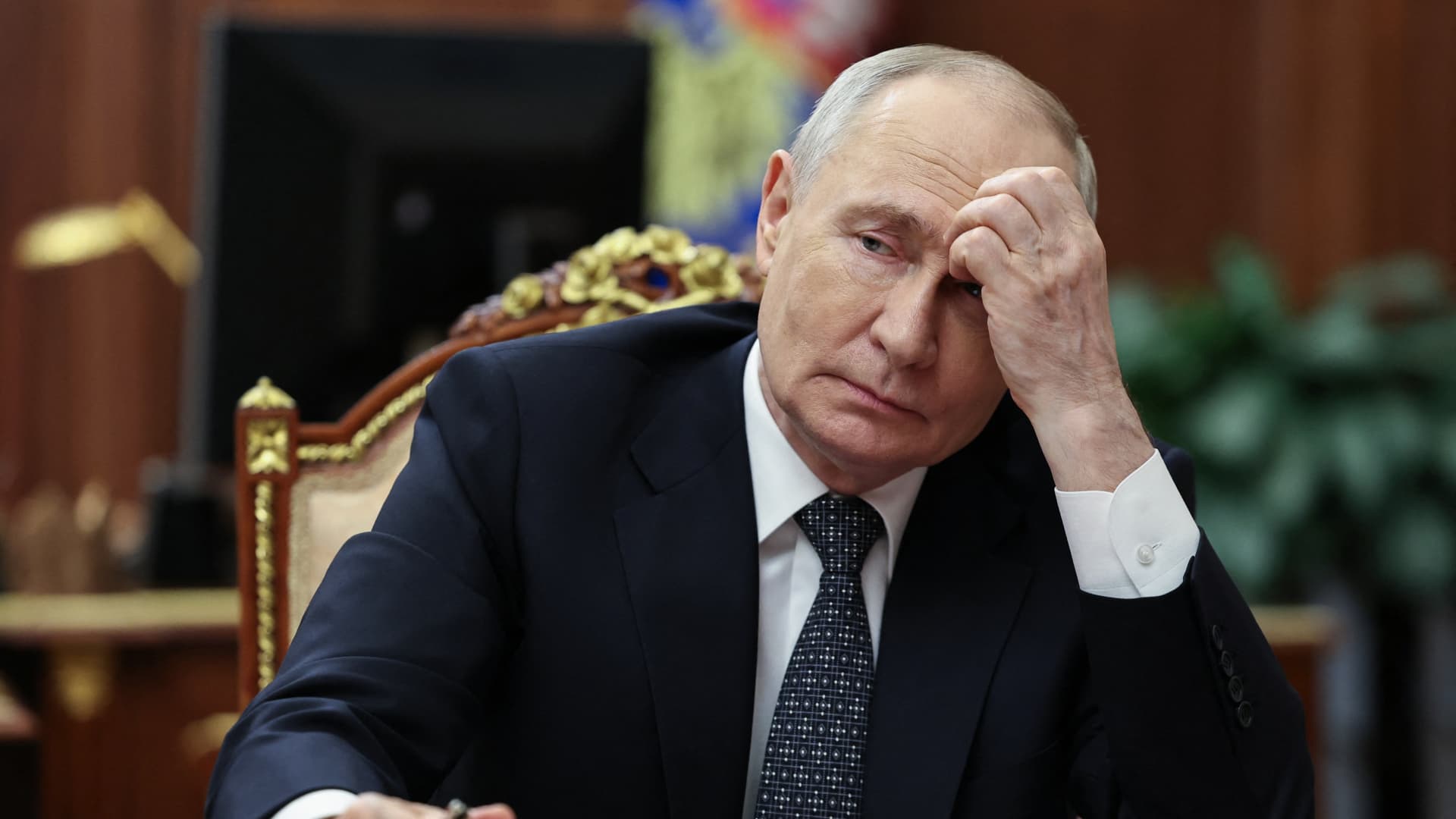

As Russia battles through a protracted war with Ukraine that has lasted over four years, its economy has taken on a dual nature, characterized by prosperity for some while amplifying challenges for others. Experts indicate that while the economy has shown slight growth due to government military spending and elevated oil prices, significant underlying issues remain. Analysts warn that despite this moderate growth, the strain could push Russia’s leadership, particularly President Vladimir Putin, toward further escalation of the conflict rather than retreating.
| Article Subheadings |
|---|
| 1) Current Status of Russia’s Economy Amid Ongoing Conflict |
| 2) Economic Metrics Highlighting the War’s Impact |
| 3) Consumer Behavior Adjustments Reflect Economic Realities |
| 4) Government Strategies to Address Economic Challenges |
| 5) War Dynamics and Economic Downturn |
Current Status of Russia’s Economy Amid Ongoing Conflict
As of mid-2026, Russia’s economy exhibits a complex state of affairs, having undergone significant transformations due to the ongoing war with Ukraine. Despite the armed conflict, recent data indicates that the country’s gross domestic product (GDP) grew by 1.3% year-on-year in the second quarter, marking the first instance of economic growth since 2023. However, this modest recovery is tempered by concerns surrounding the sustainability of this growth. Analysts like Alex Kolyandr, director at the Eurasia Group, point out that fluctuations in economic health are misleading due to reliance on military spending and the volatility of global energy prices.
The war’s persistent toll has defined the economic landscape, creating a divided reality where specific sectors, notably military production, flourish while the broader economy grapples with inflation and a shrinking non-military sector. Kolyandr emphasizes that those fortunate enough to be employed in thriving sectors enjoy stability, contrasting sharply with the challenges faced by others. This uneven economic recovery raises questions about its future trajectory amid ongoing warfare.
Economic Metrics Highlighting the War’s Impact
Proponents of the Russian economic model often cite specific metrics to support their claims of resilience. The current government spending focused on military initiatives, alongside a temporary surge in oil and gas prices, has resulted in positive GDP figures. Yet financial analysts stress that the most revealing indicators of economic health are deficit levels and inflation rates. Charles Lichfield, director of economic foresight at the Atlantic Council, notes that Russia is set to double its budget deficit from previous years, a troubling sign given the country’s reliance on fluctuating oil revenues.
The first half of 2026 marked a significant decline in oil and gas revenues, decreasing to just 64% compared to the same timeframe two years prior. The imposition of Western sanctions, alongside concentrated Ukrainian drone strikes targeting refineries, has brought increased instability to the energy sector. Furthermore, although inflation has reportedly stabilized around the government’s target rate of 4%, maintaining this figure in the face of ongoing internal and external pressures poses an ongoing challenge.
Consumer Behavior Adjustments Reflect Economic Realities
The economic strain faced by many Russian citizens has driven shifts in consumer behavior, with recent reports indicating a notable shift toward more affordable food products. Renowned retailer X5 Group revealed that cookie consumption has surged nearly two and a half times as consumers opt for less costly indulgences instead of pricier confectionery items. This behavior reflects a sense of frugality among citizens, aiming to adjust their expenditures amid an uncertain economic landscape.
Such consumer trends illuminate the broader economic realities in Russia, highlighting how citizens are adapting to financial stress. The increased consumption of basic goods denotes an underlying concern regarding personal financial security, which may further influence retail strategies and the overall market landscape. Analysts argue that a shift towards lower-cost brands and products indicates a level of caution among consumers that could impact retail sales forecasts.
Government Strategies to Address Economic Challenges
In response to to mounting economic challenges, the Russian government has applied various strategies aimed at bolstering fiscal stability. Economic experts, like Lichfield, suggest alternative measures that could help alleviate budget deficits, such as increasing taxes on oil and gas corporations or exploring international borrowing avenues. Additionally, the possibility of utilizing the central bank’s extensive reserves, mainly untapped due to international sanctions, remains a potential option for addressing fiscal shortcomings.
Russia’s central bank is estimated to hold approximately $300 billion in reserves, which could, in theory, be mobilized to bridge financial gaps. While such a move could alleviate immediate fiscal issues, experts caution it may also undermine confidence in the central bank’s commitment towards curbing inflationary pressures, creating further turbulence in Russia’s economic landscape.
War Dynamics and Economic Downturn
Despite the government’s efforts, analysts remain skeptical that economic factors will significantly affect the ongoing war with Ukraine. Elina Ribakova, a senior fellow at the Peterson Institute for International Economics, indicated that even with increased financial pressure, Russia’s economy is unlikely to relent in its aggression. The conflict continues to draw resources and attention, with current oil price conditions providing Moscow with a temporary cushion to maintain its military endeavors.
Ribakova emphasizes, “It has to get much more dire” for the Kremlin to consider scaling back its wartime operations. Elevated oil prices have brought a temporary sense of economic stability, deflecting attention away from the harsher realities of domestic financial strain. Against the backdrop of global conflicts and fluctuating energy prices, Russia’s decision-making appears tethered to long-term strategies rather than immediate economic concerns.
| No. | Key Points |
|---|---|
| 1 | Russia’s economy has displayed slight growth despite ongoing warfare, with a reported increase in GDP in the second quarter of 2026. |
| 2 | Increased military spending and higher oil prices are cited as contributing factors to this growth; however, systemic economic issues persist. |
| 3 | Consumer habits have shifted, with a notable increase in lower-cost product consumption indicating economic pressures on citizens. |
| 4 | Experts recommend strategies including increased taxation on energy companies and utilizing central bank reserves to manage fiscal challenges. |
| 5 | Despite financial difficulties, analysts suggest the current economic situation is unlikely to deter Russia from continuing its military actions in Ukraine. |
Summary
Russia’s economy stands as a paradox in 2026, revealing growth metrics overshadowed by deep-seated economic vulnerabilities. While some sectors thrive, a growing humanitarian and financial strain on civilians underscores a troubling undercurrent. The increasingly precarious fiscal situation raises critical questions regarding the Kremlin’s military strategies and overall stability, hinting at a potential escalation of conflict rather than resolution. The shape of Russia’s economy amid ongoing warfare is not just a reflection of current metrics; it embodies the challenges and choices facing a nation at a critical juncture of its history.
Frequently Asked Questions
Question: What are the indicators of Russia’s economic health?
Key indicators include GDP growth, inflation rates, and the national budget deficit. Recent data suggests Russia’s GDP has shown growth, yet substantial challenges remain regarding inflation and deficits.
Question: How have consumer behaviors changed in Russia recently?
Shifts towards low-cost food products have been noted, with a significant increase in cookie consumption as consumers seek more affordable indulgences amid economic pressures.
Question: What impact could economic conditions have on Russia’s ongoing war?
Despite raising economic concerns, analysts generally believe these conditions are unlikely to influence Russia’s decision to continue its military actions in Ukraine, especially with buoyant oil prices providing short-term stability.
