

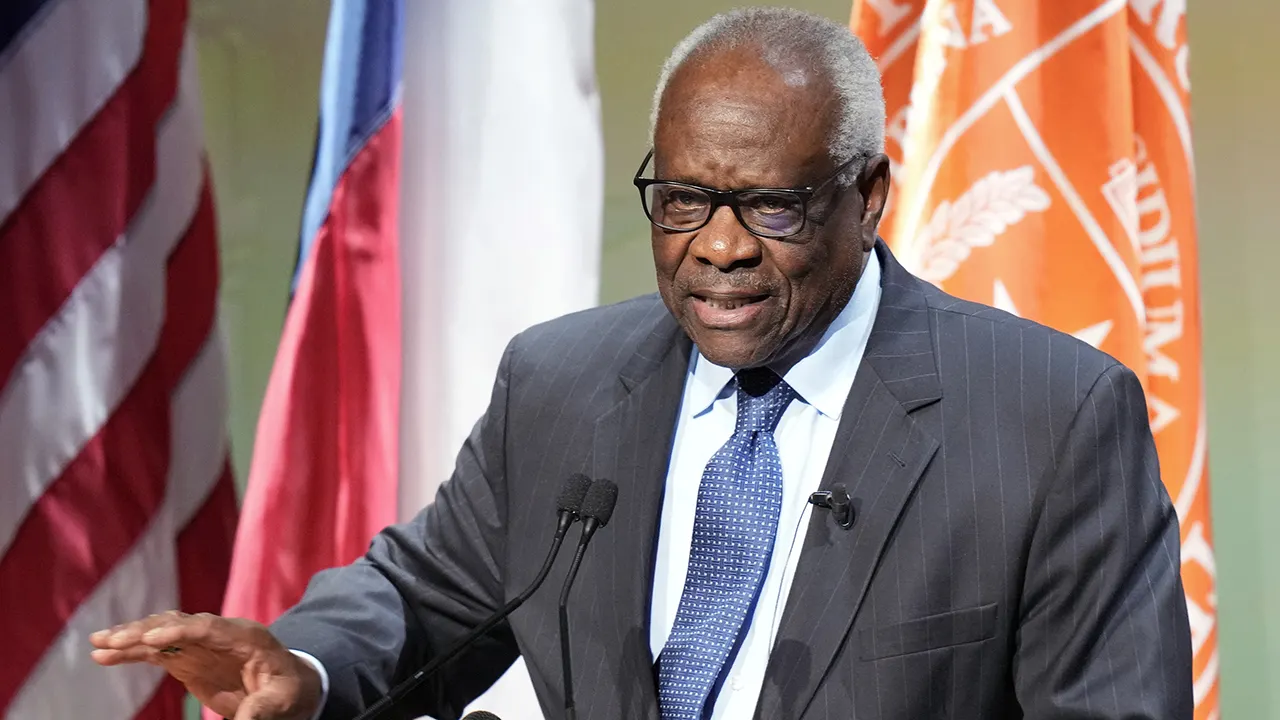

In a thought-provoking interview with Senator Ted Cruz, Supreme Court Justice Clarence Thomas expressed his views on the political expectations placed on Black Americans, arguing against the notion that race dictates political beliefs. During the conversation on the “Verdict with Ted Cruz” podcast, Thomas drew from his personal experiences and observations to challenge common stereotypes about Black identity and political alignment. His reflections shed light on issues of autonomy, racial identity, and the limitations that society imposes due to one’s skin color.
| Article Subheadings |
|---|
| 1) Justice Thomas on Individualism and Race |
| 2) Early Life and Influences |
| 3) Transformation in Political Beliefs |
| 4) The Intersection of Race and Ideas |
| 5) Implications for Future Discourse |
Justice Thomas on Individualism and Race
During his recent appearance on Ted Cruz’s podcast, Clarence Thomas articulated a powerful perspective on the limitations placed on individual thought within racial contexts. He responded to Senator Cruz’s remarks by stating, “We had this saying [that there are] only two things I have to do: stay Black and die.” This statement encapsulates his belief that societal expectations often box in the individual identity of Black Americans, compelling them to conform to predefined political narratives correlated with their race. He expounded on this stance by declaring that he refuses to be tethered to the ideologies that others expect him to embrace solely based on his racial background. Thomas’s rejection of what he describes as a “deterministic view” illustrates his commitment to the notion of individualism over racial allegiance.
Early Life and Influences
Born in segregated Georgia, Thomas’s upbringing played a crucial role in shaping his views and principles. Growing up in a humble wooden shack in Pin Point, Georgia, and later residing with his grandparents in Savannah, he faced the harsh realities of racial segregation firsthand. His early years were steeped in cultural heritage and linguistic nuances; he spoke Gullah, a creole language that reflects the blend of African and American cultures. Through interviews, Thomas has expressed that his experiences with poverty and segregation have instilled a strong sense of resilience and individualism within him. He noted the profound impact of his grandfather, who emphasized self-reliance and inner strength, elements that continue to influence his thinking today.
Transformation in Political Beliefs
Thomas initially embraced leftist ideologies during his college years at the College of the Holy Cross, where he admired leaders such as Malcolm X and participated in establishing the school’s Black Student Union. However, a pivotal moment in his life occurred during a 1970 protest in Cambridge, Massachusetts, which turned violent. Reflecting on this experience, Thomas felt a profound sense of shame that propelled him towards a re-evaluation of his beliefs. He transitioned from left-wing activism to conservative ideals, embracing the values espoused by his grandfather and fostering a commitment to self-sufficiency and personal accountability. This transformation highlights the dynamic nature of political identity among individuals, suggesting that personal experiences can significantly alter one’s ideological path.
The Intersection of Race and Ideas
Thomas drew parallels between the historical restrictions of segregation and contemporary efforts to dictate which ideas Black Americans should adopt. He pointed out that just as it would be unfair to limit access to spaces such as the Savannah Public Library based on race, it is equally unjust to restrict the intellectual pursuits of individuals based on their ethnic background. He posed provocative questions during the interview: “What if they had certain books marked that were off limits to me? That would be wrong.” His arguments challenge the mindset that certain political ideologies are inherently tied to race, advocating instead for a broader acceptance of diversity in thought and opinion within minority communities.
Implications for Future Discourse
Thomas’s assertions come at a critical juncture for American society, where conversations about race and politics are increasingly polarized. His beliefs raise questions about freedom of thought, the nature of racial identity, and how these elements play together in the fabric of American democracy. By emphasizing the importance of individual choice and rejecting predefined political alignments, Thomas invites a reconsideration of how society views race and political agency. This discourse could serve to reinforce the idea that acknowledging an individual’s right to a personal political identity can contribute to enriching societal dialogue, rather than limiting it to narrow, race-based frameworks.
| No. | Key Points |
|---|---|
| 1 | Justice Thomas opposes the notion that race should determine political beliefs. |
| 2 | His upbringing in segregated Georgia influenced his views on race and individualism. |
| 3 | A pivotal event in college caused a shift from leftist to conservative beliefs. |
| 4 | Thomas compares societal restrictions on thought to past segregation practices. |
| 5 | He advocates for diverse viewpoints, emphasizing the importance of individual choice in politics. |
Summary
Justice Clarence Thomas’s interview with Senator Cruz offers an insightful exploration of race, individuality, and the expectations placed upon Black Americans. By rejecting the idea that one’s political views should be dictated by race, Thomas champions personal agency and the freedom to explore varied ideologies. His experiences shed light on the ongoing dialogues about race in America, reinforcing the notion that individual backgrounds and choices significantly shape one’s beliefs, thereby enriching the national discourse.
Frequently Asked Questions
Question: What does Justice Thomas believe about the political expectations of Black Americans?
Justice Thomas believes that Black Americans should not be bound by expectations that dictate their political perspectives based solely on their race. He advocates for individual thought and personal agency.
Question: How did Justice Thomas’s upbringing influence his views?
Thomas’s upbringing in segregated Georgia and his experiences with poverty instilled in him a strong sense of resilience and the value of individualism, shaping his perspective on race and ideology.
Question: What was the turning point in Thomas’s political beliefs during his youth?
A pivotal moment for Thomas occurred during a violent protest in college, prompting him to reevaluate his leftist views and eventually embrace conservatism, informed by the teachings of his grandfather.
