

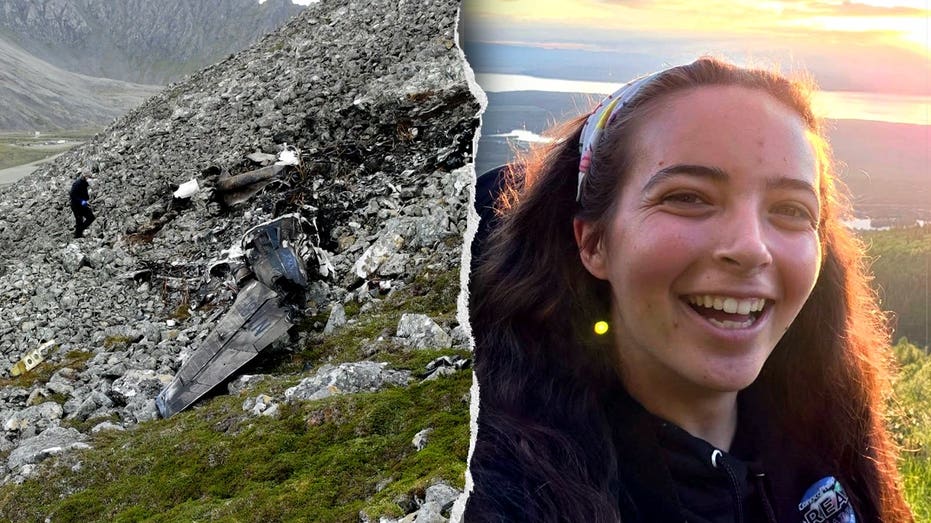

Second Lt. Leah R. Borsich, a 23-year-old Air Force officer, is being remembered as a positive leader after dying in a charter plane crash in remote western Alaska. The Cessna 441 crashed near the Cape Newenham Long Range Radar Site Airport on Aug. 20, killing all eight people aboard. The aircraft was making its second approach to a gravel runway in heavy fog when it lost contact with officials.
Borsich served as a project programmer with the 611th Civil Engineer Squadron at Joint Base Elmendorf-Richardson. The other victims included two pilots, two U.S. Army Corps of Engineers employees and four contractors supporting a military project.
| 1) | Air Force officer remembered for leadership |
| 2) | Crash occurred during a fog-shrouded approach |
| 3) | Eight victims included military and contractor personnel |
| 4) | Cape Newenham supports Alaska’s remote radar network |
| 5) | Investigators continue to determine the cause |
Air Force officer remembered for leadership
The Air Force identified Borsich on Aug. 24 after notifying her family. She worked as a project programmer with the 611th Civil Engineer Squadron at Joint Base Elmendorf-Richardson, supporting infrastructure and engineering work in Alaska.
Col. Timothy Meerstein, commander of the Pacific Air Forces Regional Support Center, described Borsich as a positive leader whose energy and enthusiasm strengthened her command. He said she led with professionalism, compassion and purpose.
“She made a lasting impact on our team, and we are grateful for her service and commitment to our nation,” Meerstein said.
Crash occurred during a fog-shrouded approach
The twin-engine Cessna 441, also known as a Cessna Conquest, departed Ted Stevens Anchorage International Airport for Cape Newenham on Aug. 20. It crashed at about 12:15 p.m. near the remote airport, approximately 450 miles west-southwest of Anchorage.
According to Clint Johnson, the National Transportation Safety Board’s Alaska region chief, the pilots were flying by instruments because they could not see the runway. They abandoned an initial landing attempt because of poor visibility, then crashed during a second approach.
An observation system near the airport recorded fog and visibility of about 10 miles shortly before the crash. About 15 minutes later, visibility had dropped to less than a quarter-mile, according to the National Weather Service. Search teams later located fragmented wreckage.
Eight victims included military and contractor personnel
All eight people aboard died. In addition to Borsich, the passengers included two U.S. Army Corps of Engineers employees and four contractors. Two contractors worked for Calista Brice, a company providing construction, engineering and logistics services in remote areas.
The Army Corps said its employees were members of a project delivery team traveling to a project site in support of the Air Force. The pilots were employees of Security Aviation, the Anchorage-based charter company that operated the flight.
Military leaders said the victims were dedicated professionals carrying out a vital mission in a demanding environment.
Cape Newenham supports Alaska’s remote radar network
The crash occurred near the Cape Newenham Long Range Radar Site Airport in western Alaska. Cape Newenham is part of a network of isolated radar installations that monitors aircraft operating in Alaska’s airspace and along the state’s borders.
The site was built in the 1950s as part of an early-warning system developed during the Cold War. It now helps monitor air activity off Alaska’s coast in the direction of Russia, North Korea and China. Its remote location and changing weather can make transportation and operations demanding.
Lt. Gen. Robert Davis, who leads Alaskan Command, the Alaskan North American Aerospace Defense Command Region and Eleventh Air Force, called the crash a devastating loss.
Investigators continue to determine the cause
The NTSB is investigating the aircraft’s approach sequence, weather conditions, visibility and operational factors. Officials have not announced a final cause, and available information does not establish whether any single factor led to the accident.
Security Aviation said it was cooperating with investigators and would not speculate about what happened. The company expressed condolences to the victims’ families and thanked military personnel, the Alaska Rescue Coordination Center and search-and-recovery teams.
| Number | Key Point |
|---|---|
| 1 | Second Lt. Leah R. Borsich was 23 and served with the 611th Civil Engineer Squadron. |
| 2 | The Cessna 441 crashed near Cape Newenham on Aug. 20 during a second approach in heavy fog. |
| 3 | All eight people aboard, including military personnel, contractors and two pilots, were killed. |
| 4 | The Cape Newenham site is part of Alaska’s remote air surveillance network. |
| 5 | The NTSB is investigating, and officials have not determined the crash’s final cause. |
Summary
The Alaska crash killed eight people involved in military and support operations, including Air Force officer Leah R. Borsich. Her commanders remembered her leadership, compassion and commitment to service. Investigators are reviewing the second approach, worsening visibility and other factors.
Frequently Asked Questions
Who was Leah R. Borsich?
Borsich was a 23-year-old Air Force second lieutenant and project programmer with the 611th Civil Engineer Squadron at Joint Base Elmendorf-Richardson.
When and where did the plane crash?
The Cessna 441 crashed on Aug. 20 at about 12:15 p.m. near the Cape Newenham Long Range Radar Site Airport in western Alaska.
What is known about the weather?
Visibility deteriorated sharply, falling from about 10 miles shortly before the crash to less than a quarter-mile approximately 15 minutes later.
Who is investigating the crash?
The National Transportation Safety Board is investigating the accident. Officials have not announced a final cause.
