

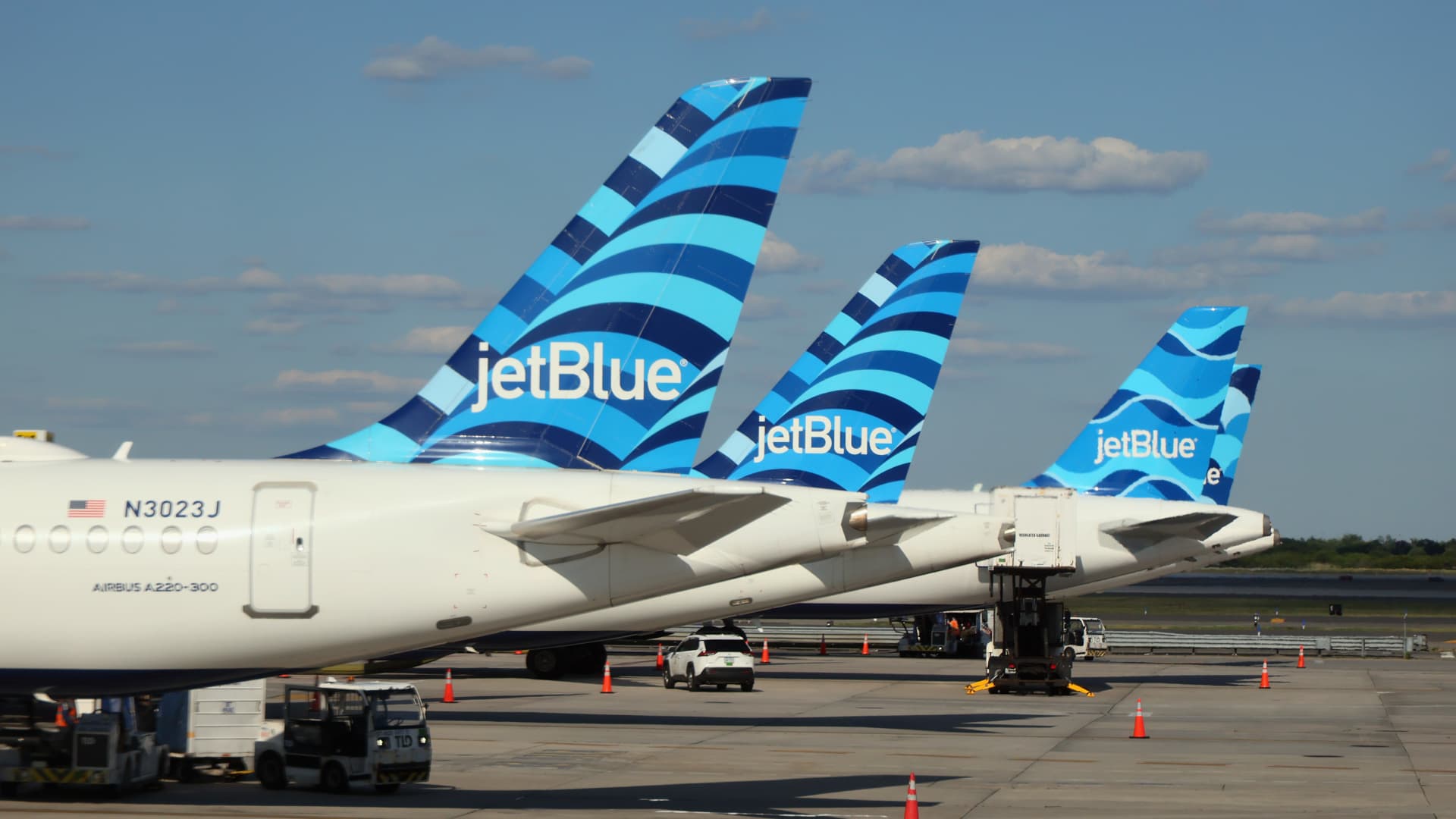

JetBlue Airways has announced a larger financial loss in the third quarter compared to the same period last year, primarily due to rising fuel costs. Despite this setback, the airline sees strong travel demand as a mitigating factor, with its stock experiencing a notable increase in after-hours trading. As JetBlue prepares for an upcoming earnings call to discuss its long-term strategies, analysts are closely monitoring its recovery plan following sustained losses.
| Article Subheadings |
|---|
| 1) JetBlue’s Financial Performance in Q3 |
| 2) Impact of Fuel Prices on Operations |
| 3) Future Outlook and Strategic Plans |
| 4) Competitive Landscape in the Airline Industry |
| 5) Financial Position and Capital Management |
JetBlue’s Financial Performance in Q3
In its earnings report for the third quarter, JetBlue Airways disclosed a net loss of $257 million for the three months ending September 30, which is a significant increase from the $143 million loss reported for the same period in the previous year. The increase in losses can be attributed to various factors, including escalating operational costs and market conditions that affected the overall financial performance of the airline. JetBlue’s operational loss reflects broader challenges faced by many airlines this year, as the industry continues to recover from the effects of the pandemic.
The airline’s revenue for the third quarter reached $2.81 billion, slightly below Wall Street expectations of $2.82 billion. This performance has raised concerns among investors regarding the company’s profitability prospects as it navigates a competitive marketplace. Even with the significant losses reported, JetBlue executives expressed optimism about demand, with CEO Joanna Geraghty emphasizing that robust travel demand and rising yields have driven income beyond initial forecasts, aiding in recapturing some of the increased fuel costs.
Impact of Fuel Prices on Operations
Fuel costs have surged dramatically, rising 61% to $868 million in the latest quarter, which has notably affected JetBlue’s financial outcomes. The airline industry has struggled with increased fuel expenses, which have become a primary concern as competition intensifies and operational costs mount. Higher fuel prices result in a direct impact on ticket prices, which have risen by over 20% this year; however, demand for travel has remained resilient, according to JetBlue. The airline’s average fare increased from $205.67 in the prior year to $245.11 in the most recent quarter.
In a statement, CEO Joanna Geraghty emphasized the airline’s intention to maintain a focus on capacity growth in regions like Fort Lauderdale, where operational performance remains strong despite challenging market conditions. “Resilient demand and strong yields drove revenue well ahead of our initial expectations,” she stated, indicating a careful balance between managing costs and meeting traveler expectations. Despite rising fares, the company has observed that travelers continue to fly, suggesting that demand may not be adversely affected by increased ticket prices.
Future Outlook and Strategic Plans
As JetBlue navigates through this period of financial challenge, the management is committed to a turnaround strategy that includes revenue growth initiatives and operational efficiency improvements. The airline has focused on investments in premium seating options, including a newly introduced domestic first-class section that is now available for customers. Such moves are expected to enhance the airline’s appeal and bolster revenue streams.
Additional strategies involve improving customer experience and increasing operational capacity in high-demand markets. The earnings call is anticipated to clarify additional steps the company plans to take to achieve profitability, including operational adjustments and cost-cutting measures. The airline expects improvements in their financial performance could lay a foundation to reach positive earnings per share and free cash flow by 2028, as indicated by CFO Ursula Hurley.
Competitive Landscape in the Airline Industry
JetBlue operates in a challenging competitive landscape where it contends with larger rivals such as American Airlines and other legacy carriers that have greater resources and operational advantages. Attempts to expand via acquisitions, such as their pursuit of acquiring Spirit Airlines, have faced substantial regulatory hurdles leading to setbacks in growth strategies. A federal judge ruled that the acquisition was anticompetitive, thus blocking the deal that JetBlue hoped would enhance its market position and operational efficiency against larger competitors.
Furthermore, a sought-after partnership with American Airlines was also halted by legal challenges, restricting JetBlue’s ability to collaborate with a major player in the airline industry. Currently, the airline has established a partnership with United Airlines which aims to enhance their network and competitive position, especially within highly congested routes in the Northeast United States.
Financial Position and Capital Management
JetBlue has reported a liquidity position of $2.2 billion as of the close of the third quarter, which provides a critical buffer as it continues to work toward stabilizing its financial health and improving profitability. The airline holds an unencumbered asset base valued at $7 billion, which includes aircraft and engines worth approximately $2.8 billion. Despite being in a precarious financial position characterized by an accumulating debt of $8.4 billion, JetBlue executives assert that they have the financing mechanisms to traverse the current economic climate successfully.
The management’s approach emphasizes disciplined cost execution and meticulous capital management. Ursula Hurley stated that the company feels confident in its current liquidity and plans to establish firm liquidity bridges to foster sustainable growth and return to profit in the years to come. The focus remains on transitioning to a phase of positive cash flow while carefully navigating existing economic hurdles.
| No. | Key Points |
|---|---|
| 1 | JetBlue reported a net loss of $257 million in Q3 2023, a marked increase compared to the previous year. |
| 2 | The airline’s fuel costs surged by 61% to $868 million, contributing significantly to financial challenges. |
| 3 | Despite higher fares, travel demand remains strong, with average ticket prices increasing to $245.11. |
| 4 | JetBlue is focused on a turnaround plan that includes boosting revenue through premium seating and enhanced customer experience. |
| 5 | The company faces significant competition and reported difficulties with past acquisitions and partnerships that hinder growth potential. |
Summary
In conclusion, JetBlue Airways faces a challenging financial landscape characterized by increasing operational costs and competitive pressures. The airline’s reported losses in the third quarter represent the significant hurdles it must overcome to achieve sustained profitability. However, the management’s focus on strong travel demand, strategic investments, and operational improvements illustrate their commitment to navigating these challenges effectively. As the company prepares for its upcoming earnings call, investors and analysts alike will be keenly observing JetBlue’s plans for recovery and future growth in a post-pandemic travel environment.
Frequently Asked Questions
Question: What factors contributed to JetBlue’s larger loss in Q3 2023?
The larger loss can be attributed primarily to a significant increase in fuel costs, which surged by 61% compared to the previous year, alongside other operational challenges amid a highly competitive market.
Question: How is JetBlue planning to improve its financial outlook?
JetBlue is implementing a turnaround strategy focused on increasing revenue, including investments in premium seating, alongside cost-cutting and efficient capital management to return to profitability.
Question: What challenges does JetBlue face in the competitive airline industry?
JetBlue faces intense competition from larger rivals, struggles with regulatory obstacles impacting growth strategies, and must navigate rising operational costs while working to sustain traveler demand.
