

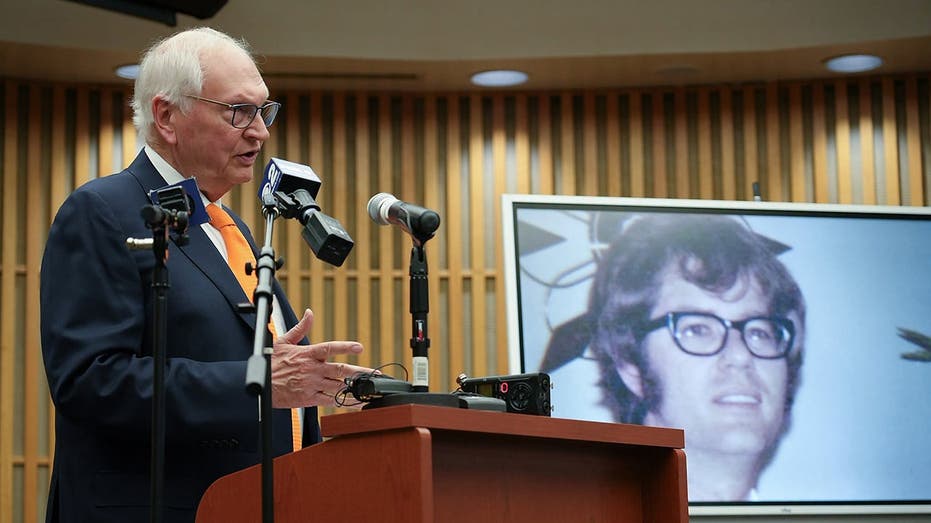

Authorities have identified a man known for decades as the “Unknown Wanderer” as Dr. Mathew Francis Betkouski, an organic chemist who died from cyanide poisoning in an Idaho church in 1982. The development has renewed attention on the unsolved Chicago Tylenol murders, in which seven people died after taking cyanide-laced capsules. Investigators have not named Betkouski as a suspect and said they cannot place him in Chicago when the poisonings occurred. A forensic psychiatrist involved in the original investigation said the new evidence could represent “very likely closure.”
| 1) | The unidentified man found in Boise |
| 2) | How investigators established his identity |
| 3) | Evidence that drew attention to the Tylenol case |
| 4) | What remains unproven about Betkouski’s movements |
| 5) | Investigators seek additional information |
The unidentified man found in Boise
On Dec. 4, 1982, an unidentified man walked into Sacred Heart Catholic Church in Boise, Idaho. Authorities determined that he had died from cyanide poisoning, but he carried no identification and his fingerprints did not produce a match. He became known as the “Unknown Wanderer,” and his identity remained unresolved for more than four decades.
Investigators later determined that the man was Mathew Francis Betkouski, an organic chemist. His death occurred only weeks after seven people in the Chicago area died in the September 1982 Tylenol poisonings, creating renewed interest in whether the two events might be connected.
How investigators established his identity
The breakthrough came after investigators examined nearly 30 keys found among the unidentified man’s belongings. One key was traced to Jacksonville, Florida, where Betkouski had lived. That lead helped investigators build a possible identity from records and family connections.
DNA recovered from a wallet associated with the man was compared with a sample from his brother. The genetic comparison established that the unidentified man was Betkouski. Authorities then reviewed his background, possessions and known movements to determine whether he might have had any connection to the Tylenol killings.
Evidence that drew attention to the Tylenol case
Investigators said former colleagues remembered Betkouski discussing cyanide, poison and the idea of a “perfect crime.” Another scientist recalled him saying that poison could be placed into over-the-counter capsules. Authorities also found a map of Chicago and a bottle of sodium cyanide among belongings stored at his family’s home in Los Angeles.
The type of poison found in those belongings was not the same as the potassium cyanide used in the Tylenol deaths. Investigators also found photographs showing that Betkouski had visited Chicago, but concluded they were probably taken in December 1981, not during the poisonings in September 1982.
Forensic psychiatrist Dr. Park Dietz, who was consulted during the original investigation, reviewed the evidence gathered about Betkouski. He said groups of forensic psychiatrists, psychologists and criminal profilers who were shown the information anonymously overwhelmingly regarded Betkouski as a viable suspect.
“It’s an extraordinary thing to have been around at the beginning in 1982, and now today in 2026, to see very likely closure,” Dietz said.
What remains unproven about Betkouski’s movements
Despite the circumstantial evidence, authorities said they have not established that Betkouski was in Chicago during the final week of September 1982. Investigators are therefore not identifying him as a suspect in the murders. The available photographs and other records do not show that he returned to Chicago when the poisonings occurred.
Betkouski disappeared from his home in New Mexico on Oct. 15, 1982. He was found dead in Boise seven weeks later, apparently after changing his appearance. The timing of his disappearance and death has prompted questions, but it does not by itself establish responsibility for the Chicago poisonings.
Investigators seek additional information
The Idaho investigation has been referred to law enforcement agencies in the Chicago area. Authorities are seeking information about Betkouski’s movements, communications and activities during 1982, particularly around the period before and after the Tylenol deaths.
Ada County Sheriff Matt Clifford said the investigation remains active. The request for information reflects the distinction between identifying a person who may fit elements of a criminal profile and proving that person committed a specific crime.
“This isn’t over,” Clifford said.
| Number | Key Point |
|---|---|
| 1 | The “Unknown Wanderer” was identified as organic chemist Mathew Francis Betkouski. |
| 2 | Betkouski died from cyanide poisoning in Boise in December 1982. |
| 3 | His background and possessions prompted questions about the Tylenol murders. |
| 4 | Authorities have not placed him in Chicago during the poisonings or named him as a suspect. |
| 5 | Investigators continue seeking information about his movements and communications in 1982. |
Summary
The identification of Betkouski resolves the long-standing “Unknown Wanderer” mystery and provides investigators with a potentially relevant figure in the broader history of the 1982 Tylenol murders. However, the available evidence remains circumstantial, and authorities have not established that he was in Chicago or committed the poisonings. Further information about his activities and communications may be needed before any definitive conclusion can be reached.
Frequently Asked Questions
Who was the “Unknown Wanderer”?
The unidentified man was Dr. Mathew Francis Betkouski, an organic chemist who died from cyanide poisoning in an Idaho church in December 1982.
Was Betkouski identified as the Tylenol murders suspect?
No. Investigators have not named him as a suspect and said they cannot place him in Chicago during the September 1982 poisonings.
Why did investigators examine a possible connection?
Former colleagues recalled Betkouski discussing cyanide, poison and capsules, while investigators found a Chicago map and sodium cyanide among family belongings. Those details raised questions but did not prove a connection.
