

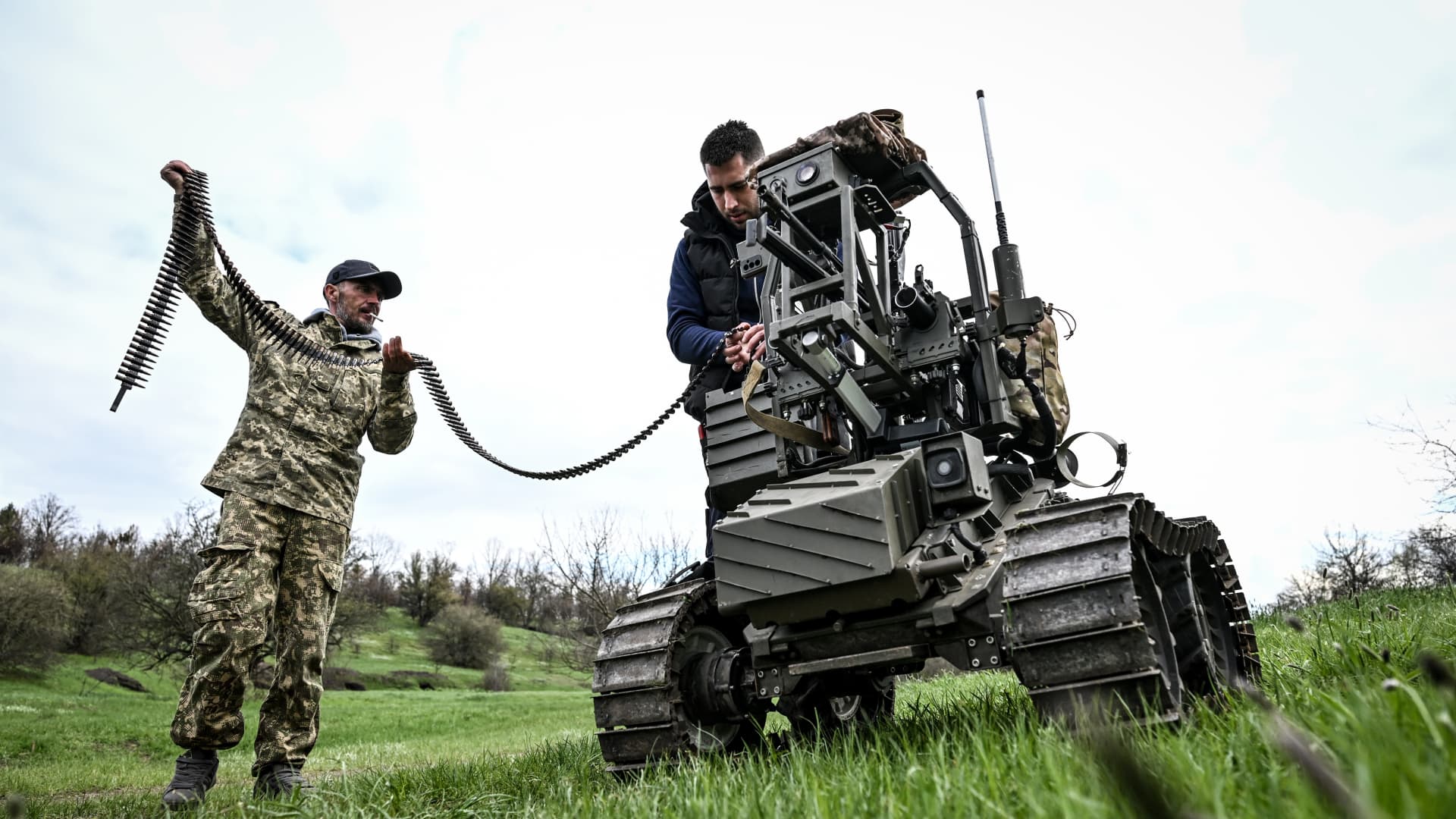

In a significant military development, the Ukrainian forces have launched a surprise robotic offensive dubbed “Operation Vivaldi,” in the eastern Donbas region, resulting in notable territorial gains against Russian military forces. The ongoing operation, which began in May 2026, has reportedly turned the tide in Ukraine’s favor, reclaiming a total of 176 square kilometers of territory that had been under Russian control. Security experts suggest that this revolutionary approach, involving drones and ground robots, not only demonstrates Ukraine’s strategic innovation but also poses a serious challenge to Russian President Vladimir Putin’s ambitions in the region.
| Article Subheadings |
|---|
| 1) Ukrainian Robotic Offensive Unveiled |
| 2) The Implications of Operation Vivaldi |
| 3) International Reactions and Strategic Impacts |
| 4) The Role of Technology in Modern Warfare |
| 5) Future of Ukraine’s Military Strategy |
Ukrainian Robotic Offensive Unveiled
The launch of “Operation Vivaldi” marks a pivotal moment for the Ukrainian military as it has integrated advanced robotic technology into its combat strategies. Initiated in May 2026, this operation has brought together the Third Army Corps and various unmanned aerial and ground vehicles to conduct ground assaults against Russian forces. The introduction of drones and remote-controlled robots behind enemy lines, particularly around the strategic location of Lyman in northern Donetsk Oblast, took Russian troops by surprise, offering the Ukrainian forces a tactical edge.
The operation represents a remarkable adaptation to modern warfare tactics where the isolation of personnel risks has been effectively addressed. Ukrainian forces have used this innovative approach to maintain pressure on the Russian military while ensuring the safety of their own troops. Reports indicate that as of late September, Operation Vivaldi has successfully liberated 176 square kilometers of territory, showcasing an impressive operational capability.
Ukrainian Brigadier-General Andrii Biletskyi noted the significant success, with the operation inflicting substantial losses on Russian forces, including over two thousand soldiers and capturing more than two hundred personnel. This shift in combat strategy underscores the effective use of technology, providing both offensive operations and insights into the evolving nature of conflict between two nations.
The Implications of Operation Vivaldi
Security experts have indicated that the offensive offers critical implications for both Ukraine and Russia. According to defense analyst Patrick Bolder, the operation serves as a ‘big bloody nose’ to President Putin’s plans of seizing the Donbas region. With Russian ambitions thwarted, the current military landscape has implemented a shift in the dynamics of territory control.
The success of Operation Vivaldi suggests that Ukrainian forces may have established defensible positions, complicating future Russian attempts to achieve their territorial goals. This capability not only impacts the immediate conflict but sends a message to Moscow about the resilience and resourcefulness of the Ukrainian military.
A representative from the Ukrainian Defense Ministry emphasized that while the operation has achieved significant results, there remains a long way to go in ensuring lasting peace and stability in the region. The advances made are crucial, but experts caution that they should not be misconstrued as a conclusive victory over Russian forces. Rather, they signify the continuing challenges that lie ahead.
International Reactions and Strategic Impacts
The Ukrainian counteroffensive, characterized by its use of robots and drones, has garnered attention from military analysts and defense scholars worldwide. The operation has been hailed as both an innovative response to the Russian threat and a potential model for future warfare by various military strategists.
Officials from Kyiv, including President Volodymyr Zelenskyy, have underscored the significance of recent successes, affirming that the Third Army Corps’ achievements are vital to Ukraine’s overall defense strategy. In a recent social media statement, Zelenskyy praised the integration of robotic systems, emphasizing the importance of reducing human risk in combat situations while increasing operational efficiency.
Furthermore, experts argue that these advancements send signals to Ukraine’s allies and support networks about the changing dynamics of warfare. As strategic partners observe the efficacy of these technologies, expectations for cooperative military support and technological transfers may also evolve. The implications may not be limited to just Ukraine, as various nations consider the lessons learned in this ongoing conflict.
The Role of Technology in Modern Warfare
The integration of robotic and unmanned systems in the battlefield is reshaping the fundamental principles of military engagements. According to Serhii Kuzan, Chairman of the Ukrainian Security and Cooperation Center, robotic systems have notably reduced risk to personnel and changed the logic of combat. Instead of deploying large battalions, the implementation of remotely-controlled platforms has allowed for strategic military operations with fewer men on the ground.
Kuzan highlights that Ukraine’s experience with Operation Vivaldi showcases a paradigm shift in how conflicts are conducted, suggesting that the systematic replacement of traditional soldiers with robotic forces is gradually becoming the norm in modern conflicts. The utilization of these systems permits significant tactical maneuvers while diminishing the risk to human life, resulting in a more calculated and effective fighting style.
This growing reliance on technology has implications beyond the battlefield, as it also influences military training, procurement strategies, and the overall approach to national defense. Nations may increasingly look to integrate similar technologies, making advancements in robotics and artificial intelligence key components of their military infrastructure.
Future of Ukraine’s Military Strategy
As Ukraine continues to navigate the complexities of its military engagement with Russia, the adoption of robotic and technological systems is poised to play a pivotal role in its future defense strategy. The ongoing conflicts give rise to new operational methods that prioritize efficiency, intelligence, and safety for personnel.
Ukrainian leadership has signaled its commitment to enlarging the scope of robotic systems within its military framework. In a statement, President Zelenskyy articulated a vision where drones and unmanned vehicles increasingly undertake high-risk operations previously reserved for soldiers. This strategic shift denotes a broader acknowledgment of the effectiveness of these systems in contemporary warfare.
Looking ahead, as Russian military objectives evolve, it will be critical for Ukraine to adapt its strategies accordingly. The dynamic nature of military conflict necessitates constant evaluation and re-evaluation of tactics, especially with technology as a driving force in the battlefield landscape. Ukraine’s resolve to maintain operational agility and resourcefulness will undoubtedly influence its future trajectory in the ongoing conflict.
| No. | Key Points |
|---|---|
| 1 | Operation Vivaldi has successfully reclaimed 176 square kilometers of territory. |
| 2 | The integration of robotic systems is reshaping modern warfare tactics. |
| 3 | Expert analysis indicates these operations serve as a strategic challenge to Russian ambitions. |
| 4 | Ukrainian President Zelenskyy advocates for increased use of drones and robots in combat. |
| 5 | Ukraine’s counteroffensive strategies have implications for international military dynamics. |
Summary
The developments surrounding Operation Vivaldi signify a turning point in the ongoing conflict, demonstrating how the integration of robotic and technological innovations is fostering new dynamics on the battlefield. As Ukraine continues to regroup and strategize, the utilization of such technology presents both immediate tactical advantages and long-term implications for the region’s security landscape. The outcomes of this counteroffensive not only challenge Russian aspirations but may also dictate how future conflicts are approached across the globe.
Frequently Asked Questions
Question: What is Operation Vivaldi?
Operation Vivaldi is a Ukrainian military counteroffensive launched in May 2026 aimed at reclaiming territory lost to Russian forces, integrating innovative robotic and drone technologies.
Question: How has technology influenced Ukraine’s military strategy?
Technology, specifically the use of robotic systems and drones, has allowed Ukraine to execute strategies with minimized personnel and altered traditional combat dynamics, enhancing overall operational effectiveness.
Question: What are the implications of Ukraine’s recent military successes?
The recent successes not only bolster Ukraine’s military positioning but also send a clear message to Russia and its allies about the effectiveness and resilience of Ukraine’s military capabilities in ongoing conflicts.
