

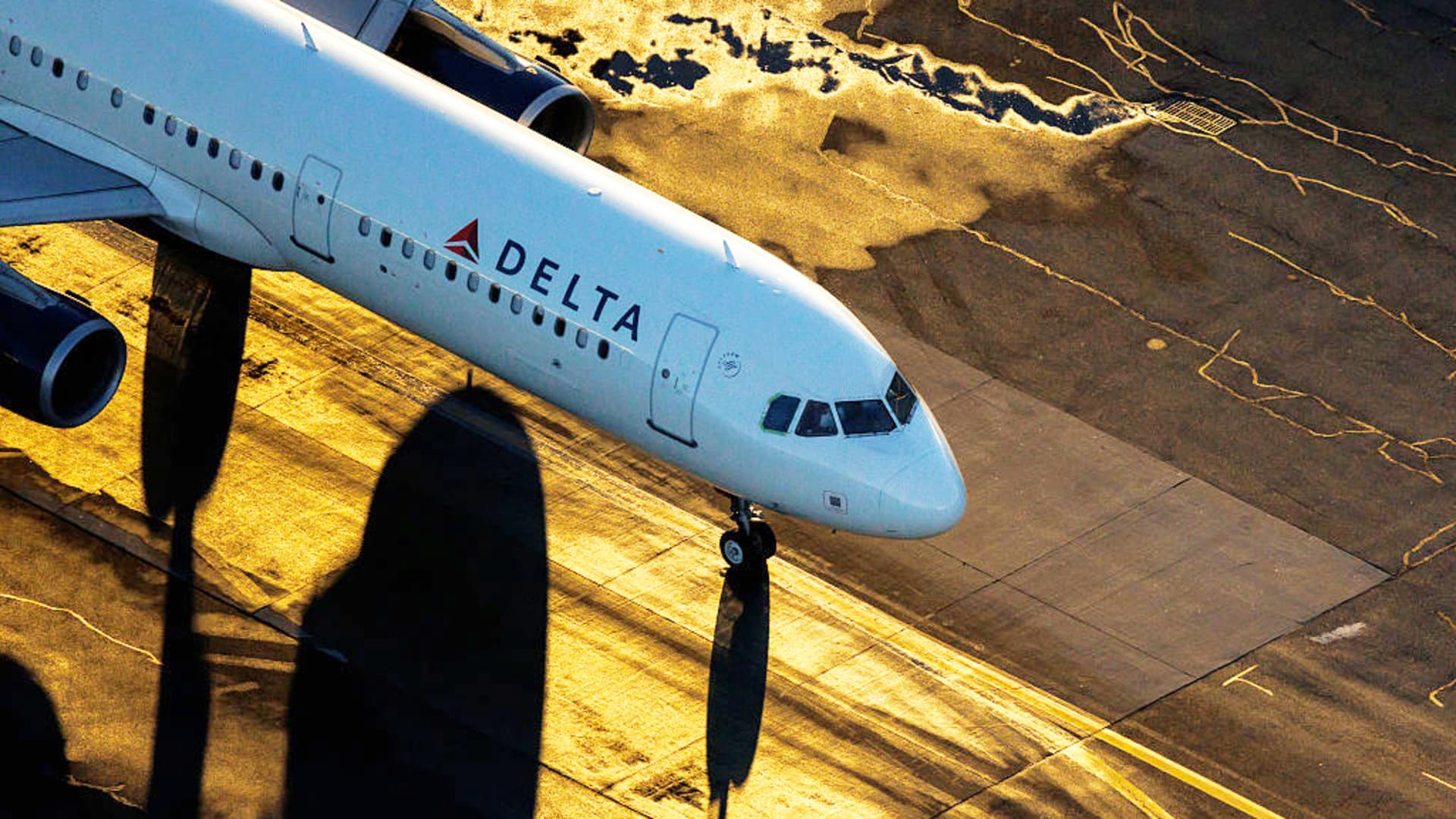

Delta Air Lines has revised its profit forecast for 2026, attributing the changes to surging fuel prices. Despite these increased costs, CEO Ed Bastian reports that passenger demand remains strong, with travelers still booking flights at higher fares. The airline’s latest financial announcement includes a drop in its free cash flow outlook and adjusted revenue predictions, reflecting ongoing challenges in the aviation industry amidst fluctuating fuel costs.
| Article Subheadings |
|---|
| 1) Delta’s Revised Profit Forecast and Impact of Fuel Prices |
| 2) Financial Performance: Revenue and Earnings Metrics |
| 3) Fuel Costs and Airline Profitability |
| 4) Delta’s Brand Positioning and Competitive Landscape |
| 5) Future Directions: Investments in Technology |
Delta’s Revised Profit Forecast and Impact of Fuel Prices
Delta Air Lines has announced a significant reduction in its profit forecast for 2026, now estimating earnings per share between $5.10 and $5.60, down from the previous range of $6.50 to $7.50 a share set earlier in July. This downward revision is primarily influenced by the ongoing high fuel prices, which have been driven up by geopolitical tensions and economic fluctuations. CEO Ed Bastian indicated that the company’s profitability outlook has been adversely affected by a staggering $6 billion increase in fuel costs this year alone.
Despite these price challenges, Bastian conveyed optimism regarding travel demand, noting that consumers are still willing to pay higher fares. The airline has seen fares rise in response to the rising costs of fuel, yet bookings remain strong across various travel segments—hinting at resilience in consumer behavior even amidst economic pressures.
Financial Performance: Revenue and Earnings Metrics
In detailing its recent financial performance, Delta reported adjusted earnings per share of $1.72, which fell slightly below the Wall Street consensus estimate of $1.75. Additionally, the company generated $17.59 billion in adjusted revenue, which also did not meet expectations set at approximately $17.67 billion. This marked the first occasion in two years that Delta had underperformed relative to market forecasts.
Delta recorded a net income of $756 million for the third quarter, translating to a $1.15 per share profit, representing a stark decline of 47% from the previous year’s net income of $1.42 billion. However, when adjusting for one-time financial impacts, their earnings corresponded more closely to the expectations of industry analysts. The airline’s operational revenue climbed notably, increasing by 21% in the third quarter to reach $20.19 billion, a promising sign despite the overall challenges.
Fuel Costs and Airline Profitability
Fuel costs remain a significant concern for Delta, with prices in the U.S. Gulf of Mexico region nearly doubling over the past year, reaching $4.34 per gallon. The surge in fuel prices, particularly following geopolitical events like the conflict in Iran, has placed substantial pressure on airlines’ profit margins. Despite the price increases, Delta aims to navigate these turbulent waters by leveraging pricing strategies to maintain their profitability.
The broader airline industry is grappling with inflationary pressures, and data indicates that airfare has risen by over 23% compared to the previous year. Delta’s recent statements suggest that consumers are still responding positively to these fare increases, a testament to the airline’s strong brand appeal and market position. Bastian noted, “The consumer response continues to be quite strong,” emphasizing that both leisure and business travel segments are performing well amidst these shifts.
Delta’s Brand Positioning and Competitive Landscape
As America’s most profitable airline, Delta stands at the forefront of the aviation market, but it is not without competition. Other airlines like United, American, and Southwest Airlines are also vying for market share, particularly as they innovate and adapt to shifts in consumer behavior. Delta’s premium revenue has become a larger component of its overall sales, growing by 18% in the third quarter. However, main cabin sales have lagged behind, increasing by only 12%.
The airline’s recent announcement to introduce Amazon’s Leo satellite internet serves as a strategic move to enhance customer experience and retain competitiveness. Though some industry voices have questioned the relationship dynamics between Delta and tech companies, particularly in light of comments from Elon Musk, Bastian emphasized that Delta’s decisions are centered on safeguarding customer interests and enhancing service quality.
Future Directions: Investments in Technology
Delta’s commitment to technology investment signals its ambition to stay ahead in the competitive airline landscape. The deployment of high-speed internet throughout the fleet epitomizes Delta’s determination to elevate passenger experience while keeping pace with industry trends. Collaborative partnerships, such as with Amazon, aim to facilitate a leap in onboard performance, enhancing customers’ in-flight connectivity.
In light of criticisms from external parties, including remarks by Musk regarding Delta’s stance on technology partnerships, Bastian has maintained that the airline is focused on delivering exceptional service rather than getting embroiled in personal disputes. The CEO stated, “There’s no tit for tat as far as I’m concerned,” indicating a measured response to external critiques while affirming the company’s strategic choices regarding service enhancements.
| No. | Key Points |
|---|---|
| 1 | Delta Air Lines has reduced its 2026 profit outlook due to rising fuel prices. |
| 2 | CEO Ed Bastian reported strong consumer demand despite fare increases. |
| 3 | Delta’s third-quarter earnings fell below analyst expectations for the first time in two years. |
| 4 | The airline plans to enhance onboard experience with Amazon’s satellite internet technology. |
| 5 | Delta remains focused on strategic partnerships and improving customer service amid competitive pressures. |
Summary
In summary, Delta Air Lines faces significant challenges with rising fuel prices impacting profitability, yet remains resilient in the face of these adversities. As the airline revises its financial outlook while reporting strong consumer demand, it positions itself strategically within a competitive market. Ongoing investments in technology and service enhancements signal Delta’s commitment to maintaining its status as a leader in the aviation industry.
Frequently Asked Questions
Question: How has Delta’s profit outlook changed recently?
Delta has revised its 2026 profit forecast downward due to the impact of high fuel prices, adjusting expected earnings per share from a previous range of $6.50 to $7.50 to a new range of $5.10 to $5.60.
Question: What is influencing Delta’s current financial performance?
The airline’s financial performance has been significantly influenced by rising fuel costs, which have increased dramatically since last year, affecting overall profitability despite strong consumer demand and fare increases.
Question: What steps is Delta taking to improve customer experience?
Delta is introducing satellite internet service in partnership with Amazon to enhance connectivity on flights, aiming to provide customers with a higher quality in-flight experience and stay competitive in the market.
