

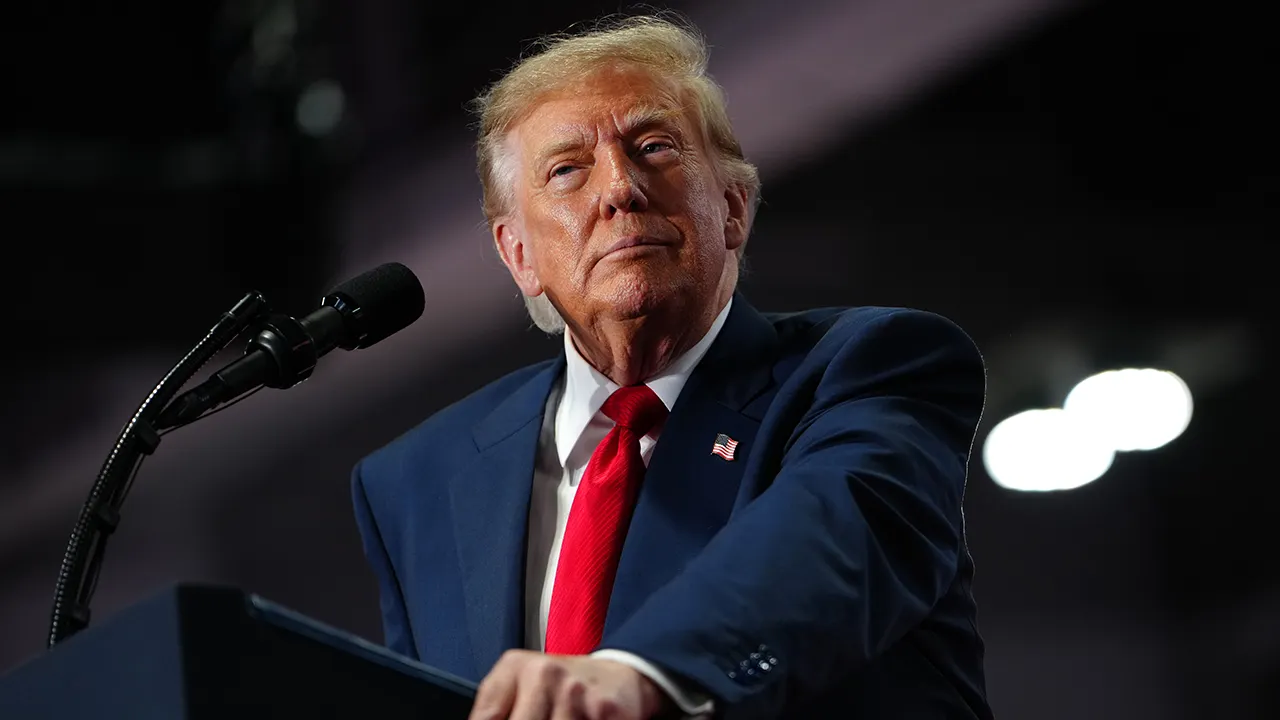

In a recent social media post, former President Donald Trump criticized the Norwegian Nobel Committee for overlooking him for the 2026 Nobel Peace Prize. He cited an array of international diplomatic accomplishments, claiming they warranted recognition. Trump has historically expressed a desire for the Nobel Prize, which he first received a nomination for in 2018 regarding his negotiations with North Korea. Despite multiple nominations, he was again passed over this year in favor of South African jurist Navi Pillay.
| Article Subheadings |
|---|
| 1) Trump’s Reaction to Nobel Committee’s Decision |
| 2) Previous Nominations and Trump’s Aspirations |
| 3) The Significance of Navi Pillay’s Selection |
| 4) Controversy Surrounding Pillay’s Nomination |
| 5) The Broader Implications of the Nobel Peace Prize |
Trump’s Reaction to Nobel Committee’s Decision
On Saturday, Donald Trump took to his social media platform to express disappointment at not being awarded the Nobel Peace Prize. He articulated a range of international achievements that he believes justify his eligibility for such recognition. For instance, Trump stated, “I settled 8 WARS, am close to ending or settling 2 more,” highlighting his claims of negotiating peace amid global conflicts.
Trump’s comments reflect a longstanding desire for the Nobel Prize, with the former president actively promoting his diplomatic efforts in various global arenas, including his dealings with North Korea and conflicts in the Middle East. His narratives often emphasize his role in resolving complex geopolitical tensions, asserting that the reward would validate his administration’s international strategies.
The Norwegian Nobel Committee, known for its discretion regarding nominees, chose to pass on Trump once again, following his vocal critiques regarding their nomination process. The former President’s dissatisfaction with the committee’s choice is emblematic of his broader critiques of institutional establishments, which he often claims are biased against him.
Previous Nominations and Trump’s Aspirations
Trump has been nominated for the Nobel Peace Prize multiple times, indicating a level of international recognition for his efforts. His first nomination came in 2018, proposed by Norwegian lawmakers for his work on nuclear disarmament with North Korea, a process that drew significant media attention and political support in 2017.
In 2019, during a news conference, Trump displayed confidence about his chances, suggesting, “I think I’m going to get a Nobel Prize for a lot of things, if they gave it out fairly, which they don’t.” This statement encapsulates his perspective on the selection process, suggesting that he feels deserving of accolades that have yet to come his way. His list of supporters for nominations includes notable figures such as former Japanese Prime Minister Shinzo Abe and Israeli Prime Minister Benjamin Netanyahu.
Despite his aspirations, the reality has been that Trump has yet to receive the prestigious award, an outcome he continues to openly question as he highlights his numerous diplomatic interventions.
The Significance of Navi Pillay’s Selection
This year’s Nobel Peace Prize was awarded to Navi Pillay, an esteemed South African jurist recognized for her influential work in international law and human rights. Her selection marks a significant recognition of her extensive career, including her appointments as a judge at the International Criminal Tribunal for Rwanda and the International Criminal Court.
Pillay’s award was celebrated by many, particularly in the context of her work advocating for human rights and justice. Her alignment with global values and standards in law positioned her as a credible candidate in a field competitive with a diverse range of global issues. U.N. Secretary-General Antonio Guterres praised her as “a champion of international law and human rights,” highlighting her impactful contributions throughout her career. This reflects an appreciation for her efforts toward justice at the international level.
However, while her selection was celebrated in many quarters, it also stirred significant discussions around the decision-making processes of the Nobel Committee and the broader implications for political narratives around justice and conflict resolution.
Controversy Surrounding Pillay’s Nomination
Pillay’s nomination did not come without its share of controversy, particularly regarding her role as chair of the U.N.’s Independent International Commission of Inquiry on the Palestinian Territory. Critics have raised concerns about perceived biases in her approach, specifically accusing her of displaying anti-Israel sentiments in her findings.
Some representatives in the political landscape argue that her focus on accountability in the context of Palestinian rights and Israeli actions presents a one-sided narrative in a complex geopolitical situation. This criticism underscores the contentious nature of international human rights discourse, notably when intersecting with longstanding geopolitical conflicts.
While advocates in international human rights lauded her efforts, skeptics have framed her approach as indicative of broader ideological divides within global diplomacy, thereby complicating interpretations of her contributions to justice initiatives.
The Broader Implications of the Nobel Peace Prize
The Nobel Peace Prize has long been viewed as a symbol of recognition for significant contributions to peace and conflict resolution. As such, the choices made by the Nobel Committee carry weight beyond individual recognitions; they reflect the evolving narratives around global peace and diplomacy. The selection of figures like Pillay shows an increasing emphasis on human rights advocacy amid complex geopolitical and humanitarian crises.
The divergent reactions to Pillay’s award and Trump’s exclusion reveal a wider discourse on what constitutes deserving contributions to peace. In an era where political figures actively engage in public diplomacy, the implications of such awards challenge conventional understandings of recognition and meritocracy on the world stage.
As both domestic and international commentators evaluate the impact of these decisions, it becomes evident that the objectives of awards like the Nobel Peace Prize extend far beyond individual accolades; they influence international policy discussions and reshape public understandings of conflict and resolution.
| No. | Key Points |
|---|---|
| 1 | Former President Donald Trump criticized the Nobel Committee for not awarding him the 2026 Nobel Peace Prize. |
| 2 | Trump cited various international diplomacy achievements defending his eligibility. |
| 3 | The Nobel Peace Prize this year went to Navi Pillay, known for her work in human rights and international law. |
| 4 | Pillay’s nomination sparked debate over bias in international human rights discussions. |
| 5 | The broader implications of Nobel Prize selections reveal shifts in the narratives around global peace efforts. |
Summary
The renewed discussions surrounding the Nobel Peace Prize, highlighted by Donald Trump’s disappointment at not being recognized for his diplomatic efforts, showcase the complexities of international acknowledgment amid competing narratives of justice and peace. The selection of Navi Pillay emphasizes a growing focus on human rights, although it raises questions about perceived bias and the politicization of such awards. Ultimately, these developments inspire reflection on the significance and criteria behind one of the world’s most prestigious honors.
Frequently Asked Questions
Question: What were Trump’s claims regarding his qualifications for the Nobel Peace Prize?
Trump claimed he had settled multiple wars, brought back hostages, and made significant contributions to international peace, particularly through negotiations involving North Korea and Iran.
Question: Who is Navi Pillay, and why was she awarded the Nobel Peace Prize?
Navi Pillay is a South African jurist recognized for her extensive work in international law and human rights, including her roles at the U.N. and various international judicial tribunals.
Question: What controversy arose from Pillay’s selection for the Nobel Prize?
Critics have argued that her role in U.N. inquiries displayed anti-Israel bias, raising questions about fairness in her assessments and the objectives of her advocacy for Palestinian rights.
