

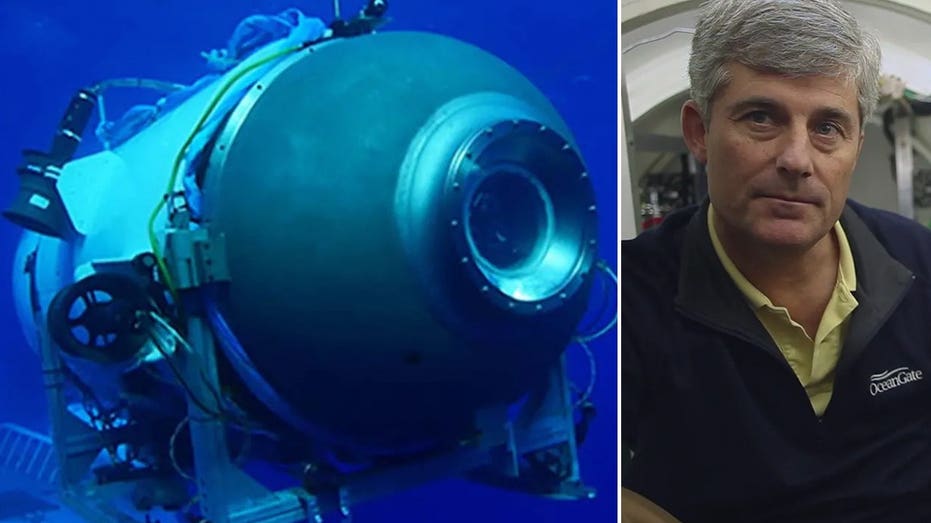

A longtime friend of OceanGate CEO Stockton Rush claims Rush wanted the Titan submersible disaster to make him part of the enduring Titanic mythology. The allegation appears in a new book about amateur submarines and has not been established as fact. The Titan lost contact during its descent to the Titanic wreck in June 2023 and later imploded, killing all five people aboard. A former prosecutor said the available account could have supported serious criminal scrutiny, but proving first-degree murder would have been difficult.
| Article Subheadings | |
|---|---|
| 1) | The allegation about Rush’s intentions |
| 2) | What happened during the Titan dive |
| 3) | The Titanic symbolism surrounding the vessel |
| 4) | Questions about criminal liability |
| 5) | The investigation and unresolved claims |
The allegation about Rush’s intentions
The claim was made by Karl Stanley, a commercial submersible expert and longtime friend of Rush. In the book, Stanley alleged that Rush’s ambition extended beyond operating an experimental vessel and that he wanted to become a central figure in the Titanic story. Stanley characterized the Titan as a dangerous vessel carrying wealthy passengers, but the article provides no independent evidence that Rush deliberately planned the implosion or intended to kill anyone.
“His ego was so big, he was willing to die and kill to be the pivotal character of this story.”
Stanley also alleged that people who worked for OceanGate knew what would happen. Those claims remain allegations and are not presented as findings by investigators or a court.
What happened during the Titan dive
The Titan was descending toward the Titanic wreck in the North Atlantic on June 18, 2023, when it lost contact with its support ship. The loss of communication prompted a multinational search operation. Four days later, debris from the submersible was found, and officials announced that the vessel had imploded, killing all five occupants.
Those aboard were Rush, Paul-Henri Nargeolet, Hamish Harding, Shahzada Dawood, and Dawood’s son, Suleman Dawood. Passengers reportedly paid as much as $250,000 for the expedition. The incident drew international attention because of the depth of the dive, the experimental design of the vessel, and the difficulty of conducting rescue operations in the North Atlantic.
The Titanic symbolism surrounding the vessel
The book’s account links the name Titan to the mythology surrounding the Titanic disaster. The name also echoes a fictional ocean liner called Titan in Morgan Robertson’s 1898 novel Futility, in which a ship strikes an iceberg. The parallel has long been noted because of similarities between the fictional vessel and the later fate of the Titanic.
According to the account attributed to Stanley, Rush’s use of the name was part of a broader effort to connect the submersible to that history. The allegation suggests that the symbolism was intentional, but the article does not identify documentary proof showing that Rush designed the Titan to implode or selected the name for that purpose.
Questions about criminal liability
Former federal and state prosecutor Brandi Young said a first-degree murder charge would have been difficult to prove. One reason, she explained, was that Rush also placed his own life at risk by joining the dive. Young said prosecutors could have considered manslaughter or potentially a theory involving extreme recklessness, depending on the evidence available.
“There’d be an argument to be made that perhaps second-degree murder, showing just reckless, extreme disregard, something that’s heightened over manslaughter, that potentially might be an avenue.”
The distinction would have depended on proving Rush’s state of mind, his knowledge of the vessel’s risks, and whether his conduct met the legal requirements for a specific offense. The article does not report that charges were filed.
The investigation and unresolved claims
A U.S. Coast Guard investigation later concluded that the disaster was preventable. That finding intensified scrutiny of OceanGate’s decisions and the Titan’s operation, but it does not by itself establish the intent alleged by Stanley. The reported debris included major structural components recovered from the ocean floor, providing investigators with evidence about the implosion and the vessel’s condition.
The central question raised by the new book is whether the disaster resulted from deliberate action, extreme recklessness, or failures in design and oversight. Based on the information presented, the claim that Rush intended the implosion remains unproven, while the preventability finding and the deaths of all five occupants remain established parts of the disaster’s record.
| Number | Key Point |
|---|---|
| 1 | A longtime friend alleged that Stockton Rush wanted to become part of Titanic mythology. |
| 2 | The Titan imploded during a June 2023 descent, killing all five people aboard. |
| 3 | A Coast Guard investigation determined the disaster was preventable. |
| 4 | A former prosecutor said first-degree murder would have been difficult to prove. |
Summary
The allegations described in the new book add a serious motive theory to the continuing debate over the Titan disaster. However, the reported claims by Stanley are not proven findings. The established record is that the submersible imploded during a Titanic expedition, five people died, and investigators later concluded that the tragedy could have been prevented.
Frequently Asked Questions
What did Karl Stanley allege?
Stanley alleged that Stockton Rush intended the Titan to implode so he could become part of the Titanic mythology. The claim has not been independently established in the article.
When did the Titan disaster occur?
The Titan lost contact with its support ship on June 18, 2023, during a descent toward the Titanic wreck in the North Atlantic. Debris was found four days later.
What did investigators conclude?
A U.S. Coast Guard investigation concluded that the disaster was preventable.
Could Rush have faced murder charges?
Former prosecutor Brandi Young said first-degree murder would have been difficult to prove, while manslaughter or a theory based on extreme recklessness could have been considered depending on the evidence.
