

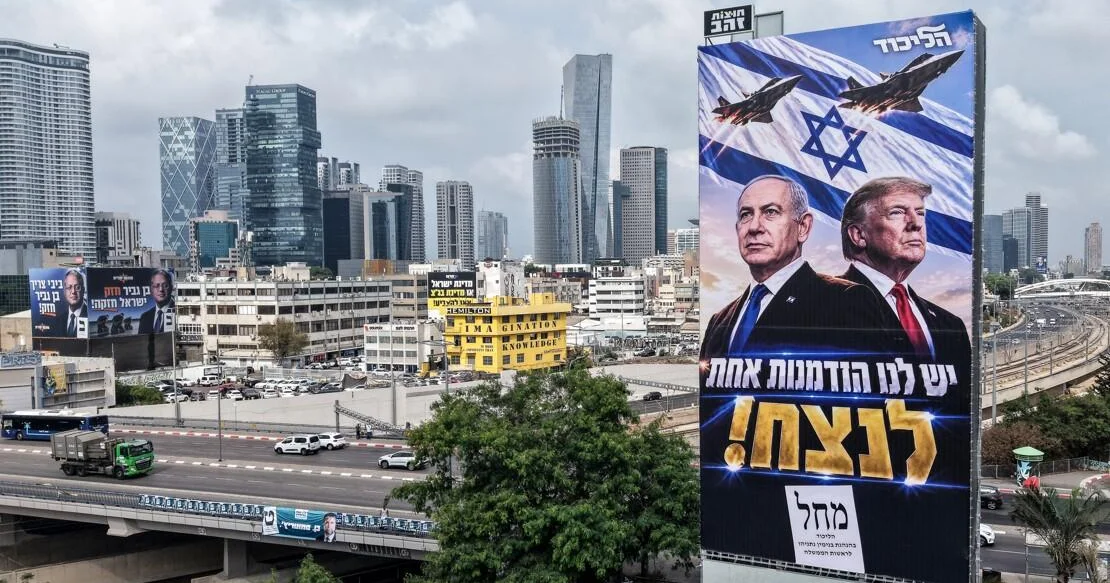

In a highly anticipated election marked by ongoing conflicts and political rivalries, Israelis are making their voices heard as they head to the polls. This election is particularly significant, occurring after the recent Oct. 7 missile attacks, which have significantly influenced voter sentiments and party dynamics. With Prime Minister Benjamin Netanyahu striving to maintain his grip on power amid a tight race against the “change bloc,” the results could have profound implications for Israel’s political landscape and its handling of multiple front conflicts.
| Article Subheadings |
|---|
| 1) Overview of Election Dynamics |
| 2) The Netanyahu Camp |
| 3) The Change Bloc’s Strategy |
| 4) The Role of Arab Voters |
| 5) Possible Outcomes and Political Implications |
Overview of Election Dynamics
Israelis are voting in an election deemed one of the most pivotal in the nation’s recent history due to the ongoing security crisis. Polls indicate a tightly contested race with no prevailing side emerging as a certainty. Both right-leaning and left-leaning pollsters present conflicting projections about the potential success of the major factions, reflecting deep divisions within the electorate. With the Knesset being composed of 120 seats, analysts suggest that neither the right-wing bloc nor the opposition is likely to secure a decisive majority, which raises fears of a prolonged political stalemate that could hamper decision-making during a time of crisis.
Yohanan Plesner, president of the Israel Democracy Institute, observed that the potential for an indecisive outcome appears high, which could result in extended negotiations or even lead to subsequent elections. In the shadow of significant recent events, including conflicts in Gaza, Lebanon, and tensions with Iran, the stakes are extraordinarily high as confidence in government leadership is being fundamentally challenged.
The Netanyahu Camp
Currently serving as the prime minister, Benjamin Netanyahu of the Likud party is immersed in addressing dual challenges: maintaining his role at the nation’s helm and responding to critics following the unanticipated attack by Hamas. His campaign focuses on leveraging perceived strengths, particularly his ability to form a government without dependence on Arab parties, which he claims pose potential security threats. Netanyahu’s supporters believe that he possesses the experience and credibility necessary to navigate Israeli security concerns, particularly related to Iran.
Netanyahu’s campaign slogan encapsulates his perspective on the elections: “Either right wing or Palestine, either right wing or a nuclear bomb.” This rhetoric builds on fears regarding Iran’s nuclear ambitions, which he frames as an existential threat. Recently, he promoted his campaign with vivid imagery, including a manipulated depiction of a nuclear explosion above Tel Aviv, illustrating the urgency he associates with his political vision.
His attempt to augment his appeal has included high-profile endorsements, notably from former President Donald Trump, who asserts that America’s support for Israel may hinge on Netanyahu’s electoral success. The endorsement is seen as a pivotal factor for Netanyahu’s approach, as he underscores the need for continuity in leadership during tumultuous times.
Netanyahu’s coalition traditionally consists of ultranationalist and ultra-Orthodox parties, and he remains committed to this framework as he reaches out to voters. The prime minister’s messaging is rooted in a narrative of stability and security, reflecting his long-standing position as a global statesman.
The Change Bloc’s Strategy
Opposing Netanyahu is a diverse ensemble of parties collectively known as the “change bloc.” This electoral coalition comprises an array of political factions, from leftists to centrists and Arab parties, with a singular objective: to oust Netanyahu from power. Leading this coalition is Gadi Eisenkot, a former military chief who advocates for a vision of unity and hope for the nation. Eisenkot’s campaign contrasts significantly with Netanyahu’s fear-driven narrative by promoting transparency and accountability.
Having lost family members to conflict within Gaza, Eisenkot appeals to voters as a compassionate choice, focusing on healing and rebuilding national unity. His campaign seeks to address pressing societal issues, including governmental failures that hinder Israel’s security, such as the intelligence lapses surrounding the recent Hamas attack.
Eisenkot’s approach directly challenges Netanyahu’s tactics. He critiques Netanyahu for “fear-mongering” and relies on presenting a balanced perspective to disillusioned voters. Additionally, Eisenkot promises an inquiry into security and intelligence failures from recent conflicts, a move that many view as necessary but which Netanyahu has opposed.
While Eisenkot is seen as a viable alternative to Netanyahu, his coalition must galvanize enough support to achieve a majority, or risk being sidelined in a fragmented parliament that could lead to further political instability.
The Role of Arab Voters
Arab-Israeli voters, constituting approximately 20% of Israel’s population, play a crucial role in determining the election outcome. Historically, voter turnout among this demographic has varied significantly compared to other groups, and analysts predict that the desire to counter a Netanyahu-led government may drive increased turnout.
Activists within Arab communities express that under Netanyahu’s governance, their social conditions have deteriorated, prompting many to feel a sense of hopelessness and disenfranchisement. Subsequently, there is a heightened impulse among Arab voters to engage in the electoral process, with the goal of securing representation that can advocate for their interests and rights.
New parties entering the political landscape present additional dynamics, as they seek to challenge long-standing coalition arrangements that marginalize Arab voices. The calls for a formal inclusion of ultra-Orthodox citizens into mandatory military service echo broader demands for equality within Israeli policymaking and could also influence Arab voter turnout.
Possible Outcomes and Political Implications
Experts suggest a range of outcomes is possible depending on how the vote tallies play out. If no party achieves a clear majority, negotiations for coalition government formation will ensue. In Israeli politics, it is not uncommon for parties to switch allegiances or create unexpected partnerships; therefore, future alliances may shift dramatically based on post-election dynamics.
A minority government could also take shape if opposition parties manage to accumulate more collective seats than their rivals, even if not an outright majority. That scenario could feasibly see limited engagement with radical factions, as Arab parties might support such a formation through strategic voting or abstaining from opposition.
In the event of a total deadlock, Israel could face a prolonged period without a functioning government, potentially leading to renewed elections—a situation previously seen from 2019 to 2022 when the nation conducted five elections due to political impasses.
The outcome of these elections is pivotal, not only for governance but for overarching national direction amid ongoing security challenges. As Plesner observes, the politicians’ commitment to their promises will fundamentally shape whether Israelis will experience another electoral cycle of uncertainty.
| No. | Key Points |
|---|---|
| 1 | The election is tightly contested, with no clear majority expected. |
| 2 | Netanyahu focuses on security and stability as a campaign strategy. |
| 3 | Eisenkot represents the “change bloc,” advocating for national unity and accountability. |
| 4 | Arab voter turnout could significantly impact the election results. |
| 5 | Potential implications include coalition negotiations or a return to new elections. |
Summary
The upcoming Israeli elections carry profound significance, serving as a referendum on current leadership amid ongoing conflict. With a fragmented political climate and crucial issues at stake, including national security and representation for marginalized groups, the results will not only shape governance but also the collective future of the Israeli populace. As the nation mobilizes to exercise its democratic rights, the attention remains fixed on the potential outcomes and the extent to which they might overcome existing discord and division.
Frequently Asked Questions
Question: Why are the elections particularly significant this year?
This election is particularly significant due to the ongoing security challenges faced by Israel, particularly following the recent attacks by Hamas, which have altered voter sentiments and polarized political factions.
Question: What role do Arab voters play in the elections?
Arab voters, who make up approximately 20% of Israel’s population, play a crucial role in determining the outcome. Increased turnout among Arab citizens could significantly influence the electoral landscape and provide a counterbalance to right-wing politics.
Question: What could happen if there is no clear majority after the elections?
If no party achieves a clear majority, it could lead to extended negotiations for coalition formations, the possibility of a minority government, or even trigger new elections if a compromise cannot be reached.
