

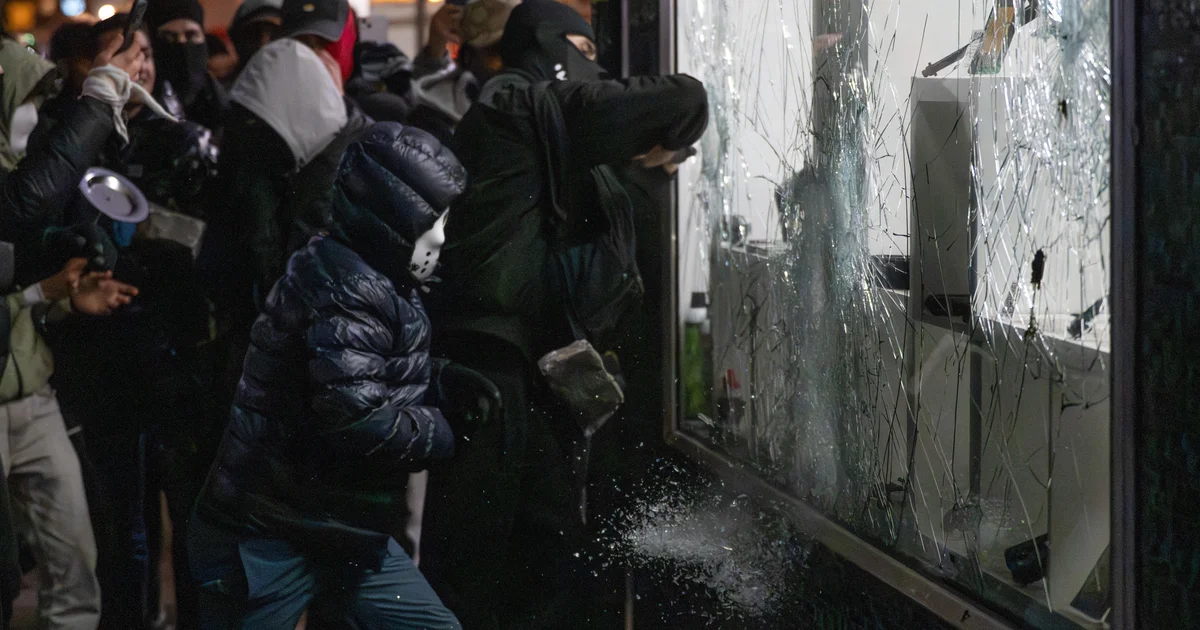

Late Saturday evening, Frankfurt, Germany turned into a scene of chaos as masked rioters vandalized storefronts and looted goods during a protest against growing living costs. This demonstration was primarily organized by a youth initiative, “Gen Z regelt,” which sought to address pressing issues like education, health care, climate protection, and the rejection of military conscription. While the protests began peacefully in over 30 cities, tensions erupted in major urban areas, resulting in violent clashes and extensive property damage.
| Article Subheadings |
|---|
| 1) Overview of the Protest Actions |
| 2) Significant Clashes and Arrests |
| 3) Voices from the Protest |
| 4) Government and police response |
| 5) Implications for the Future |
Overview of the Protest Actions
The protests initiated by “Gen Z regelt” aimed to attract attention to the rising costs of living in Germany, coupled with critical social issues facing the youth today. The movement highlighted the demand for better educational funding, healthcare access, and climate action, coinciding with increasing frustration among the younger population over economic instability. According to organizers, tens of thousands participated in the demonstrations, affirming a nationwide sentiment of unrest. While most events across more than 30 cities were reported to be peaceful, the atmosphere shifted as the sun set.
In Frankfurt, the peak of the protest saw some participants ignoring dispersal orders, culminating in violent clashes between protesters and law enforcement. Initial reports indicated that while many protesters gathered peacefully during the day, the situation escalated as evening approached. Young demonstrators utilized social media to mobilize participants and spread their messages of discontent effectively, indicating the power of digital platforms in grassroots movements.
Significant Clashes and Arrests
As evening fell, tensions escalated in several major cities, including Berlin, Hamburg, and Cologne. In Frankfurt, reports emerged of masked protesters throwing stones, setting fires, and launching fireworks at police forces attempting to contain the unrest. Police used tear gas and water cannons to disperse the crowds as rioters responded with Molotov cocktails and other projectiles.
Specific incidents captured the gravity of the evening’s events; looters were reported breaking into various stores, including a gun shop from which firearms were stolen and later recovered by authorities. The violent clashes resulted in numerous injuries and arrests, showcasing a stark contrast to the earlier peaceful gathering. Local authorities noted the significant security challenge this type of mobilization presents, raising concerns regarding public safety during large-scale protests.
Voices from the Protest
Despite the violence that transpired later in the day, many protesters expressed their genuine concerns and desires for change earlier in the afternoon. Among those speaking out was Lara Breitenbach, a high school student who articulated the sentiments shared by her peers. “We call for more money to be invested in social services and education, as well as in climate protection,” she stated, emphasizing that young people will bear the brunt of inadequate investment today.
Another student, Janelle Schulz, reiterated the challenges faced in educational institutions, voicing frustrations about dilapidated schools lacking adequate facilities. “At my school, the ceiling is collapsing because of water damage, nothing is being done about it,” she elaborated, underscoring the direct effects of governmental neglect on the youth populace. The comments from these students reflect a broader call for accountability and action on pressing issues that affect their futures.
Government and police response
The government and police response to the protests underscored the complexity of maintaining public order while respecting the right to assembly. As the situation unraveled, officials pointed out that early interventions aimed at distinguishing between peaceful protesters and those intent on violence were crucial. Authorities reviewed tactics employed during the protests and raised questions about their efficacy in managing large crowds effectively.
With tensions high and public sentiment shifting rapidly, government officials acknowledged the need for public dialogue and policy reforms to address the grievances raised by demonstrators. The police also faced scrutiny regarding the use of crowd control measures in response to the escalated violence. Debates emerged around the balance between enforcing law and order while protecting citizens’ rights to protest peacefully.
Implications for the Future
The protests marked not only a significant moment of unrest in Germany but also highlighted an emerging generational divide regarding socio-economic issues. With growing discontent among the youth, officials will be compelled to reassess current policies and programs to align with the expectations of younger citizens. In an era where online mobilization can amplify calls for change, failure to address these issues could lead to a continuation of unrest.
Moreover, the ramifications of this protest extend beyond public policy; they reveal a broader sentiment fostered by economic pressures and a lack of responsiveness from established systems. Observers suggest that policymakers may need to engage more proactively with youth initiatives to foster a sense of trust and investment in the future of their community, or else face the potential for increased demonstrations and unrest.
| No. | Key Points |
|---|---|
| 1 | Protests in Frankfurt and other cities were sparked by the rising cost of living and dissatisfaction with social services. |
| 2 | Tens of thousands participated in demonstrations organized by the youth initiative “Gen Z regelt.” |
| 3 | While most protests began peacefully, significant violence broke out in the evening in several major cities. |
| 4 | Students voiced specific grievances regarding inadequate investments in education and deteriorating facilities. |
| 5 | The government’s reaction highlighted the challenges of balancing public safety with the right to protest. |
Summary
The protests in Germany serve as a potent reminder of the complexities surrounding socio-economic issues and the demands for change from younger generations. As public sentiment continues to evolve, it is clear that a significant part of the population feels unheard and undervalued. The recent events underscore the direct correlation between social grievances and civic unrest, signaling a potential shift in how policymakers will need to engage with their constituents moving forward.
Frequently Asked Questions
Question: What were the main causes of the protests in Germany?
The protests were primarily driven by concerns over rising living costs, lack of adequate investment in education, healthcare, and climate issues as expressed by the youth initiative “Gen Z regelt.”
Question: How did the protests escalate into violence?
While starting as peaceful demonstrations, tensions escalated in the evening as some protesters ignored dispersal orders, leading to violent clashes with law enforcement involving projectiles and vandalism.
Question: What actions did the police take during the protests?
Police employed crowd control measures such as tear gas and water cannons to disperse violent crowds, and they also arrested individuals involved in looting and vandalism.
