

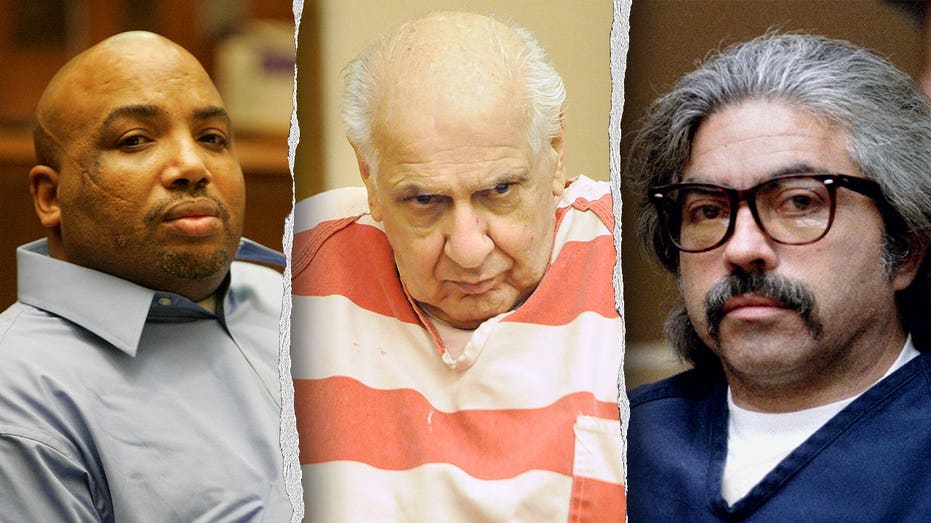

California Gov. Gavin Newsom announced on Nov. 5 that he intends to commute the death sentences of all 548 inmates on the state’s death row. The commutations would replace capital punishment with life imprisonment without the possibility of parole, although some cases require approval from the California Supreme Court. The decision could affect inmates convicted in some of the state’s most notorious child-murder and serial-killing cases. It has also drawn concern from prosecutors and victims’ families who oppose the policy.
Newsom said the action reflects what he considers the most severe punishment California can ethically enforce. The move does not immediately remove every prisoner from death row because state law requires additional judicial review for inmates with multiple felony convictions.
Among those who could benefit are Richard Allen Davis, Randy Kraft, Charles Ng and other prisoners whose crimes resulted in death sentences over several decades.
| Article Subheadings | |
|---|---|
| 1) | The statewide death-sentence commutation plan |
| 2) | Cases involving child victims |
| 3) | Serial-killing convictions in Southern California |
| 4) | Northern California and Yosemite cases |
| 5) | What the commutations mean legally |
The statewide death-sentence commutation plan
Newsom’s Nov. 5 action covers all 548 inmates currently on California’s death row. He said each sentence would be changed to life without parole, meaning the affected prisoners would remain incarcerated for life but could not be executed. In an open letter, Newsom acknowledged that the decision would anger some people and cause additional pain for victims’ relatives.
“I have decided to commute every death sentence.”
The governor described life without parole as the harshest punishment he can legally impose and the state can ethically enforce. The plan is intended to clear death row, but it does not erase convictions or reduce prisoners’ sentences to a term that would permit release.
Cases involving child victims
Richard Allen Davis was sentenced to death in 1996 for kidnapping 12-year-old Polly Ann Klaas from a Petaluma home during a 1993 sleepover, strangling her and leaving her body near Cloverdale. His earlier criminal record helped fuel support for California’s Three Strikes law.
Christopher Cheary was convicted in 2016 and sentenced to death in 2017 for the 2011 murder, rape and torture of 3-year-old Sophia Acosta in Exeter. The child was found unconscious after Cheary had been babysitting her and her sister.
In 2018, Isauro Aguirre received a death sentence for the torture and murder of his girlfriend’s 8-year-old son, Gabriel Fernandez. The abuse occurred over months in a Palmdale residence. Gabriel’s mother, Pearl Fernandez, received life in prison without parole.
Serial-killing convictions in Southern California
Randy Kraft, known as the Scorecard Killer, was sentenced to death in Orange County in 1989 after being convicted of killing 16 young men and hitchhikers. Investigators linked additional victims to coded material found in his vehicle, and authorities have believed the total number of victims may have been substantially higher.
Chester Turner was sentenced to death in Los Angeles County in 2007 for killing 10 women in South Los Angeles. He received another death sentence in 2014 for four additional killings. Authorities arrested him in 2003 after DNA evidence connected him to victims.
David Carpenter, called the Trailside Killer, was sentenced to death in separate cases involving the murders of hikers in Marin County and Santa Cruz between 1980 and 1981. The convictions included rape and the killing of at least seven people.
Northern California and Yosemite cases
Joseph Naso, known as the Alphabet Killer, was sentenced to death in Marin County in 2013 for killing at least four women between 1977 and 1994. Prosecutors said he targeted women whose first and last names began with the same letters.
Cary Stayner was sentenced to death in 2002 for murdering Carole Sund, her daughter Juli Sund and family friend Silvina Pelosso near Yosemite National Park in 1999. He was already serving a life sentence for killing nature guide Joie Armstrong.
Charles Ng was sentenced to death in 1989 for abducting, torturing and murdering at least 11 people at a remote Calaveras County cabin between 1983 and 1985. His co-conspirator, Leonard Lake, died by suicide during a police standoff.
What the commutations mean legally
The proposed commutations change the punishment, not the underlying convictions. Prisoners would remain in custody for life without parole, and the state would continue to hold them in the prison system. However, California law requires Supreme Court approval for commutations involving inmates with numerous felony convictions, a provision that could affect hundreds of death-row prisoners.
The action therefore creates a legal process beyond the governor’s announcement. The ultimate implementation will depend on the required reviews and orders. Prosecutors and relatives of victims have objected to replacing death sentences, while Newsom has defended the measure as a uniform policy applied to every condemned prisoner.
| Number | Key Point |
|---|---|
| 1 | The plan covers 548 California death-row inmates. |
| 2 | The replacement sentence is life without the possibility of parole. |
| 3 | Some commutations require California Supreme Court approval. |
| 4 | The affected prisoners include convicted serial killers and child murderers. |
| 5 | The policy changes sentences but does not vacate convictions. |
Summary
Newsom’s decision would end the use of death sentences for California’s current death-row population by replacing them with life without parole. The measure could benefit prisoners convicted in some of the state’s most notorious murder cases, but required court approval means the process is not automatic for every inmate. The policy is likely to remain contested by prosecutors and families of victims who oppose the commutations.
Frequently Asked Questions
How many death sentences did Newsom seek to commute?
The governor announced a plan covering 548 inmates on California’s death row.
What punishment would replace the death sentences?
The proposed replacement is life in prison without the possibility of parole.
Are the commutations automatic?
No. California law requires Supreme Court approval for commutations involving inmates with numerous felony convictions, so additional legal review is required in many cases.
