

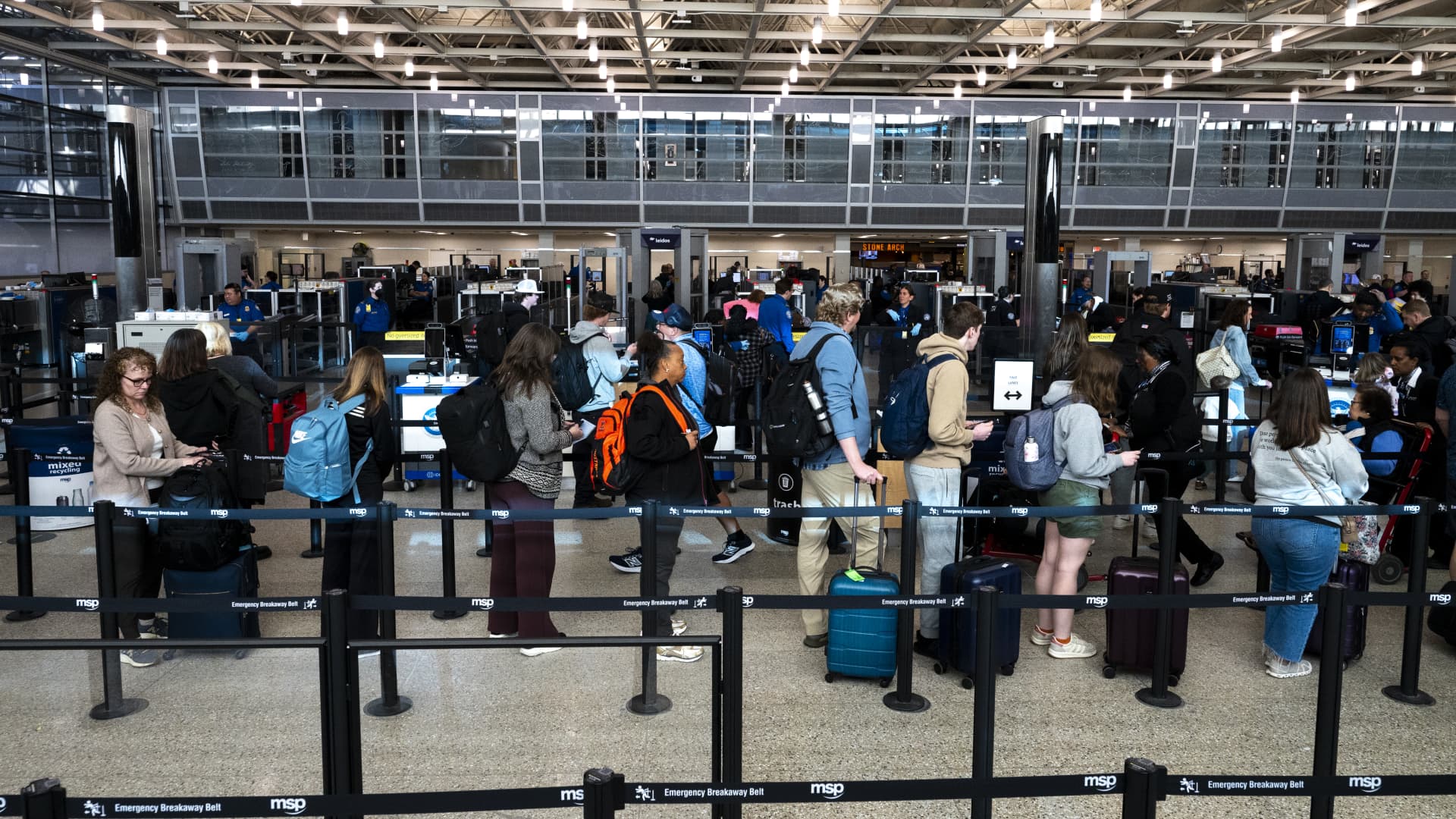

The airline industry is currently navigating a complex landscape marked by rising airfare and evolving passenger demand. Despite a notable decline in the number of travelers this year—the first annual reduction since 2020—airline executives report that they are largely unconcerned about the trends. Instead, they are focusing on maintaining profitability amidst soaring fuel prices, which continue to affect operational costs significantly. As airlines grapple with higher fuel expenses, they have adjusted their pricing strategies to prioritize yield over sheer passenger numbers.
| Article Subheadings |
|---|
| 1) Growing Airfare Challenges in the Airline Industry |
| 2) Dynamics of Airline Revenue and Capacity |
| 3) Managing Fuel Costs and Profitability |
| 4) Implications of Market Changes and New Entrants |
| 5) Future Prospects for Airlines and Passengers |
Growing Airfare Challenges in the Airline Industry
Airline ticket prices have surged dramatically, largely in response to increased jet fuel costs. As airlines grapple with these escalating expenses—their second-biggest cost after labor—they are compelled to transfer more of this financial burden onto consumers. For instance, average airfare in September was reported to have risen by more than 22% compared to the previous year, intensifying concerns about overall travel accessibility. According to fare tracker Hopper, the upcoming holiday season is expected to witness the highest ticket prices in years, indicating that consumers may need to reconsider their travel plans.
The flight cost for major airlines reflects these growing prices; for example, the average fare for Southwest Airlines in the third quarter jumped to $231.69, an increase of nearly $50 from a year earlier. Furthermore, this does not account for the additional fees introduced by the airline, such as luggage charges and seat selection, making affordable flying increasingly unattainable for many traveler demographics.
Dynamics of Airline Revenue and Capacity
Despite the uptick in ticket prices, the total number of passengers flying has declined. In fact, the Transportation Security Administration has documented nearly 9.3 million fewer travelers screened at airport checkpoints this year compared to the same period in 2025. This drop, while slightly less than 2%, breaks a long-standing trend of increasing air travel stemming from the pandemic recovery. American Airlines has reported a decline in its load factor—the measure of how full its planes are—dropping from 86% to 83.4% over the past year. This situation is prompting airline executives to declare strategic shifts away from “load factor” as a primary metric for success.
Airline chief executives have asserted that overall demand remains stable, especially for higher-value premium seating that commands a far greater ticket price. Markedly, airlines like United Airlines reported a slight increase in passenger count despite some competitors experiencing drops, illustrating a somewhat fragmented market recovery. United’s unit revenue also showed a significant increase of 16%, suggesting a potential racing advantage in catering to affluent travelers.
Managing Fuel Costs and Profitability
Fuel costs present one of the most formidable challenges for airlines, with prices nearing an average of $4.80 per gallon expected in the upcoming fourth quarter, up from $3.90 in the third. This continued rise is unsettling executives and has compelled them to revise profit forecasts downward. Both American Airlines and United Airlines have reported concerns over these long-term impacts, with American poised for a financial loss this year—marking a significant change from earlier predictions.
Airline leaders emphasize their confidence in their ability to manage pricing power amidst these challenges. They are employing strategies to minimize capacity while maintaining high fares, thus making available seats more scarce—thereby naturally driving up prices if demand holds steady.
“Today, we find ourselves yet at another inflection point for our industry and the world,”
remarked a leading CEO during a recent awards ceremony, referencing the broader economic conditions that affect operational viability.
Implications of Market Changes and New Entrants
The competitive landscape of the airline industry is undergoing significant changes as smaller airlines prepare to announce their quarterly earnings. JetBlue Airways is likely the first to share its performance, followed by other budget carriers such as Frontier Airlines and Allegiant Air. These airlines have traditionally catered to cost-sensitive passengers, but analysts speculate that shifting consumer behaviors may reveal a pullback in this customer base due to the considerable fare increases.
Additionally, the collapse of Spirit Airlines in May has transformed the market significantly, with reports suggesting that their previous clientele might be opting out of air travel altogether. This decline not only reshapes consumer choices but may create an acute challenge in terms of passenger volume recovery as well.
Future Prospects for Airlines and Passengers
Industry leaders are optimistic about overcoming certain operational hurdles, including delays in aircraft deliveries. With improvements in production by both Boeing and Airbus, the momentum towards better service and operational efficiency appears to be returning. A recent FAA approval for critical aircraft models could usher in a new era of enhanced commercial capabilities for airlines like Southwest and United, which may lead to expanded routes and improved service reliability in the coming years.
Meanwhile, enhancements in engine durability and repair turnaround times from manufacturers such as RTX and GE Aerospace are garnering attention. However, feedback from airlines suggests that continued improvements are necessary to align with evolving industry demands. As airlines press forward with these advancements, they aim to bolster profitability while navigating customer expectations amidst a transformed travel landscape.
| No. | Key Points |
|---|---|
| 1 | Airfare prices have significantly increased, affecting consumer travel choices. |
| 2 | Airlines are prioritizing higher yield over the previously used metric of load factor for profitability. |
| 3 | Rising fuel costs pose a major challenge to airline profitability, forcing adjustments in forecasts. |
| 4 | The collapse of Spirit Airlines has altered market dynamics, influencing travel patterns. |
| 5 | Boeing and Airbus are ramping up production to address issues related to aircraft availability and capacity. |
Summary
In conclusion, the airline industry is at a significant juncture, characterized by rising airfare, fluctuating demand, and increasing operational costs. While airlines face challenges from soaring fuel prices and a decline in passenger numbers, a focus on higher-yield strategies offers a potential path to profitability. As competition increases and market landscapes shift, airlines must adapt effectively, balancing pricing power with passenger satisfaction to ensure a sustainable future in the industry.
Frequently Asked Questions
Question: Why are airline ticket prices increasing?
Airline ticket prices have increased primarily due to soaring jet fuel costs, which airlines are passing on to consumers. Additionally, airlines are prioritizing profit margins over filling seats, leading to higher fares.
Question: How is passenger demand changing in the airline industry?
Passenger demand is experiencing a decline for the first time since 2020, with fewer travelers screened at airports. This decline coincides with elevated airfare and shifts in consumer spending habits due to economic factors.
Question: What strategies are airlines using to cope with rising fuel costs?
Airlines are focusing on increasing ticket prices, reducing capacity to maintain fare levels, and prioritizing sales of premium (higher-priced) seats to offset the impact of rising fuel costs on profitability.
