

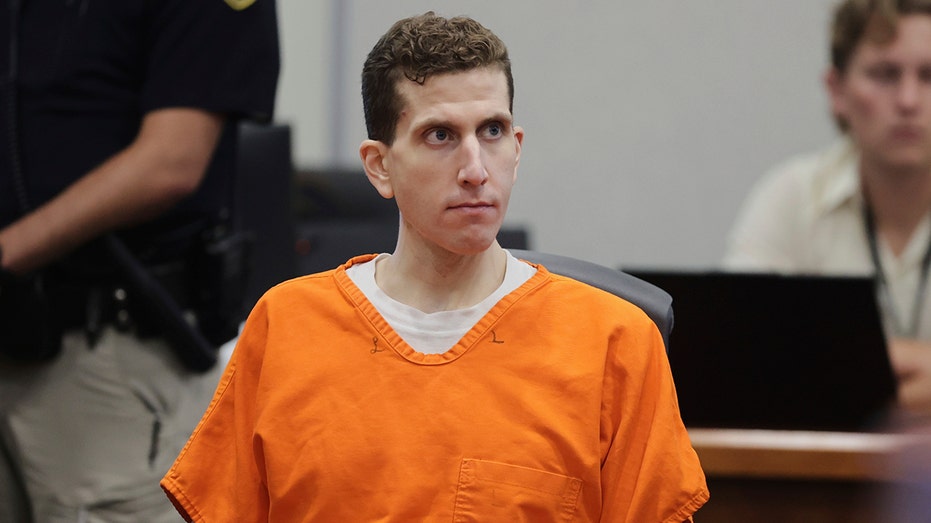

Bryan Kohberger is asking a court to disqualify the judge who handled his criminal case and move his post-conviction proceedings out of Ada County. The requests were filed by his new court-appointed attorney, Gregory Rauch, as Kohberger seeks to withdraw his guilty plea and obtain a trial. Kohberger has since claimed he is innocent and blamed his defense team for leading him to make a false confession.
| 1) | Request to disqualify the judge |
| 2) | Bid to move post-conviction hearings |
| 3) | Challenge to the guilty plea |
| 4) | Concerns about defense preparation |
| 5) | Statements central to the impartiality claim |
Request to disqualify the judge
The motion asks that Fourth Judicial District Judge Steven Hippler be removed from Kohberger’s post-conviction proceedings. Rauch’s filing argues that the judge’s prior rulings and comments create questions about whether he can fairly consider claims concerning the criminal case. The motion describes an “extraordinary convergence” of circumstances rather than one unfavorable decision or severe remark.
The issue matters because the judge could be asked to assess whether Kohberger’s guilty plea was valid and whether his defense met constitutional standards. The filing therefore focuses on future credibility and legal determinations.
Bid to move post-conviction hearings
Kohberger’s lawyers also want the proceedings transferred from Ada County, where he pleaded guilty and was sentenced, to Latah County, where the killings occurred. His original criminal trial was moved to Ada County in 2024 to help secure an impartial jury and provide adequate resources.
The new motion argues those reasons do not apply in the same way to a bench proceeding decided by a judge rather than a jury. It cites the convenience of witnesses and the interests of justice.
Challenge to the guilty plea
Kohberger, 31, pleaded guilty last year to four counts of first-degree murder and one felony burglary charge in the 2022 stabbing deaths of University of Idaho students Madison Mogen, 21, Kaylee Goncalves, 21, Xana Kernodle, 20, and Ethan Chapin, 20. He was subsequently convicted and sentenced.
He now seeks to take back that plea, asserting that he is innocent and that his defense team pressured or misled him into making a false confession. The requested remedy would give him a trial, although he could face the death penalty if the plea were withdrawn and the case proceeded in that manner. The filings do not establish that the plea will be withdrawn.
Concerns about defense preparation
A central part of the effort to remove Hippler concerns whether trial counsel had enough time to prepare for a potential capital case. Defense lawyers argued that the schedule made it impossible to review the massive volume of evidence and warned that proceeding could violate Kohberger’s constitutional right to effective representation.
Hippler rejected those arguments during the criminal proceedings. He accused the defense of invoking the discovery record as a tactic to delay the case rather than as evidence of a genuine lack of preparation. Rauch’s motion now places that dispute within its broader argument about the former defense team.
Statements central to the impartiality claim
The disqualification motion cites comments Hippler made during sentencing about Kohberger’s credibility and character. According to the filing, the judge asked, “Do we really believe, after all of this, he is capable of speaking the truth?” The motion also says Hippler described Kohberger as a “faceless coward” and “the worst of the worst.”
“Those statements are fundamentally different from believing Kohberger committed terrible crimes or deserved severe punishment,” the motion states. “They are forward-looking judgments about his credibility. And credibility may now be at the center of this proceeding.”
The defense argues that these comments could matter if the case turns on Kohberger’s account of the plea process or the reliability of statements by him and his former attorneys. The court must address the requests for a new judge and venue before the broader challenge can proceed.
| Number | Key Point |
|---|---|
| 1 | Kohberger seeks Judge Steven Hippler’s disqualification. |
| 2 | His lawyers want hearings moved from Ada County to Latah County. |
| 3 | He claims ineffective defense advice led to a false confession. |
| 4 | The defense says preparation was constrained by evidence volume and the capital-case schedule. |
| 5 | The motion cites sentencing comments as evidence of possible credibility concerns. |
Summary
Kohberger’s new attorney is seeking a different judge, a different venue and a trial by challenging the guilty plea. The filings rely on arguments about defense preparation, judicial comments and the circumstances surrounding the plea. Court decisions on disqualification and venue will determine how the challenge proceeds.
Frequently Asked Questions
What is Bryan Kohberger asking the court to do?
He is asking the court to disqualify Judge Steven Hippler, move proceedings to Latah County and allow him to withdraw his guilty plea.
Why does the defense want the judge removed?
The defense argues that Hippler’s rulings and statements about Kohberger’s truthfulness and character raise questions about impartiality.
What charges did Kohberger plead guilty to?
He pleaded guilty to four counts of first-degree murder and one felony burglary charge in connection with the 2022 deaths of four University of Idaho students.
Why is the venue being challenged?
The defense says the earlier reasons for moving the criminal trial to Ada County are not relevant to a post-conviction hearing decided solely by a judge.
