

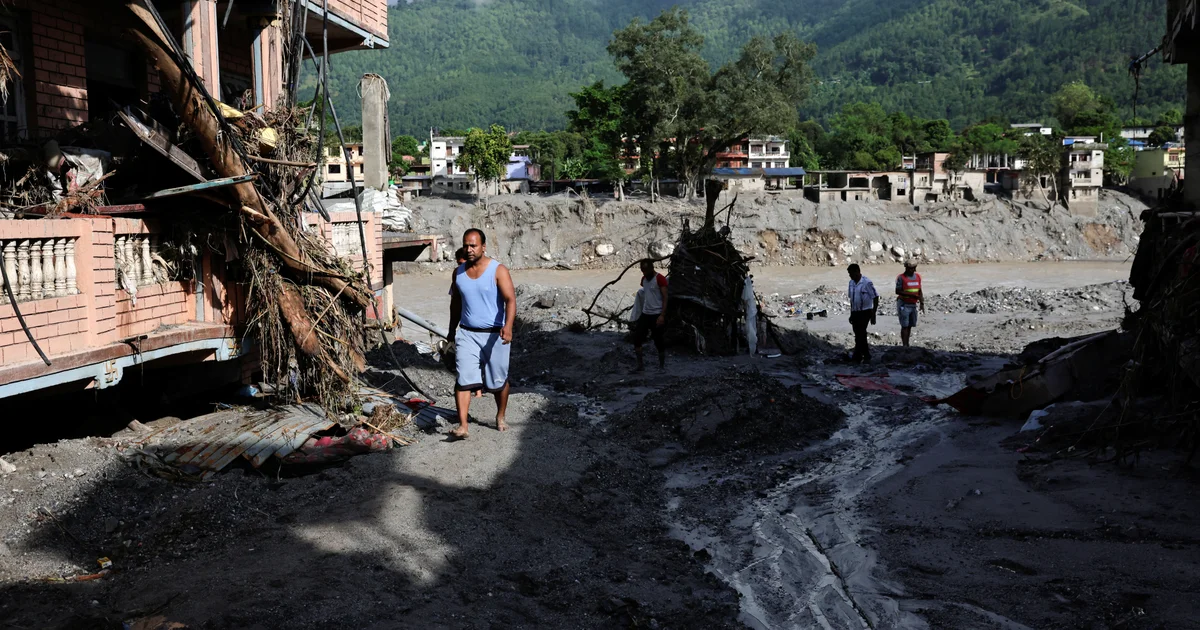

Authorities in Nepal have temporarily halted rescue operations due to concerns over a newly formed lake, which poses a flooding risk following a catastrophic flash flood along the border with China. As the death toll has tragically risen to 469, with over 1,500 people still unaccounted for, rescuers continue to battle through debris in a desperate attempt to locate survivors. The overwhelming scale of destruction and the precarious conditions highlight the urgent need for ongoing safety measures in the area.
| Article Subheadings |
|---|
| 1) The Emergence of the Flooding Threat |
| 2) Rescue and Recovery Efforts Underway |
| 3) Personal Accounts of Survival |
| 4) International Response and Assistance |
| 5) Geographical Factors of the Disaster |
The Emergence of the Flooding Threat
Following the devastating flash floods that struck the Himalayan border region between Nepal and China, alarming developments have emerged concerning a newly formed lake that has begun to overflow. As reported by both Nepali and Chinese authorities, the lake was formed due to unprecedented amounts of rain and geological upheaval, which caused significant volumes of runoff and debris accumulation. The Nepal Police confirmed that the combined death toll from the disaster has tragically reached 469, with the numbers expected to climb as more bodies are recovered from the wreckage.
The urgency surrounding the situation stems from warnings issued by officials, who have advised residents in low-lying areas near the lake to evacuate to safer ground. Estimates indicate that the lake currently contains approximately 70 million cubic feet of water and is expected to accumulate an additional 106 million cubic feet in the coming days, heightening the risk of further catastrophic flooding. Authorities are closely monitoring the lake’s stability, which holds the potential to inundate communities downstream, echoing the destruction experienced earlier in the week.
Rescue and Recovery Efforts Underway
Rescue operations are ongoing as search teams attempt to locate hundreds of individuals still missing. The Nepal Army reported that hundreds of soldiers have been dispatched to assist in the recovery efforts throughout the affected regions. Airlifting operations have successfully brought 3,253 individuals, including flood survivors and the injured, to safety in Kathmandu and surrounding areas. However, many families are still awaiting news about their loved ones, including foreign tourists who were in the area at the time of the flooding.
The Nepali Army’s spokesperson, Brig. Gen. Raja Ram Basnet, stated that operation teams were deployed to inspect various areas of the border, particularly the Upper Trishuli-1 Hydropower Project, where reports indicated that individuals may be trapped inside a tunnel. The situation proves challenging, as the entrance and exit points to the tunnel have been buried beneath mud, complicating rescue operations. The retrieval of stranded individuals remains the first priority for rescue teams across the region, working tirelessly to ensure no one is left behind.
Personal Accounts of Survival
Among the fortunate survivors, personal stories of bravery and resilience have emerged. One such account comes from customs officer Karbir Gaire, who recalled the moment the disaster struck. “Right after the shake, I noticed a black storm coming towards us,” he recounted, describing the chaotic effort to escape the imminent floods. Gaire managed to lead several individuals to safety as he quickly recognized the magnitude of the threat. However, he shared the heart-wrenching news that 15 of his colleagues are still missing.
Survivors describe the scene as apocalyptic, with floodwaters sweeping away buildings, vehicles, and lives in a matter of moments. The incessant rush of water led many in the area to liken the flood to a tsunami rather than a typical flooding event. From a vibrant village now reduced to destruction, survivors are grappling with their losses while navigating the challenges posed by the ongoing rescue efforts. Families are left with unanswered questions as the search continues for missing loved ones, who were often specifically visiting the area for its natural beauty or religious significance.
International Response and Assistance
In the wake of the disaster, global leaders and organizations have since offered support to those affected. Recognition of the extent of damage caused by the floods has prompted authorities and citizens worldwide to rally resources for recovery efforts. Aid is being coordinated not only by local responders but also through international partnerships that aim to provide necessary supplies and financial aid to the devastated communities.
While Nepal’s tourism board announced that over 500 foreigners are among the missing, responses have ranged from condolences to pledges of assistance from foreign governments. Reports indicate that officials have commenced communication efforts to track down the missing individuals, with many families seeking information about their loved ones. As international efforts mobilize, the focus remains on how best to assist both survivors and those who mourn the loss of their family members and friends.
Geographical Factors of the Disaster
The geographical challenges of the Himalayan region contribute significantly to the disaster’s severity. Recent scientific evaluations revealed that a bedrock collapse beneath a glacier in the area instigated part of the disaster. As a result, an outpouring of melted water combined with the debris from the collapse assaulted valleys below, leading to torrents that destroyed infrastructure in their path. Such geographical vulnerabilities are heightened by the region’s unpredictable weather patterns, exacerbating the potential for catastrophic flooding.
Officials must now consider not only immediate rescue efforts but also long-term strategies to mitigate similar catastrophes in the future. As scientists and environmental strategists collaborate to develop sustainable practices, the people of Nepal and the surrounding regions are left to deal with the immediate consequences of the disaster. Infrastructure assessments will be essential to plan for future resilience, ensuring communities are better equipped to withstand nature’s unpredictable fury.
| No. | Key Points |
|---|---|
| 1 | The death toll from the flash floods has reached 469, with more than 1,500 individuals reported missing. |
| 2 | Rescue operations are ongoing, with more than 3,000 people successfully airlifted to safety. |
| 3 | The rapidly formed lake upstream poses a new flooding threat, prompting evacuations from affected areas. |
| 4 | International aid and support are being mobilized in response to the disaster and losses suffered. |
| 5 | Environmental factors, including glacier collapse, have contributed significantly to the disaster’s intensity. |
Summary
The catastrophic flash floods affecting the border region between Nepal and China elucidate the overwhelming impact that natural disasters can have on communities. As officials grapple with the loss of life and the extensive destruction left in the wake of the floods, the need for urgent rescue operations remains while recovery efforts take shape. International partnerships in aid and long-term strategies to prevent future catastrophes will play critical roles. The harrowing experiences of survivors underscore the human toll of this disaster, leaving families in mourning and a community in search of solace during difficult times.
Frequently Asked Questions
Question: What caused the flash floods in Nepal and China?
The flash floods were primarily caused by heavy rainfall that destabilized geological formations, resulting in a glacier collapse and subsequent debris flow, which overwhelmed the rivers in the valleys below.
Question: How many people are currently missing or unaccounted for?
As of the latest reports, over 1,500 individuals are still unaccounted for following the flash floods, with ongoing rescue efforts attempting to locate and assist trapped or missing persons.
Question: What measures are being taken to ensure the safety of survivors?
Rescue teams are actively airlifting survivors to safety, providing medical assistance to the injured, and coordinating with international organizations to deliver necessary supplies to those affected by the disaster.
