

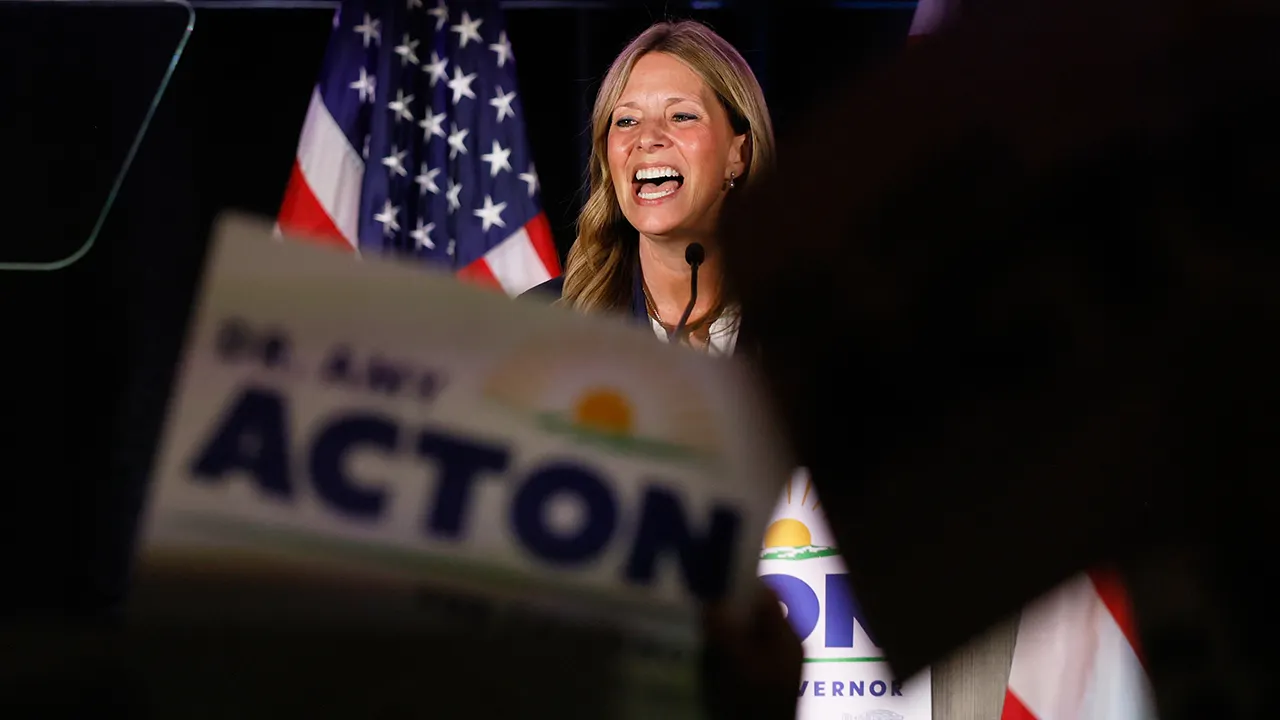

In a recent campaign event, Amy Acton, the former health director of Ohio and Democratic candidate for governor, faced a challenging confrontation with a Republican political activist while engaging with voters in Harrison, Ohio. The incident, which involved a confrontation about her refusal to debate her Republican opponent, Vivek Ramaswamy, has intensified scrutiny on Acton’s campaign strategies as both candidates approach the final stages of their race. With the Ohio gubernatorial election set for November 3, the stakes are high, and the dialogue surrounding Acton’s communication style has become a focal point of discussion.
| Article Subheadings |
|---|
| 1) Incident at Campaign Event Raises Questions |
| 2) Ramaswamy’s Attack on Acton’s Debate Strategy |
| 3) Context Behind the Gubernatorial Candidates |
| 4) The Role of Media in Political Campaigns |
| 5) Implications for the Upcoming Election |
Incident at Campaign Event Raises Questions
During a campaign event last Saturday, Amy Acton was approached by a Republican political activist wielding a camera, leading to a confrontation that raised questions about her approach to media engagements and public debates. The activist questioned Acton about her hesitation to participate in a debate against her opponent, Vivek Ramaswamy. In response, her campaign staff intervened swiftly to prevent further interaction, stating, “No photos, no videos.” This aggressive approach to media engagement has drawn criticism and continues to fuel discussions regarding Acton’s willingness to face scrutiny as she seeks higher office.
Videos of the incident captured Acton walking away from the interviewer without addressing the question, further intensifying critiques directed at her campaign. Critics have pointed out that her reluctance to engage in public debates could signify a lack of confidence in her position. As election day approaches, the question of whether her strategy will resonate with voters remains unanswered. This incident highlights the broader challenges candidates face in managing their public image and addressing difficult questions during a heightened political climate.
Ramaswamy’s Attack on Acton’s Debate Strategy
The confrontation has been leveraged by Vivek Ramaswamy to question Acton’s qualifications as a leader. He criticized her for avoiding voter questions and debates, claiming that her caution indicates a lack of readiness to lead Ohio. Ramaswamy’s remarks suggest that he views her avoidance as detrimental to her campaign. Specifically, he stated, “It’s too bad for Ohio voters that Acton won’t take voter questions, won’t debate.” This assertion serves to position him as the more open and forthright candidate in the eyes of potential voters.
Ramaswamy’s campaign has emphasized the importance of public engagement during a campaign, advocating that transparency and debate are critical components of a democratic process. He aims to frame Acton’s approach as evasive and strategically avoidant, reflecting poorly on her ability to effectively govern. Ramaswamy’s campaign continues to press for a debate, arguing that the voters deserve to see their candidates engage directly with each other on critical state issues.
Context Behind the Gubernatorial Candidates
Both candidates bring distinct backgrounds and visions for Ohio to the table, setting the stage for a competitive gubernatorial election. Amy Acton, who rose to prominence during her leadership of the Ohio Department of Health amid the COVID-19 pandemic, positions herself as the candidate focused on health and public safety. Her campaign has focused on connecting with Ohioans and addressing their concerns directly. However, the personal attacks and controversies surrounding her past tenure as health director have complicated her narrative.
On the other hand, Vivek Ramaswamy has leveraged a business-minded platform that appeals to constituents dissatisfied with the status quo. His ability to fund his campaign through personal finances has allowed him to project a narrative of determination and independence from traditional party structures. Additionally, Ramaswamy has been vocal about exposing controversies related to Acton’s past, aiming to gain an advantage by framing her as a problematic candidate governed by personal scandals.
The Role of Media in Political Campaigns
The recent confrontation underscores the evolving role of media in political campaigns. Candidates like Acton find themselves navigating a landscape where every public interaction can instantly become fodder for both critique and support on social media. This escalating scrutiny forces candidates to be highly strategic in their engagements with press and activists. Acton’s team’s quick response to the camera-wielding activist reflects an attempt to control the narrative and minimize potential critiques stemming from unedited video footage.
Conversely, Ramaswamy’s team has adopted a more aggressive media strategy that seeks to amplify the criticisms of Acton while also bolstering his campaign’s visibility. The manipulation of media encounters, particularly during an election year, emphasizes the pivotal role that public relations plays in shaping candidate perceptions – on both sides of the political spectrum. These interactions become battlegrounds in their own right, as the media’s portrayal of events can significantly impact voter opinions.
Implications for the Upcoming Election
With the Ohio gubernatorial election approaching on November 3, the implications of Acton’s recent interactions could resonate profoundly with undecided voters. If her reluctance to debate continues to be viewed negatively, it could affect her overall campaign strategy and ultimately influence electoral outcomes. As early voting begins, both candidates are likely to amp up their efforts to solidify their bases while appealing to swing voters.
Ramaswamy’s aggressive stance on debating and addressing voter concerns may resonate with electorates seeking accountability, while Acton’s emphasis on direct communication with constituents may attract those looking for a compassionate, health-focused leader. As the clock ticks down to election day, all eyes will be on how both candidates adjust their strategies to gain a crucial edge in a highly competitive political landscape.
| No. | Key Points |
|---|---|
| 1 | The confrontation involving Acton challenges her approach to media engagements and public debates. |
| 2 | Ramaswamy leverages Acton’s avoidance of debates to question her leadership qualifications. |
| 3 | Acton aims to connect with voters on health issues while navigating public scrutiny. |
| 4 | The role of media in shaping candidate perceptions is central to the current campaign landscape. |
| 5 | The outcome of the election could hinge on the effectiveness of each candidate’s public engagement strategy. |
Summary
The recent incident involving Amy Acton serves as a microcosm of the larger dynamics at play in the Ohio gubernatorial race. With Vivek Ramaswamy poised to challenge her at every turn, Acton must navigate not only her past and present interactions but also the mounting expectations of voters who desire transparency and accountability. As the election nears, both candidates will continuously reassess their strategies to appeal to their constituencies and win the governorship, marking a critical chapter in Ohio’s political landscape.
Frequently Asked Questions
Question: What is the significance of the confrontation at Acton’s campaign event?
The confrontation highlights Acton’s approach to media interactions, emphasizing her reluctance to engage with tough questions, which could impact her standing with undecided voters.
Question: How might Ramaswamy’s criticism affect Acton’s campaign?
Ramaswamy’s critique could reinforce images of Acton as evasive, potentially alienating voters who favor transparency and accountability in candidates.
Question: What are the key issues at stake in the election?
Key issues include public health, economic management, and the candidates’ respective approaches to addressing constituent concerns during their campaigns.
