

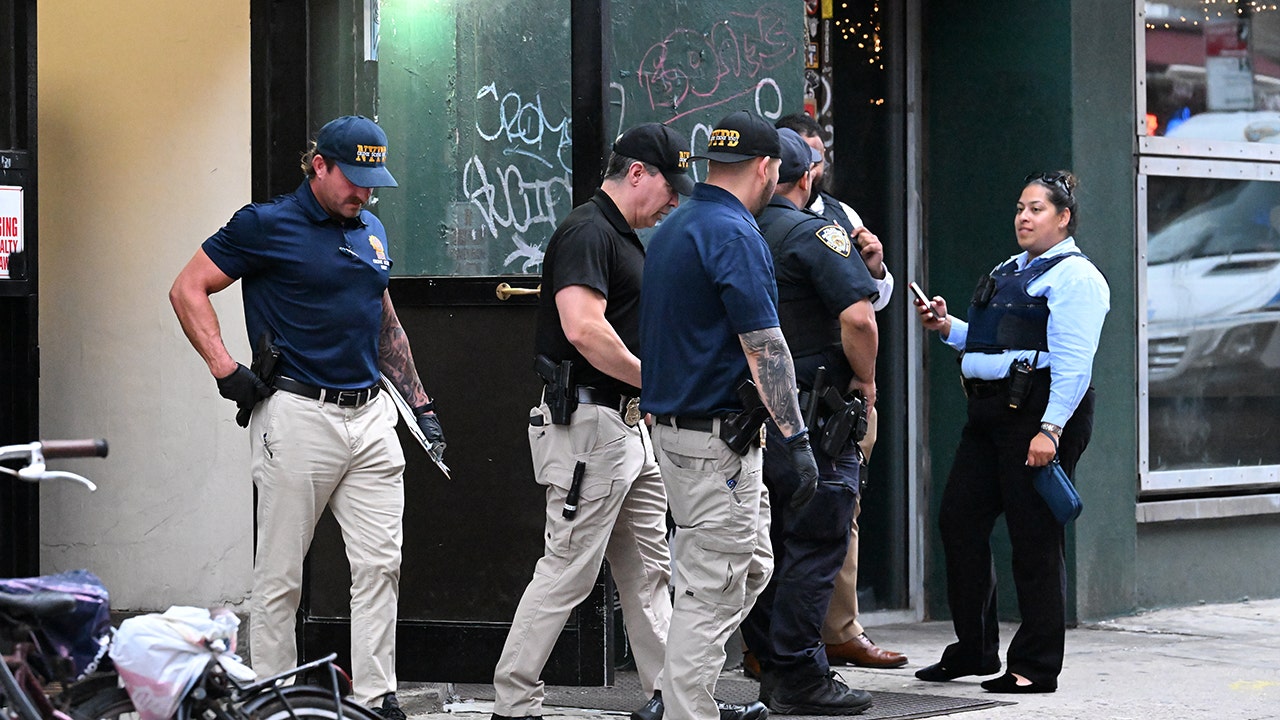

In a critical incident on Sunday afternoon in Manhattan’s Lower East Side, NYPD officers shot and killed a 54-year-old man who brandished a large butcher knife. The shooting unfolded shortly after 4 p.m. at 126 Ludlow Street, where law enforcement responded to multiple 911 calls indicating an ongoing assault. The deceased, identified as Wei Chan, had a documented history of mental health issues, further complicating the incident. NYPD officials highlighted the complexity of the encounter, which ended tragically despite efforts to de-escalate the situation.
| Article Subheadings |
|---|
| 1) The Sequence of Events Leading to the Shooting |
| 2) The Encounter: Officers’ Response and Actions |
| 3) Background on Wei Chan and His Family |
| 4) Official Responses and Investigations |
| 5) Broader Implications of the Incident |
The Sequence of Events Leading to the Shooting
The tragic shooting incident unfolded just after 4 p.m. when NYPD officers responded to multiple emergency calls from a Lower East Side apartment building at 126 Ludlow Street. The reports indicated a violent situation in progress. Upon arrival, officers noted a trail of blood leading up the staircase, suggesting a serious altercation had occurred prior to their arrival. This scene added urgency to their response as they assessed the situation carefully.
As the officers entered the building, they moved towards the staircase, where they encountered Wei Chan descending while wielding a large butcher knife. The urgency of the call and the visible signs of violence heightened the officers’ alarm and led to a rapid assessment of the threat posed by Chan. The officers aimed to prevent further harm and, crucially, assess the safety of any potential victims within the apartment.
The Encounter: Officers’ Response and Actions
During the encounter, NYPD officials assert that the officers repeatedly commanded Wei Chan to show his hands and drop the knife, attempting to de-escalate a potentially dangerous confrontation. Unfortunately, according to NYPD Assistant Chief Melissa Eger, Chan continued to advance towards them, prompting the officers to act decisively to protect themselves and others in the immediate vicinity.
After issuing multiple warnings, the officers found themselves with no other option but to open fire, striking Chan. He was quickly transported to a nearby hospital but succumbed to his injuries shortly after arrival. The NYPD underscored the chaotic nature of such encounters, attributing to them the split-second decisions that officers must make when confronted with life-threatening challenges.
Background on Wei Chan and His Family
Reportedly, Wei Chan did not have any known convictions or a history of criminal behavior on file with the NYPD. However, Assistant Chief Eger mentioned that he had a documented mental health history that had been known to the police department. This information has raised questions about the resources and support available for individuals grappling with such challenges.
Authorities also revealed that Chan’s father, Cheung Chan, aged 75, was found at the scene suffering from a laceration to the head, reportedly inflicted by his son prior to the police’s intervention. The elder Chan was taken to a hospital as a precautionary measure and is expected to survive, but the incident has brought additional grief to the family, demonstrating how swiftly violence can escalate within familial relationships.
Official Responses and Investigations
In light of the shooting, Mayor Zohran Mamdani has stated that the incident will undergo a thorough investigation. He confirmed that body-worn camera footage from the responding officers would be released as part of the review process, adhering to departmental protocol regarding officer-involved shootings. This transparency aims to provide answers to the community and the family involved, as well as hold the police accountable for their actions.
The police department emphasized that the officers involved in the incident were also taken to a hospital for evaluation following the shooting. Assistant Chief Eger reiterated the challenges faced by police when approaching situations where mental health crises manifest as acts of violence, remarking, “Their actions are a reminder of how officers run towards danger and not away from it.”
Broader Implications of the Incident
This incident raises crucial discussions regarding the intersection of mental health awareness and law enforcement. The series of events that culminated in this tragedy have illuminated how inadequately equipped law enforcement can be when dealing with individuals experiencing mental health crises. Experts argue for the essential need for inter-agency collaboration, better resources for mental health crises, and training programs for officers on de-escalation techniques in such cases.
As community members grapple with the implications of the shooting, many are calling for systemic changes in how mental health issues are addressed during police interventions. The ongoing investigation will not only scrutinize the actions taken by the officers involved but also examine how emergency services can better respond to distress calls involving mental health situations. Community leaders emphasize the urgent need for dialogue surrounding these topics as public safety remains a priority.
| No. | Key Points |
|---|---|
| 1 | NYPD officers fatally shot a man armed with a butcher knife after responding to multiple 911 calls regarding an assault. |
| 2 | The shooting, which occurred shortly after 4 p.m., resulted in the death of 54-year-old Wei Chan. |
| 3 | Officers indicated that Chan had a documented history of mental health issues, adding complexity to the situation. |
| 4 | The incident is under investigation, with body-worn camera footage set to be released by the NYPD. |
| 5 | Community leaders are advocating for better mental health resources and improved police training for handling such situations. |
Summary
The shooting of Wei Chan by NYPD officers sheds light on the critical intersection between public safety and mental health crises. As investigations unfold, the need for systemic reforms in how police handle such incidents becomes increasingly apparent. This tragic event not only has immediate consequences for the individuals involved but also calls for a broader dialogue regarding community safety and mental health resources.
Frequently Asked Questions
Question: What circumstances led to the shooting of Wei Chan?
NYPD officers responded to multiple 911 calls reporting an assault in progress, ultimately leading to the confrontation in which Chan was shot while brandishing a butcher knife.
Question: What is known about Wei Chan and his family?
Wei Chan, 54, had no known criminal history, but he was reported to have a documented mental health history. His father, Cheung Chan, was injured during the incident but is expected to recover.
Question: What steps are being taken following the incident?
An internal investigation is underway, and Mayor Mamdani has confirmed that body-worn camera footage from the incident will be released to assist in understanding the events that transpired.
