

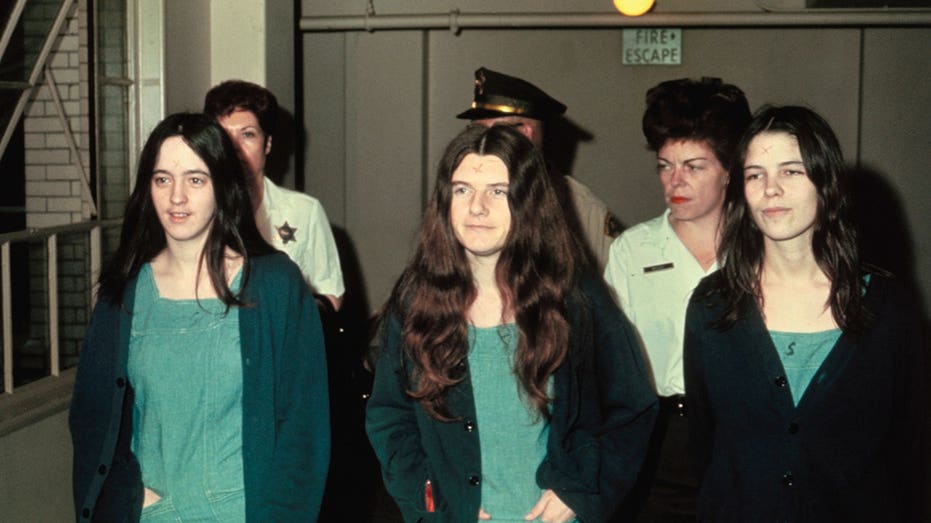

Patricia Krenwinkel, a former follower of cult leader Charles Manson, has been recommended for parole after spending more than 55 years in prison. The California parole board’s recommendation marks the third time in four years that Krenwinkel has been considered for release. California Gov. Gavin Newsom previously blocked two recommendations, citing concerns about her risk to public safety. The latest recommendation still requires additional review before Newsom decides whether to approve or reject it.
Krenwinkel, now 78, was convicted for her role in the 1969 Tate-LaBianca murders, a series of killings that left seven people dead, including actress Sharon Tate, who was eight months pregnant.
Article Subheadings
| 1) | Parole recommendation follows decades in custody |
| 2) | Newsom previously rejected Krenwinkel’s release |
| 3) | The 1969 Tate-LaBianca killings |
| 4) | Rehabilitation efforts and disputed risk assessment |
| 5) | What happens next in the parole process |
Parole recommendation follows decades in custody
Patricia Krenwinkel was recommended for parole Tuesday by California authorities after more than 55 years behind bars. The decision was confirmed through state corrections records and represents her third parole recommendation in four years. She remains at the California Institution for Women in Corona, where she is serving a life sentence.
Krenwinkel entered the California prison system on April 28, 1971. Her current recommendation does not mean she will be released. The parole process requires a review by the state board, followed by a decision from Gov. Gavin Newsom.
Newsom previously rejected Krenwinkel’s release
State records show that Krenwinkel was recommended for parole in May 2022 and again in May 2025. Gavin Newsom reversed both recommendations, preventing her release from prison.
In an October 2025 decision, Newsom acknowledged Krenwinkel’s rehabilitation efforts but concluded that she lacked the level of insight required for safe release. He wrote that the evidence, considered as a whole, showed she still posed an unreasonable danger to society at that time.
The 1969 Tate-LaBianca killings
Krenwinkel was 21 when she joined members of the group known as the Manson Family in two nights of killings in August 1969. The victims included Sharon Tate, who was eight months pregnant, and her friends and acquaintances. The killings also involved the deaths of Abigail Folger, Wojciech Frykowski, Steven Parent and Jay Sebring.
The following night, members of the group killed Leno LaBianca and Rosemary LaBianca at their home. According to the case summary, Krenwinkel fatally stabbed Folger and helped attack other victims. She and other defendants were originally sentenced to death, but those sentences were reduced to life in prison after California’s death penalty system was invalidated in 1972.
Rehabilitation efforts and disputed risk assessment
During her decades in prison, Krenwinkel earned college degrees, counseled other incarcerated people and mentored younger women. Those efforts have been cited in support of her parole applications and were acknowledged by Newsom in his previous decision.
Newsom nevertheless raised concerns about Krenwinkel’s self-awareness and what he described as a tendency to blame others for her conduct. Her attorney, Keith Wattley, disputed that assessment and argued that her record demonstrates meaningful rehabilitation and that she no longer presents an unreasonable threat to public safety.
“For more than five decades, she has committed to deep healing and rehabilitation, earning degrees, counseling others and becoming a mentor to younger women inside,” Keith Wattley said after the 2025 decision.
What happens next in the parole process
The parole board must complete its review before the recommendation can advance to the governor. Gavin Newsom will then have the authority to approve the release or reverse the recommendation, as he did in 2022 and 2025.
Until that process is complete, Krenwinkel will remain incarcerated at the Corona institution. The case is likely to renew debate over how California evaluates rehabilitation, accountability and public safety in applications involving people convicted of notorious violent crimes.
Key Points
| Number | Key Point |
|---|---|
| 1 | Patricia Krenwinkel was recommended for parole for the third time in four years. |
| 2 | She has spent more than 55 years in prison and remains at the California Institution for Women. |
| 3 | Gov. Gavin Newsom reversed her previous parole recommendations in 2022 and 2025. |
| 4 | Her attorney points to degrees, counseling and mentoring as evidence of rehabilitation. |
| 5 | The latest recommendation does not guarantee release and remains subject to further review. |
Summary
The latest parole recommendation gives Patricia Krenwinkel another opportunity to seek release after more than five decades in prison. Her case remains unresolved because the parole board’s review must be completed and the governor can still reject the recommendation. The central issue will be whether her rehabilitation and current conduct outweigh the state’s continuing concerns about accountability, insight and public safety.
Frequently Asked Questions
Who is Patricia Krenwinkel?
Patricia Krenwinkel is a former follower of Charles Manson who was convicted for her role in the 1969 Tate-LaBianca murders.
Why has Krenwinkel’s parole recommendation not resulted in her release?
A recommendation is not a final release decision. The parole board must complete its review, and Gov. Gavin Newsom can approve or reverse the recommendation.
What concerns have been raised about her release?
Newsom previously cited concerns about Krenwinkel’s insight, responsibility for her actions and potential danger to the public, despite acknowledging her rehabilitation efforts.
