

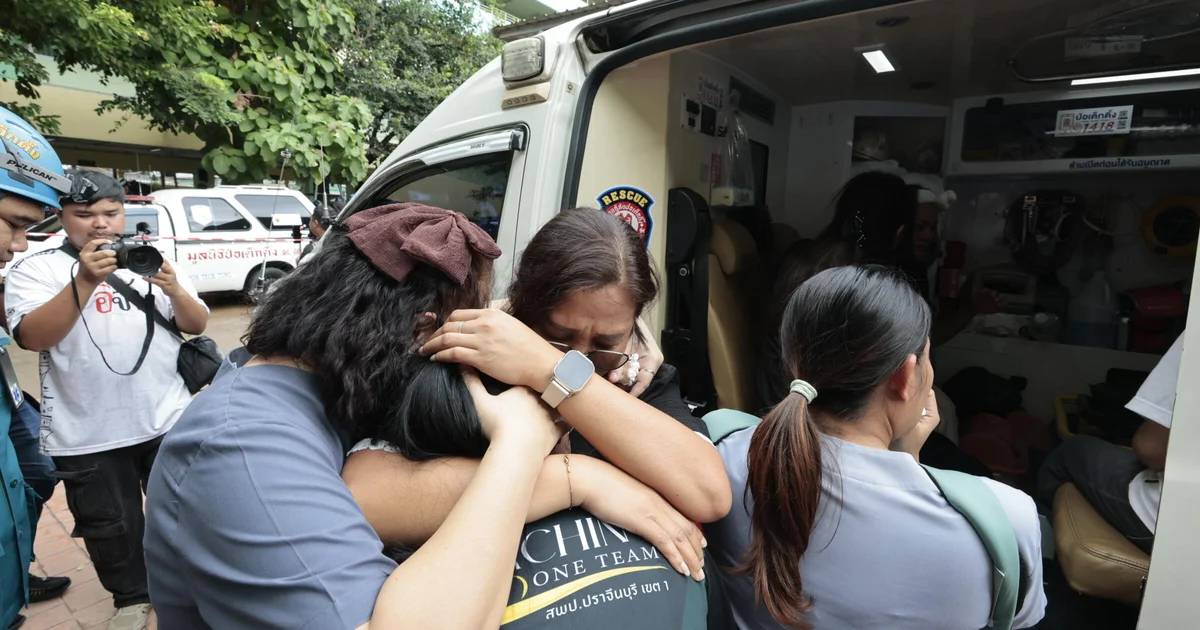

A tragic shooting incident unfolded at a high school outside Bangkok on Friday, resulting in the deaths of at least five individuals and leaving over 20 others injured. Authorities confirmed that the shooter, a 14-year-old student, took his own life shortly after the attack, which also involved the earlier slaying of his two grandparents. Witnesses described harrowing scenes as students fled the school during the rampage.
| Article Subheadings |
|---|
| 1) Details of the Incident |
| 2) Casualty and Injury Reports |
| 3) Eyewitness Accounts |
| 4) Government Response |
| 5) Gun Ownership Context in Thailand |
Details of the Incident
Around 10 a.m. local time, police responded to a shooting report at Debsirin Nonthaburi School, located in Nonthaburi province, northwest of Bangkok. Authorities confirmed that the shooter, a 14-year-old boy, also killed his grandparents earlier in the day at their home. Following the tragic incident, officials declared the site a crime scene, initiating investigations into the shooter’s motivations and mental health status.
The shooter reportedly exhibited signs of stress related to school, which may have played a role in the incident. The weapon used in the attack was described by law enforcement as small and compact, and it was legally registered to his grandfather. The relative connection of the firearm raises questions about gun safety and regulation among household members, particularly in the context of youth access to weapons.
Casualty and Injury Reports
The aftermath of the shooting revealed grim statistics; at least five individuals, primarily school staff members—including teachers and administrators—lost their lives in the attack. Moreover, 23 others were reported injured, with 10 victims in critical condition at Bangyai Hospital, located approximately three miles from the school. Many of the injuries sustained were gunshot wounds, portraying the severity of the situation. Initial casualty numbers varied as the day unfolded, highlighting the chaotic environment following the rapid response of emergency services.
Investigators continue to ascertain the full extent of the injuries and offer support to victims and their families. As community members grieve, many express their outrage and confusion over the senseless violence. Local officials are working to provide counseling services and support for students traumatized by the event.
Eyewitness Accounts
Eyewitness accounts painted a harrowing picture of the unfolding tragedy. Students reported hiding inside classrooms as gunshots echoed from adjacent buildings. When law enforcement arrived, they called for students to evacuate, creating a scene of panic and fear. One witness, Amporn Niamfuang, who owns a restaurant near the school, recounted the events, noting, “Suddenly, there was the sound of a single gunshot followed by multiple continuous shots. Students were running scared onto the street, holding each other’s hands and crying.”
These personal reflections reveal the emotional toll of such tragic events and the lasting impact it will have on an entire generation. Many survivors will likely carry the distressing memories of that day with them for years, prompting discussions surrounding mental health and support services for affected individuals.
Government Response
In the wake of the incident, Prime Minister Anutin Charnvirakul toured the school and confirmed reports of the shooter’s age and subsequent suicide. During his visit, Charnvirakul emphasized a need for national dialogue regarding school safety and youth mental health. The Prime Minister’s remarks come amidst growing concerns over escalating violence in schools around the globe.
Officials indicated that investigations will rigorously seek to uncover the underlying issues contributing to such violent acts. As more details emerge, there is significant focus on potential preventive measures that schools and communities can implement to safeguard students. Community forums and safety audits at schools may become more common as society grapples with the implications of this harrowing event.
Gun Ownership Context in Thailand
Thailand is recognized for having one of the highest rates of civilian gun ownership in Asia, second only to Pakistan and significantly exceeding that of its Southeast Asian neighbors. In a study compiled by various international organizations, it was reported that there are approximately 15.1 civilian firearms per 100 people in Thailand, contrasting sharply with less than one per 100 individuals in neighboring Malaysia. These statistics prompt questions regarding the accessibility of firearms and the role they play in instances of violence.
As discussions regarding gun control emerge, officials may face pressure to implement stricter regulations aimed at preventing access to firearms among minors. The current tragedy highlights not only the pressing need for mental health intervention but also the urgent dialogue surrounding weapon ownership laws and how they can be enacted or modified to foster a safer environment for youth.
| No. | Key Points |
|---|---|
| 1 | The shooter, a 14-year-old boy, killed five individuals at Debsirin Nonthaburi School. |
| 2 | He also shot and killed his grandparents before the attack at school. |
| 3 | 23 people were injured, with 10 in critical condition at a nearby hospital. |
| 4 | The Prime Minister called for urgent discussions on school safety and mental health. |
| 5 | Thailand’s high rate of gun ownership raises questions about firearm accessibility. |
Summary
The shooting at Debsirin Nonthaburi School serves as a stark reminder of the urgent need for comprehensive discussions regarding school safety, mental health, and gun ownership regulations. The profound impact of this tragedy ripples through the community, highlighting calls for greater support for both emotional and physical safety measures within schools. As events continue to unfold, the importance of understanding the root causes of such violence and implementing effective solutions remains critical to ensuring the safety of students and educators alike.
Frequently Asked Questions
Question: What triggered the school shooting in Nonthaburi?
The shooter exhibited signs of stress related to school, which may have contributed to the tragic incident. Authorities continue to investigate his motivations.
Question: How many individuals were injured during the shooting?
At least 23 individuals were reported injured in the shooting, with 10 of those in critical condition as they underwent treatment at a nearby hospital.
Question: What are the regulations regarding gun ownership in Thailand?
Gun ownership in Thailand is relatively high, with approximately 15.1 guns registered per 100 people, raising concerns about accessibility and safety, particularly in relation to youth access to firearms.
