

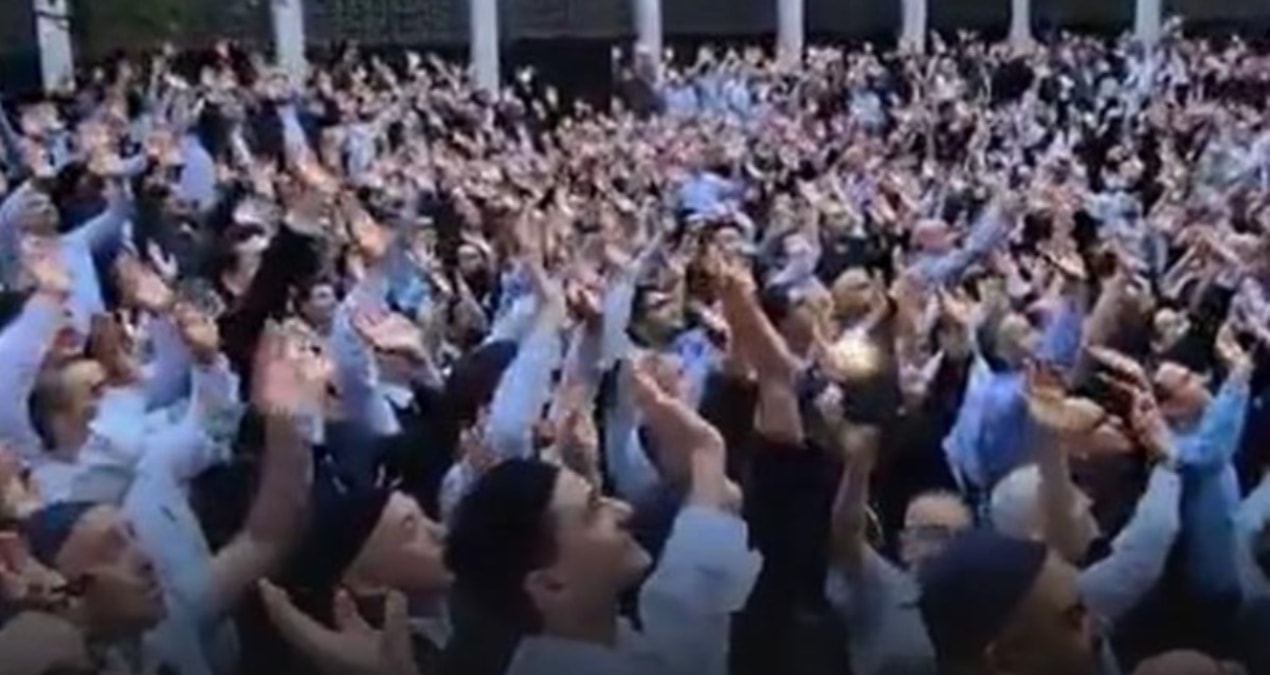

The recent inauguration of an Islamic cultural center in Cologne, Germany, has generated significant attention, particularly due to its coinciding with ongoing investigations into members of the organization behind the project. Hundreds gathered for the opening, showcasing solidarity among participants. The center, built by the Association of Islamic Cultural Centers, boasts extensive facilities and has been associated with various controversies concerning its funding and timing.
| Article Subheadings |
|---|
| 1) Allegations of a Moved Opening Date |
| 2) Overview of the New Headquarters |
| 3) Amenities and Facilities of the Complex |
| 4) Financial Aspects of the Project |
| 5) Legal Investigations and Arrests |
Allegations of a Moved Opening Date
Following the opening of the new center, allegations surfaced suggesting that its inauguration had been expedited to coincide with significant events in Turkey. Reports indicate that the timing of the ceremony correlated with the transfer of Alihan Kuriş to a courthouse in Ankara, raising suspicions that the launch was a strategic move to bolster morale among members of the organization amid the ongoing investigation.
Despite the claims, no definitive evidence or official documents have been disclosed to support the idea that the opening date was intentionally altered for this purpose. Critics argue that such speculation further complicates the narrative surrounding the center and its potential affiliations with contentious activities back in Turkey.
The dual timing of the event—reflecting a seemingly celebratory occasion amidst serious legal troubles—adds a layer of complexity to the public’s perception of the center. Many attendees at the opening ceremony sported similar blue skullcaps and collectively gestured towards an unseen focal point, which remains unverified. This display of unity was interpreted variously as a potent symbol of community support or a signal to external entities.
Overview of the New Headquarters
The new Islamic cultural center, constructed in the Müngersdorf district of Cologne, is a project spearheaded by the Association of Islamic Cultural Centers (Verband der Islamischen Kulturzentren – VIKZ). The center occupies a notable expanse of 12,608 square meters, with a total usable area of approximately 17,763 square meters and a gross floor area totaling 32,816 square meters. This spatial dimension underscores the significance and ambition of the project.
Marketing materials describe the center as a multi-faceted venue designed to serve various community needs. Divided into three main components, the facility will house not only a prayer area but also educational spaces, administrative offices, event halls, and guest accommodations. This reflects an intention to create a comprehensive cultural hub capable of supporting the diverse requirements of its future user base.
Significantly, the deliberate choice of location in a prominent urban area aligns with broader goals of community engagement and visibility. Nonetheless, local sentiments regarding the center’s establishment vary, especially in light of the allegations surrounding its organizational affiliations and purpose.
Amenities and Facilities of the Complex
The center is equipped with a prayer area designed to accommodate up to 881 individuals, which emphasizes its role as a key religious institution within the community. Furthermore, the complex features a student dormitory with a capacity for 231 beds, along with a guest house featuring 114 beds. These amenities are indicative of a broader mission to support educational endeavors and provide shelter and hospitality to those in need.
Parking facilities are also extensive, built to accommodate a total of 328 vehicles, which includes an open parking area for 172 vehicles and a closed parking area for an additional 156 vehicles. This thorough consideration towards supporting infrastructure reflects a strategic mindset regarding the center’s expected visitor traffic and community engagement.
The presence of such facilities aims to promote a supportive environment for community gatherings and educational activities, fostering a sense of belonging among attendees. Nevertheless, the underlying operational philosophies of the center remain subjects of scrutiny, particularly in light of legal issues associated with its leadership.
Financial Aspects of the Project
Reports alleging that the total cost of the center is around 70 million euros have surfaced in the Turkish media. However, no verifiable financial data has been posted on the VIKZ’s publicly accessible project page, leaving ambiguity regarding the true expenditure involved in the establishment of this facility.
Following a significant operation targeting the organization, Turkish Interior Minister Mustafa Çiftçi confirmed the strategic importance of the Cologne center, emphasizing its role within the broader context of ongoing investigations. Çiftçi mentioned that the organization under scrutiny appeared to be transitioning operations overseas, with an investment estimated at approximately 70 million euros dedicated to the Cologne facility.
These financial discussions add another layer of complexity to the public discourse surrounding the center, raising questions about funding sources and the organization’s intentions behind such a considerable investment. As financial transparency becomes an increasingly contentious topic, it remains to be seen how stakeholders will navigate these concerns while maintaining community trust.
Legal Investigations and Arrests
Amid the backdrop of the center’s opening, a significant investigation has been underway, spearheaded by the Ankara Chief Public Prosecutor’s Office. This inquiry delves into serious allegations concerning the establishment and management of a criminal organization, membership in such an organization, and various financial crimes. Notably, Alihan Kuriş was among the suspects apprehended during this investigation, which has seen a total of 38 individuals referred to a criminal judgeship.
Of those referred, 32 were taken into custody, with Kuriş and others facing legal repercussions for multiple charges, including conspiracy to defraud public institutions and money laundering. Only six of the suspects received a judicial control order allowing for a form of house arrest, suggesting a more nuanced approach to individual cases within the larger investigation.
These developments substantiate a complex interplay between community initiatives and legal scrutiny, emphasizing the need for transparency and accountability among organizations within the public sphere. The community response to the arrests and ongoing investigations will likely shape future interactions with the new center and its leadership.
| No. | Key Points |
|---|---|
| 1 | The new Islamic cultural center in Cologne has stirred controversy due to its opening coinciding with a significant investigation into its members. |
| 2 | Allegations suggest that the opening date of the center was moved forward to boost morale among members facing legal challenges. |
| 3 | The center has expansive facilities, including a prayer space, educational areas, dormitories, and guest accommodations. |
| 4 | Financial details of the project remain opaque, although it is speculated to cost approximately 70 million euros. |
| 5 | The legal investigation has led to the arrests of 32 suspects, including prominent figures within the organization. |
Summary
The opening of the Islamic cultural center in Cologne marks a significant moment in the ongoing dialogue about community identity and organizational accountability, concurrently casting a spotlight on legal challenges faced by its associated leadership. With allegations surrounding shifted timelines and substantial investments, the developments surrounding this center will likely provoke further discussion regarding its roles and responsibilities within both the local community and broader societal frameworks. The continued investigation will serve as a crucible for the organization’s long-term viability and trust among its constituents.
Frequently Asked Questions
Question: Why was the opening date of the center controversial?
The opening date was scrutinized because it coincided with significant legal troubles faced by members of the organization, including Alihan Kuriş being transferred to court on the same day.
Question: What facilities are available at the new center?
The center features a prayer area, educational facilities, dormitories for students, a guest house, and extensive parking, showcasing its intent to serve diverse community needs.
Question: What led to the arrests of several individuals linked to the center?
An investigation initiated by the Ankara Chief Public Prosecutor’s Office led to arrests under suspicion of various crimes, including establishing a criminal organization and fraud against public institutions.
