

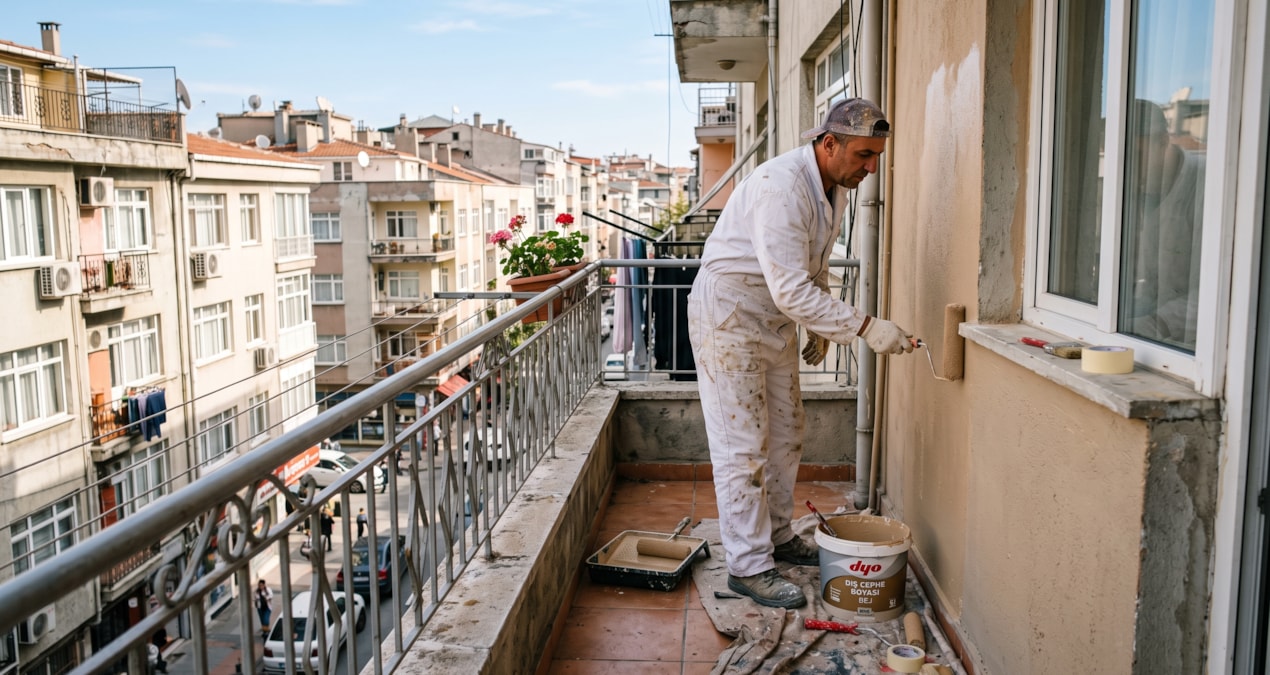

In recent discussions surrounding the governance of apartment complexes, a notable legal interpretation of Turkey’s Condominium Law has emerged. The law stipulates that the architectural exterior elements of buildings, which include external walls, roofs, doors, and visible balcony surfaces, are classified as common areas. This classification implies that any modifications made to these elements, including painting balconies in colors that deviate from the building’s approved color scheme, are not permissible without proper consent from fellow residents. Additionally, there are specific legal frameworks in place that must be adhered to when considering any exterior changes.
| Article Subheadings |
|---|
| 1) Understanding the Definition of Common Areas |
| 2) Mandatory Compliance with Color Regulations |
| 3) Legal Procedures for Color Changes |
| 4) Conditions for Painting Without Permission |
| 5) The Consequences of Non-Compliance |
Understanding the Definition of Common Areas
According to Article 4 of the Condominium Law (KMK), several components that contribute to the architectural exterior of buildings are classified as common areas. This encompasses not only the external walls and roofs but also the doors and surfaces of balconies that are visible from the outside. It is crucial for residents to recognize that alterations made to these areas—even if they occur on personal balconies—must respect the general aesthetic of the building as a whole. Any deviation from the established color scheme can be construed as a violation of architectural integrity, triggering legal disputes with other residents or management.
Mandatory Compliance with Color Regulations
Under the current legal framework, if an apartment owner wishes to paint their balcony in a color that contrasts with the building’s original palette, this act is likely to invite challenges from neighboring residents. Unless stated otherwise in the apartment management plan, it is within the rights of fellow owners to initiate legal proceedings against such unauthorized changes. As such, individuals who disregard these regulations face potential complications, including litigation aimed at reverting their changes to comply with the building’s color scheme. The Supreme Court upholds this interpretation by annulling applications that disrupt the exterior aesthetics, supporting community integrity and compliance.
Legal Procedures for Color Changes
For an apartment owner wishing to alter the color of their balcony lawfully, it is essential to follow the procedures established in Article 19 of the KMK. This includes obtaining written approval from a minimum of four-fifths of the building’s residents. Additionally, such approvals must be documented formally in the Board of Flat Owners meeting’s decision book to ensure transparency and accountability. Furthermore, it is crucial that the apartment management plan contains no clause prohibiting exterior color changes in a strict manner. Only upon meeting these criteria can a homeowner proceed with their intended alterations.
Conditions for Painting Without Permission
Interestingly, not all painting projects necessitate formal permission. Routine maintenance, such as the repainting of a balcony that has become worn or dirty, can often proceed without official consent. However, these maintenance tasks must adhere to the existing color code of the building in order to be considered legitimate. Refurbishments that merely restore the original color are classified as necessary maintenance and repair, thus bypassing the need for further legal requirements. This provision helps residents maintain their properties without the burden of extensive legal formalities while respecting the shared aesthetic of the building.
The Consequences of Non-Compliance
Failure to comply with these regulations can lead to significant repercussions for the property owner. Individuals who unilaterally decide to repaint their balconies without the necessary permissions are not only required to return their balconies to the original color but may also be liable for all litigation expenses incurred as a result of any legal actions taken by their neighbors. This financial liability serves as a deterrent to unauthorized modifications and underscores the importance of respect within a communal living environment.
| No. | Key Points |
|---|---|
| 1 | Common areas, according to the Condominium Law, include external walls, roofs, and balcony surfaces. |
| 2 | Any balcony painted in a color different from that of the building can lead to legal disputes. |
| 3 | Residents must secure approval from four-fifths of their neighbors to change balcony colors legally. |
| 4 | Routine maintenance painting using the original color does not require permission. |
| 5 | Non-compliance can result in the requirement to revert painted areas and bear litigation costs. |
Summary
The enforcement of the Condominium Law plays a crucial role in maintaining the architectural integrity of apartment complexes. Understanding the delineation of common versus private spaces is essential for residents to navigate aesthetic changes appropriately. By adhering to the established legal processes for making alterations, homeowners can avoid unnecessary legal conflicts and financial repercussions. Ultimately, respect for community standards promotes harmonious living, ensuring that modifications enhance rather than detract from the collective environment.
Frequently Asked Questions
Question: What constitutes common areas in an apartment complex?
Common areas are defined as elements that contribute to the architectural integrity of the building, including external walls, roofs, doors, and visible balcony surfaces.
Question: How can I change the color of my balcony legally?
To change the color of your balcony legally, you must obtain written approval from at least four-fifths of the building’s owners and ensure the apartment management plan does not prohibit such changes.
Question: Are there any cases where I can paint my balcony without asking for permission?
Yes, you can paint your balcony without permission if the painting is routine maintenance using the original color of the building, as this is considered necessary upkeep.
