

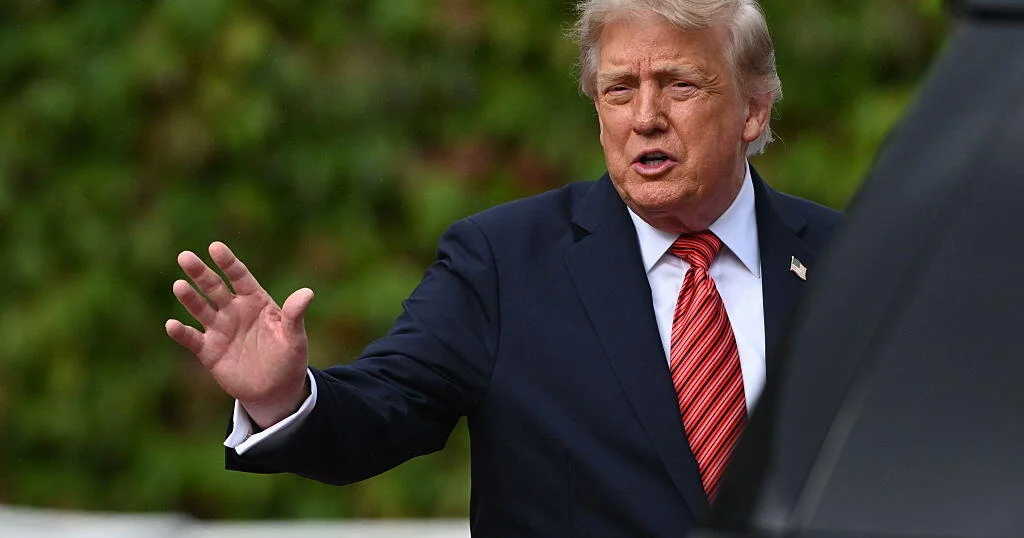

Former President Donald Trump, during his recent visit to Ireland, expressed a desire to see a unified Ireland, bridging the historical divide between the Republic of Ireland and Northern Ireland. Meeting with Irish leaders, he acknowledged the complexities surrounding this issue, particularly the perspectives of the United Kingdom and local stakeholders. As part of his trip, he attended the prestigious Irish Open golf tournament at one of his own clubs, simultaneously facing protests from various groups opposing his policies.
| Article Subheadings |
|---|
| 1) Trump Promotes Unity During Visit |
| 2) Historical Context of Irish Unification |
| 3) Mixed Reactions from Leaders and Citizens |
| 4) Trump’s Golf Tournament and Business Interests |
| 5) Protests and Political Backlash |
Trump Promotes Unity During Visit
On a visit to Ireland, Donald Trump made headlines by advocating for the unification of the Republic of Ireland and Northern Ireland. This reconciliation marks a significant historical aspiration for many, as two regions have been divided for decades amidst sectarian strife. At a meeting with Irish Prime Minister Micheál Martin in Dublin, Trump stated that he would “love to see it unified,” suggesting that now may be an opportune moment for such a political shift. He remarked, “
I don’t want to cause any problems but I’d love to see it unified. I think it would be a fantastic thing,”
while also acknowledging the likely opposition from the United Kingdom.
The former president emphasized that while he supports the idea of unification, “the U.K. will have something to say about it, obviously.” By engaging in discussions about Irish unity, Trump positioned himself in a delicate balance, aiming to foster goodwill while respecting existing political frameworks. His statements come amid a complex backdrop of historical tensions and political fragmentation between the two regions.
Historical Context of Irish Unification
The desire for a unified Ireland dates back over a century, originating after the partition of Ireland in 1921 when six counties in the north opted to remain under British governance. This decision resulted in a protracted conflict marked by violence between Unionists, who identified as British, and Nationalists, who identified as Irish. This conflict, often referred to as “The Troubles,” lasted approximately thirty years and tragically claimed thousands of lives.
The 1998 Good Friday Agreement marked a turning point, as it established a framework for peace that allowed for the possibility of a unification vote should public opinion shift favorably in Northern Ireland. Although the peace accord significantly reduced violence, the ultimate status of Northern Ireland remains unresolved. The path to unification would require a delicate negotiation, and a majority referendum amongst the populace would influence any potential changes to its political relationship with the Republic of Ireland.
Mixed Reactions from Leaders and Citizens
Trump’s statements on Irish unity drew a spectrum of responses from both high-profile leaders and everyday citizens. U.K. Prime Minister Andy Burnham asserted that discussions on a unity referendum were “off the table,” indicating that the current political climate does not favor such a change. He elaborated that a referendum would only be considered when public sentiment shifts “to the point where the call has to be considered.” This cautious stance indicates the sensitivity surrounding the topic of Irish unity and the prevailing reluctance to pursue change.
Responses from Northern Ireland’s political parties also highlighted the divisive nature of the issue. The Democratic Unionist Party, led by Gavin Robinson, explicitly rejected Trump’s remarks, asserting their interest in maintaining their status as part of the United Kingdom. Robinson stated, “
As unionists we are not interested in the destruction of our country by joining with the Irish Republic,”
emphasizing the entrenched division within Northern Ireland regarding the prospect of unification.
Trump’s Golf Tournament and Business Interests
Following his political engagements in Dublin, Trump transitioned to his oceanfront golf club in Doonbeg, where he attended the Irish Open, a prominent golfing event. Trump, an avid golfer, frequently participates in high-profile sporting occasions. His connection to golf has raised discussions about the intersection of his political influence and personal business interests, particularly as he owns several golf courses across the United States and in Europe.
The Irish Open at Trump’s property represents not just an opportunity for leisure but also highlights how Trump seeks to merge his political presence with business endeavors, bolstering his brands through association with prestigious events. His golf clubs have hosted multiple professional tournaments, generating both revenue and visibility for his enterprise, which has drawn scrutiny, particularly when juxtaposed with his role as a public figure.
Protests and Political Backlash
In tandem with Trump’s favorable discussions around Irish unification, various opposition groups planned demonstrations against his visit in Dublin. A coalition comprising left-leaning political factions, anti-military organizations, environmentalists, and pro-Palestinian groups aimed to voice their dissent against his presence. This public pushback serves as a clear indication of the polarized opinions surrounding Trump’s policies, reflecting broader societal grievances.
In addition to protests, Irish President Catherine Connolly, who holds a symbolic head of state role, engaged with Trump but not without criticism. Connolly has been vocally opposed to many of Trump’s policies and had previously joined protests against him during his last visit in 2019. In her meeting, she emphasized the public sentiment that “normalization of war and genocide can never be accepted,” a statement asserting the principled stance many Irish citizens maintain concerning U.S. foreign policy.
The juxtaposition of Trump’s optimistic remarks on unity and the vocal opposition from various segments of the Irish populace underscores how complex and contentious issues of national identity and reconciliation remain in the region.
| No. | Key Points |
|---|---|
| 1 | Trump advocates for the unification of Ireland during his visit. |
| 2 | Historical context of the Irish conflict and its impact on current affairs. |
| 3 | Mixed responses from political leaders regarding unification sentiments. |
| 4 | Trump’s attendance at the Irish Open highlights his business interests. |
| 5 | Public protests against Trump’s policies coincide with his visit. |
Summary
The recent visit by Donald Trump to Ireland has indeed stirred significant conversation regarding the complex issue of Irish unification, blending both historical grievances and contemporary political dynamics. His remarks advocating for unity elicited varied reactions from political leaders, reflecting the entrenched divisions that persist in the country. Coupled with his attendance at a major golf event, Trump’s visit illustrates the intertwining of his personal business interests with his public persona. As protests against him unfold, it becomes clear that while the notion of a unified Ireland garners some support, it remains a contentious topic that elicits strong emotions on all sides of the debate.
Frequently Asked Questions
Question: What is the significance of Trump’s comment on Irish unity?
Trump’s comment on Irish unity highlights ongoing discussions about the political status of Northern Ireland and its relationship with the Republic of Ireland. His remarks also underline a historical desire for reconciliation, which remains impactful amid current political divisions.
Question: What was the Good Friday Agreement?
The Good Friday Agreement, signed in 1998, was a major development in the peace process in Northern Ireland, establishing a framework for self-governance and allowing for the potential vote on unification depending on public sentiment.
Question: How do the protests against Trump reflect Irish public opinion?
The protests against Trump indicate a significant segment of the Irish population’s opposition to his policies and approach to international issues, particularly concerning U.S. foreign policy and historical injustices faced in Ireland.
