

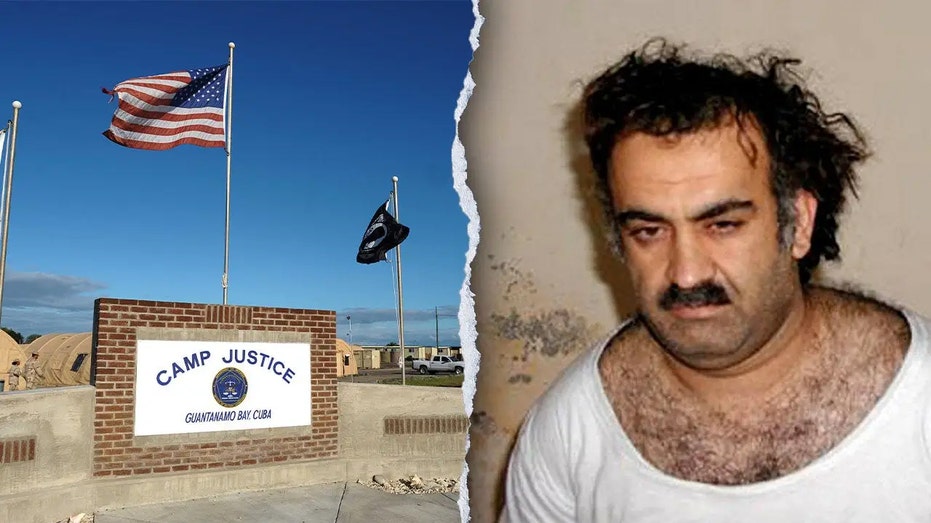

The military trial of Khalid Sheikh Mohammed and three alleged co-conspirators has been scheduled for June 5, 2028, nearly three decades after the September 11 attacks. The defendants have been held at Guantánamo Bay, Cuba, for more than 20 years while the case remained in lengthy pretrial proceedings. A former military commissions prosecutor said the delays reflect structural problems in the tribunal system rather than a lack of evidence. He described the process as a “Frankenstein’s zombie court.”
The judge also established deadlines intended to move the case toward trial, although unresolved disputes over evidence, detention practices and potential punishment remain. The proceedings have been complicated by repeated legal challenges, changes in judges and failed plea negotiations.
| 1) | Trial date follows decades of pretrial proceedings |
| 2) | Former prosecutor blames the military commission system |
| 3) | Defendants and allegations at the center of the case |
| 4) | Plea agreements and punishment questions remain unresolved |
| 5) | Victims’ families continue seeking accountability |
Trial date follows decades of pretrial proceedings
A military judge set June 5, 2028, as the expected start of the trial at the U.S. military commissions facility at Guantánamo Bay. The defendants have spent years in pretrial litigation as the commission addressed challenges involving evidence, procedure and other legal questions. The new schedule provides deadlines for the remaining preparation, but the trial is still more than a year away.
The case concerns the September 11, 2001, attacks, in which hijackers crashed commercial aircraft into the World Trade Center and the Pentagon. A fourth plane, United Airlines Flight 93, crashed in Pennsylvania after passengers attempted to retake control.
Former prosecutor blames the military commission system
Michael Lebowitz, a former Guantánamo military commissions prosecutor who worked on the September 11 case and the USS Cole bombing case, said the central problem is the way the system was created and developed. He also pointed to the logistical burden of holding hearings at Guantánamo.
“It’s the system and how it evolved and was created. And it’s also an issue of Guantánamo Bay itself.”
Lebowitz said judges, prosecutors, defense lawyers, witnesses and court personnel must travel to Washington, D.C., before flying to the detention facility for even small hearings. He said the case has had more than 10 judges, forcing lawyers to revisit issues that would ordinarily be settled more quickly in federal court.
Defendants and allegations at the center of the case
Khalid Sheikh Mohammed, a Pakistani citizen, is accused of masterminding the September 11 attacks. The other defendants are Walid bin Attash, Mustafa al-Hawsawi and Ammar al-Baluchi, also known as Ali Abdul Aziz Ali. All four have been held at Guantánamo for more than two decades.
The prosecution must continue preparing its case while the defense contests evidence and other legal matters. Lebowitz said the commission’s structure has allowed litigation to expand, slowing progress toward a trial on the merits.
Plea agreements and punishment questions remain unresolved
In 2024, Mohammed, bin Attash and al-Hawsawi agreed to admit their roles in the attacks in exchange for life sentences and the removal of the death penalty. Some victims’ families supported the arrangement, while others opposed it. The Biden administration later withdrew the agreement, leading to additional litigation and leaving the case headed toward trial.
Prosecutors must also determine whether to seek the death penalty. Lebowitz said that even if death sentences were imposed, they would face serious challenges on appeal. He added that defense lawyers could use the case to examine the CIA’s treatment of detainees after the attacks.
Victims’ families continue seeking accountability
The long delay has frustrated relatives of those killed on September 11, who have waited years for a final resolution. Terry Strada, national chair of 9/11 Families United, said families also want accountability from Saudi Arabia, alleging that its agents supported al-Qaeda and the hijackers after they arrived in the United States.
The scheduled trial offers a path toward resolving the criminal case, but the timetable does not settle the broader questions surrounding responsibility, detention practices and the military commissions themselves.
| Number | Key Point |
|---|---|
| 1 | The trial is scheduled for June 5, 2028. |
| 2 | Four defendants face allegations tied to the September 11 attacks. |
| 3 | The case has remained in pretrial proceedings for years. |
| 4 | A former prosecutor criticized the commission’s structure and logistics. |
| 5 | The death penalty and broader accountability questions remain open. |
Summary
The 2028 trial date marks a significant procedural step in the September 11 prosecution, but it follows years of delays caused by legal disputes, logistical difficulties and changes within the military commissions. The defendants’ potential convictions and sentences will depend on unresolved evidentiary and procedural issues. For victims’ families, the schedule provides a prospective courtroom resolution while leaving wider accountability questions unsettled.
Frequently Asked Questions
When is the September 11 trial scheduled to begin?
The military judge set June 5, 2028, as the scheduled trial date.
Who are the defendants?
The defendants are Khalid Sheikh Mohammed, Walid bin Attash, Mustafa al-Hawsawi and Ammar al-Baluchi.
Why has the case taken so long?
The case has been slowed by extensive pretrial litigation, disputes over evidence, changes in judges, plea negotiations and the logistical demands of conducting hearings at Guantánamo Bay.
Could prosecutors seek the death penalty?
The prosecution has not resolved that question. A former prosecutor said any death sentences would likely face substantial legal challenges.
