

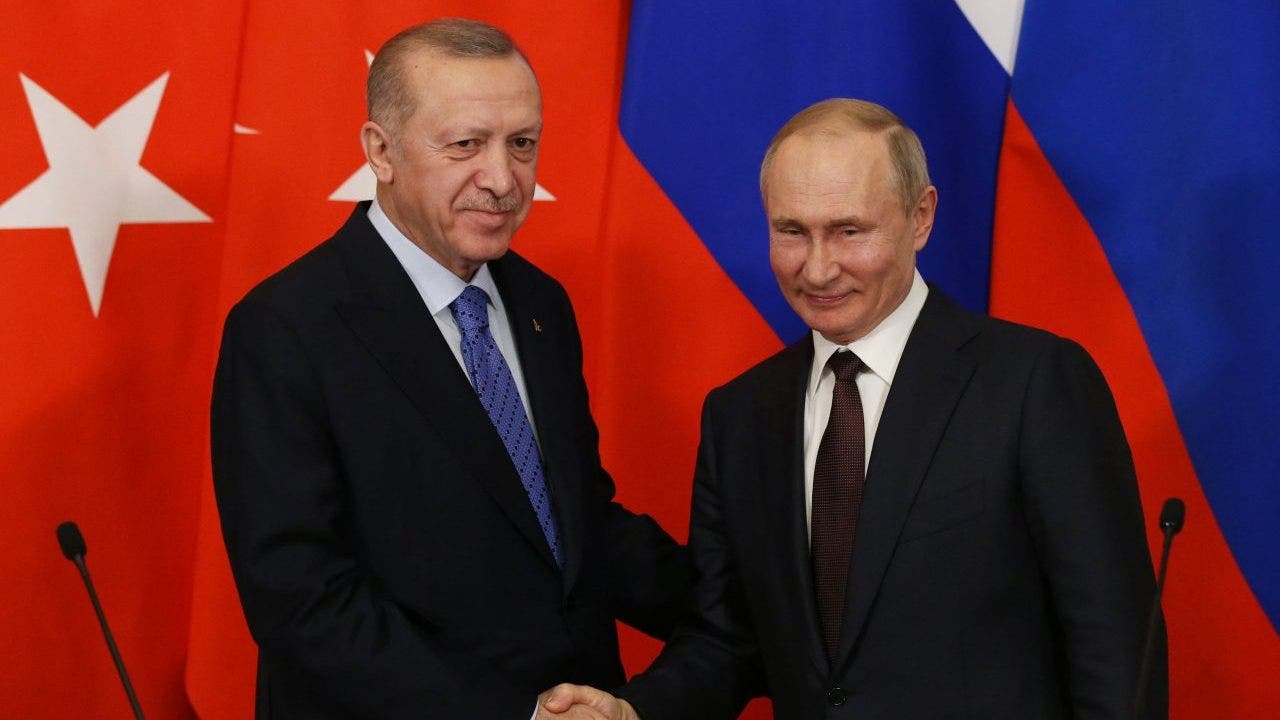

A bipartisan group of House lawmakers has proposed the Turkey Diplomatic Realignment Act, aiming to redefine Turkey’s classification at the State Department from a European country to a Near Eastern country. This move is a response to Turkey’s shifting alliances and foreign policy, which increasingly diverges from U.S. and NATO interests. Key proponents of the legislation, including Representatives Brad Schneider and Gus Bilirakis, argue it is necessary to hold the Turkish government accountable for its actions in the international arena.
| Article Subheadings |
|---|
| 1) Initiation of Legislation |
| 2) Motivations Behind the Act |
| 3) Turkey’s Geopolitical Shift |
| 4) Reactions from Turkey |
| 5) Impact of Proposed Changes |
Initiation of Legislation
The Turkey Diplomatic Realignment Act has been introduced in the House by a coalition of bipartisan lawmakers led by Representatives Brad Schneider of Illinois and Gus Bilirakis of Florida. The legislation aims to formally alter Turkey’s designation by the U.S. State Department, shifting it from the Bureau of European and Eurasian Affairs to the Bureau of Near Eastern Affairs. This legislative action reflects deeper concerns regarding Turkey’s foreign policy and international alignments, especially its increasing interactions with adversarial nations such as Russia, China, and Iran.
Supporters of the act cite Turkey’s recent diplomatic behavior as indicative of its departure from traditional Western alliances. Specifically, the lawmakers assert that Turkey’s actions are increasingly at odds with the interests of the United States and its NATO partners. By introducing this bill, these lawmakers hope to address the diplomatic realities that have emerged over recent years, fostering a more realistic approach to U.S. foreign policy concerning Turkey.
Motivations Behind the Act
The motivations behind the Turkey Diplomatic Realignment Act revolve around significant geopolitical changes and deteriorating relations between Turkey and Western countries. Representative Brad Schneider highlighted the need for the U.S. to reassess its stance on Turkey, stating, “Turkey is at a crossroads, but Erdogan has made his choice.” He further emphasized the notion that Turkey’s leadership is actively working against U.S. interests while simultaneously expecting the privileges of an ally.
The legislation stems from a recognition among U.S. lawmakers that Turkey’s government under President Recep Tayyip Erdogan has made choices that contradict the foundational principles of NATO unity, including harboring Hamas operatives and maintaining connections with Russia. Rep. Gus Bilirakis expressed a similar sentiment, stating, “The time has come for official U.S. foreign policy to more accurately reflect the realities of this hostile regime’s conduct.” Such motivations suggest a growing consensus among U.S. lawmakers that significant changes are necessary for addressing the complexities in U.S.-Turkey relations.
Turkey’s Geopolitical Shift
Turkey’s foreign policy shift has recently become more apparent, particularly in its dealings with Russia and other states viewed as adversaries in the Western geopolitical sphere. For instance, Turkey’s purchase of the Russian S-400 missile defense system has raised alarm bells within NATO, marking a significant break from collective Western defense standards.
Furthermore, reports indicate that Turkey has been fortifying its economic and political relationships with countries that challenge U.S. interests, such as Iran and China. This alignment raises concerns over regional stability, particularly with regard to Turkey’s role in the Middle East. Analysts have voiced that Turkey’s current trajectory, driven by Erdogan’s foreign policy, is increasingly shaping it into a nation that acts in opposition to U.S. and NATO objectives.
As Turkey finds itself pivoting away from traditional alliances, its roles in international conflicts and relationships merit a critical evaluation. The evolving situation exemplifies a significant departure from Turkey’s historical alignment with Western nations and presents calls for an urgent recalibration of diplomatic strategies by the U.S.
Reactions from Turkey
In response to the proposed legislation, Turkish officials have vigorously defended Turkey’s European identity, challenging the characterization of their foreign policy as hostile. A representative from the Turkish embassy in Washington asserted, “Türkiye’s European identity is an undeniable historical and geostrategic fact,” emphasizing their long-standing membership in NATO and European organizations. They argue that Turkey holds a legitimate place within the European institutional framework.
This reaction speaks to a broader narrative where Turkey views itself as a crucial player in European security and stability. Turkish leadership maintains that the nation has not abandoned its commitments but is instead navigating complex geopolitical challenges that necessitate strategic partnerships beyond traditional Western allies.
Nevertheless, U.S. lawmakers remain undeterred by Turkey’s rebuttals, indicating a continuing disconnect between the perspectives of American officials and Turkish leadership. The enduring rift over how Turkey’s foreign engagements are perceived may further complicate diplomatic interactions moving forward.
Impact of Proposed Changes
If enacted, the Turkey Diplomatic Realignment Act would not only redefine Turkey’s diplomatic status but also necessitate a comprehensive review of the implications of Turkey’s shift away from a European focus. The proposal requires the State Department to reassess Turkey’s alignment within 90 days and submit a five-year congressional review regarding the ramifications of this reclassification.
This act may provoke further scrutiny of Turkey’s military and economic relationships, influencing both bilateral and multilateral engagements. Lawmakers and analysts anticipate that this realignment could lead the U.S. to adopt a more assertive posture in addressing issues where Turkey’s actions significantly diverge from American interests in the region.
Furthermore, the legislation could spur subsequent discussions surrounding U.S. military assistance and cooperation with Turkey, potentially adjusting existing frameworks to reflect the country’s orientation. As the U.S. navigates its own geopolitical interests while addressing international challenges, Turkey’s new classification will likely spark broad debates within foreign policy circles.
| No. | Key Points |
|---|---|
| 1 | The Turkey Diplomatic Realignment Act aims to shift Turkey’s classification at the State Department from European to Near Eastern. |
| 2 | Bipartisan support reflects a growing concern over Turkey’s alignment with Russia, China, and Hamas. |
| 3 | Turkey’s foreign policy has increasingly diverged from U.S. interests, prompting calls for reassessment. |
| 4 | Turkish officials maintain their European identity, disputing U.S. lawmakers’ characterization of Turkey. |
| 5 | The act proposes a review process to evaluate the consequences of Turkey’s diplomatic realignment. |
Summary
The introduction of the Turkey Diplomatic Realignment Act marks a critical juncture in U.S.-Turkey relations, signaling a response to the profound geopolitical shifts that have altered Ankara’s alignment with traditional Western powers. By reevaluating Turkey’s designation within the State Department, lawmakers are aiming to address the complexities arising from its current foreign policy trajectory. The proposed changes, along with bipartisan support and Turkey’s counterarguments defending its European credentials, illustrate the ongoing tensions and potential ramifications for U.S. diplomatic strategy in the Near East.
Frequently Asked Questions
Question: What prompted the introduction of the Turkey Diplomatic Realignment Act?
The Act was introduced in response to Turkey’s foreign policy shifts that increasingly diverge from U.S. and NATO interests, particularly its growing ties with adversarial nations.
Question: What specific changes does the Act propose regarding Turkey’s status?
The legislation seeks to change Turkey’s designation at the U.S. State Department from the Bureau of European and Eurasian Affairs to the Bureau of Near Eastern Affairs.
Question: How has Turkey responded to the proposed legislation?
Turkish officials have defended Turkey’s European identity and criticized the characterization of its foreign policy, asserting that Turkey remains an integral part of the European institutional framework.
