

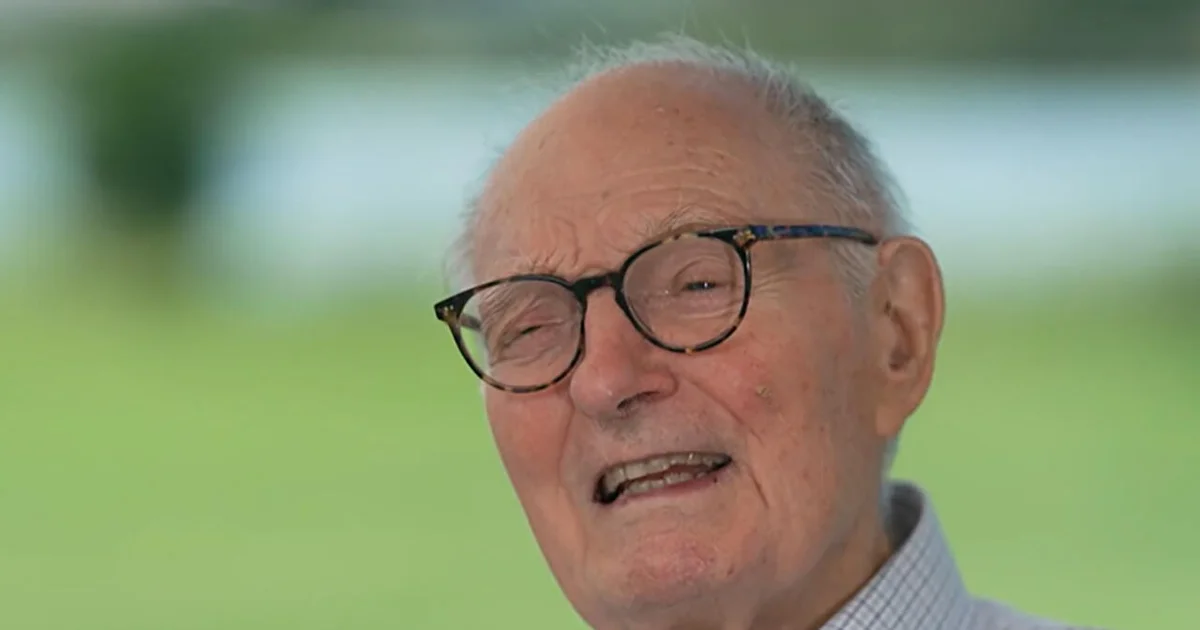

Alan Alda, the iconic actor, writer, and director, has captivated audiences across generations, particularly through his memorable roles in television. With a career spanning over six decades, Alda has made a significant impact on both the entertainment industry and public discourse, especially in the realm of science communication. Recently, he opened up about his life experiences, his celebrated career, and his ongoing battle with Parkinson’s disease, shedding light on the importance of humor and connection in overcoming life’s challenges.
| Article Subheadings |
|---|
| 1) Alda’s Iconic Roles and Their Impact |
| 2) A Childhood Marked by Adversity |
| 3) Building Connectivity Through Art |
| 4) Living with Parkinson’s Disease |
| 5) Humor as a Coping Mechanism |
Alda’s Iconic Roles and Their Impact
Among the characters that Alan Alda portrayed, his role as ‘Hawkeye’ Pierce in the television series “M*A*S*H” remains the most iconic. The show, which aired on CBS from 1972 to 1983, garnered immense popularity, culminating in a final episode that attracted over 100 million viewers. Alda’s compelling performance not only earned him critical acclaim but also won him five out of the six Emmy Awards he received during his career. Beyond ‘Hawkeye’, Alda took on various roles, from Senator Arnold Vinick in “The West Wing” to lawyer Jack Burroughs in “The Four Seasons,” each showcasing his diverse range as an actor.
In many interviews, Alda reflected on how deeply resonant his character in “M*A*S*H” was with audiences. He noted,
“I have doctors coming up to me on the street all the time telling me that seeing me in the show made them want to become a doctor. Not a single one said it made them want to become an actor!”
This sentiment underscores the significant cultural impact that Alda’s work had on the medical profession and society at large. His portrayal of a combat surgeon during the Korean War blended humor with humanism and highlighted the realities of war in a way that resonated with viewers.
A Childhood Marked by Adversity
Despite his successful acting career, Alda’s early life was fraught with challenges. At the tender age of seven, he contracted polio, an illness that plagued his childhood before the advent of vaccines. The recovery process was daunting, requiring intensive treatments that were often painful. As Alda recounted,
“My father had just gotten a huge part in a movie, playing George Gershwin, and about a week after he started shooting, I got polio. And he and my mother had to administer the treatment, which was almost-scalding hot packs of wool on every limb.”
Alda’s experience with the illness not only shaped his resilience but also taught him about empathy and the complexities of human health.
Furthermore, Alda’s family life introduced him to both the challenges of mental health and artistic expression. His mother, Joan, struggled with schizophrenia, leading to a turbulent home environment. Reflecting on this experience, Alda stated,
“My mother was mentally ill… I had to pick one reality and try to stick with that, and I think it contributed a lot to the tools I later had, trying to figure out what’s real and what’s not real.”
These formative experiences instilled within him not only a sense of curiosity but also the keen observational skills that would later inform his artistic endeavors.
Building Connectivity Through Art
Alda’s commitment to fostering human connection through art is evident in his behind-the-scenes interactions during “M*A*S*H”, where he emphasized the power of camaraderie among cast and crew. Alda remembered that the actors would remain together between scenes rather than retreating to their dressing rooms. “We stayed in our chairs in a circle and made fun of one another and laughed,” Alda shared, indicating that this sense of connectivity was intentional and vital for the spirit of the show. This nurturing environment contributed to the authenticity that audiences experienced on screen.
In addition to his work in television, Alda founded the Alan Alda Center for Communicating Science at Stony Brook University in 2009. The center is dedicated to improving the way scientists convey information to the public, aiming to demystify complex topics using techniques rooted in improvisational acting. Alda believes that understanding and connection can lead to more effective communication. He states,
“Improvisation really puts you in touch with the other person, and that’s when I realized the value of connection.”
This initiative highlights Alda’s passion for science communication, empowering scientists to articulate their research with clarity and empathy.
Living with Parkinson’s Disease
In recent years, Alda has been candid about his diagnosis with Parkinson’s disease, a neurological disorder that presents significant daily challenges. He experienced early symptoms, such as acting out dreams, which initially confounded him. “I had no twitch, no tremor, no problems with my voice,” Alda noted upon receiving his diagnosis at the age of 79. The actor chose to address this diagnosis publicly to promote awareness and understanding while destigmatizing the conversation surrounding such health issues.
Alda articulated a profound acceptance of his condition, stating,
“I really think reality is my friend… I can’t wish it away. I can’t hope for a better future. I gotta accept what is.”
Despite the absence of a cure, he continues to explore treatment options while firmly stating, “I don’t let Parkinson’s define me. It’s not who I am. It’s just a hobby.” This approach exemplifies his resilience and determination to maintain a quality of life amid adversity.
Humor as a Coping Mechanism
One of Alda’s key strategies for managing his condition is his use of humor. He emphasizes the importance of finding laughter even in the face of difficulties. “Very important, because the best way to deal with anything that’s a little bit of a problem is to find out what’s funny about it and laugh at it,” Alda shared. He often recounts lighthearted anecdotes from his experiences with Parkinson’s, such as struggling to control his hands while typing on a computer, humorously suggesting that Dr. Parkinson is “moving my hand all over the screen.”
Moreover, Alda attributes humor as a foundational element in his long-lasting marriage with his wife, Arlene. He reminisced about their first encounter when he noticed how she laughed at his jokes, a moment that left a lasting impression. Celebrating almost 70 years of marriage, Alda noted that laughter remains a powerful bond between them. He humorously concluded his reflections about the couple’s shared life: “The last time I put my socks on was a tremendous moment to celebrate!”
| No. | Key Points |
|---|---|
| 1 | Alan Alda’s diverse roles have made a significant impact on television and culture. |
| 2 | Alda’s early life challenges shaped his resilience and understanding of human connections. |
| 3 | He founded the Alan Alda Center for Communicating Science to enhance public understanding of science. |
| 4 | Alda openly discusses his Parkinson’s disease to raise awareness and acceptance. |
| 5 | Humor has been a vital tool for Alda in coping with life’s challenges and strengthening relationships. |
Summary
Alan Alda’s journey through life as an actor, advocate, and individual living with Parkinson’s disease offers an inspiring narrative of resilience and human connection. He has used his platform to emphasize the importance of clear communication in science and to highlight the reality of living with a chronic illness. Through humor and openness, Alda continues to connect with audiences, reminding us of the power of laughter and empathy in facing challenges. His legacy is one of compassion, creativity, and an unyielding spirit.
Frequently Asked Questions
Question: What is Alan Alda best known for?
Alan Alda is best known for his role as ‘Hawkeye’ Pierce in the classic television series “M*A*S*H,” along with various other significant roles in television and film.
Question: How has Alda contributed to science communication?
Alda founded the Alan Alda Center for Communicating Science, which aims to enhance the ability of scientists to communicate their research clearly and effectively to the public.
Question: What is Alda’s perspective on living with Parkinson’s disease?
Alda approaches his diagnosis with acceptance and humor, emphasizing that he does not allow Parkinson’s to define him and focusing on strategies to maintain quality of life.
