

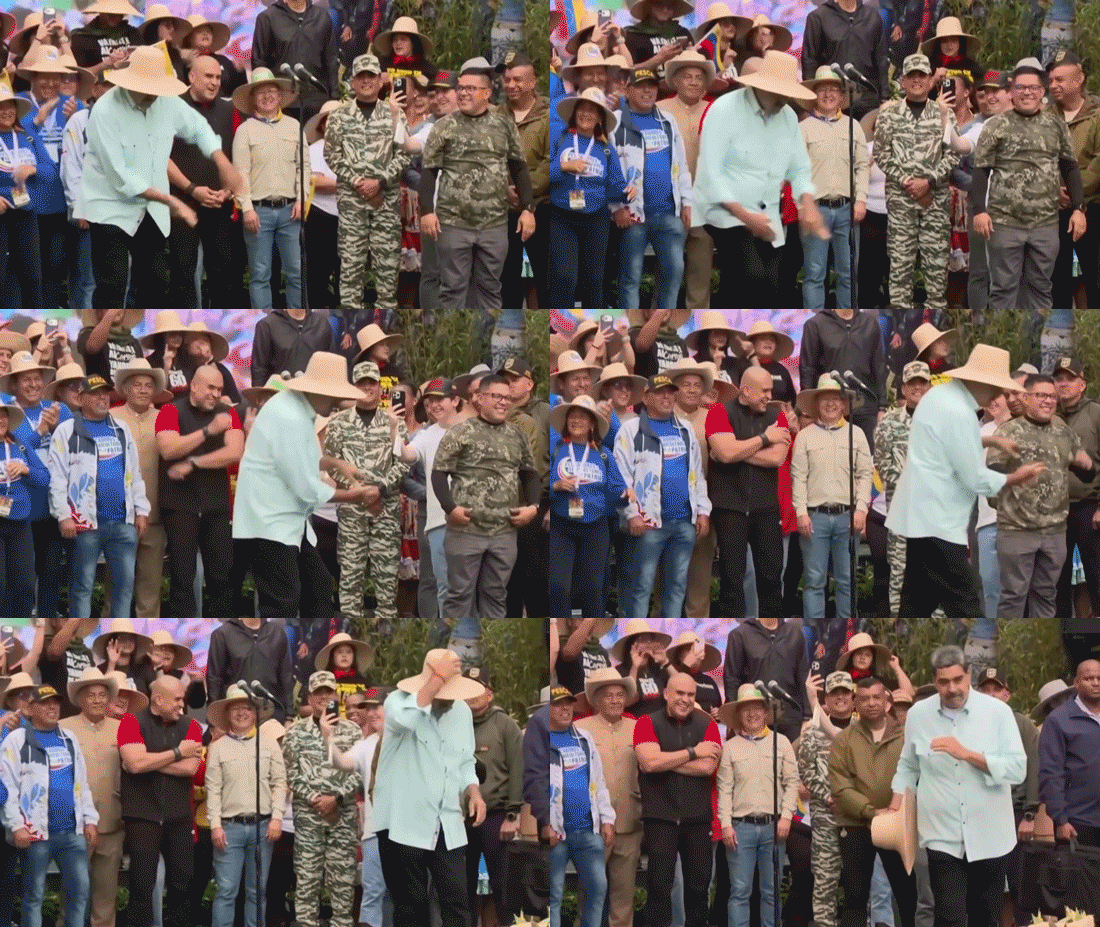

Tensions between Venezuela and the United States escalated sharply after U.S. authorities seized an oil tanker off the coast of Venezuela, accused of transporting sanctioned oil from both Venezuela and Iran. Venezuelan President Nicolás Maduro responded with a fierce warning to U.S. powers during a recent rally, urging his fellow citizens to remain vigilant against what he perceives as imperialist aggression. The statements and events surrounding the incident highlight the ongoing geopolitical issues between the two countries, showcasing a narrative characterized by accusations of piracy and claims over natural resources.
| Article Subheadings |
|---|
| 1) Maduro’s Defiant Stance at the Rally |
| 2) U.S. Justification for the Seizure |
| 3) Reactions from the Venezuelan Government |
| 4) The Broader Context of U.S.-Venezuela Relations |
| 5) Potential Consequences and Future Outlook |
Maduro’s Defiant Stance at the Rally
During a recent public rally, Nicolás Maduro showcased his resolute attitude by brandishing the sword of Simón Bolívar, a figure synonymous with Venezuelan independence. His remarks were infused with nationalist fervor, as he stated, “In these times, things have to be different… ready to smash the teeth of the North American empire if necessary.” This statement and the accompanying imagery are significant, as they trace back to the historical perspective where Bolívar is viewed as a champion against foreign oppression. Maduro emphasized that Venezuelans must remain alert amidst escalating tensions with the U.S., framing the situation as a defensive struggle for sovereignty.
U.S. Justification for the Seizure
The U.S. Department of Justice has defended the seizure of the tanker, claiming that it was involved in transporting oil in violation of U.S. sanctions. These sanctions target the Venezuelan government and its industry in response to various allegations, including human rights violations and narcotics trafficking. The Attorney General stated that the actions were necessary to curb illicit activities linked to the worsening political climate in Venezuela and its alleged dealings with Iran. U.S. officials have warned that maritime operations will continue to dismantle networks that they identify as trafficking vessels, which purportedly have connections to Caracas.
Reactions from the Venezuelan Government
The Venezuelan Foreign Ministry denounced the U.S. actions as “brazen robbery” and an overt act of “international piracy.” They accused the Trump administration of seeking to expropriate Venezuelan resources without any legal basis, arguing that this is part of a broader strategy to undermine the country’s sovereignty. Maduro’s administration indicated its intent to escalate the matter to international bodies, asserting that it would not allow foreign powers to seize what they consider to be national assets. The Ministry also portrayed the incident as a distraction from failed political efforts to undermine Maduro’s rule.
The Broader Context of U.S.-Venezuela Relations
Tensions between the U.S. and Venezuela have roots deep in historical grievances and a complex geopolitical landscape. Since the onset of the Maduro administration, relations have significantly soured, especially following the implementation of sanctions aimed at crippling Venezuela’s oil-dependent economy. The U.S. government has backed opposition leaders and taken steps, including direct negotiations with alternative Venezuelan authorities. These actions reflect ongoing efforts to influence Venezuela’s political future. The recent tanker seizure signifies an escalation in these diplomatic tensions, highlighting the underlying issues of sovereignty and control over natural resources.
Potential Consequences and Future Outlook
Given the nature of the incident, various scenarios may unfold moving forward. Analysts suggest that heightened tensions could lead to increased military presence in the region, as U.S. officials weigh their options for future operations. This might escalate into broader conflicts or potentially provoke responses from regional allies of Venezuela. The situation also places pressure on Venezuela’s political landscape, as Maduro faces criticism domestically and internationally. Furthermore, increased sanctions or military action could exacerbate humanitarian crises within Venezuela, attracting widespread condemnation and complicating any potential negotiations for a peaceful resolution.
| No. | Key Points |
|---|---|
| 1 | Maduro warned of imperialist aggression while rallying his supporters. |
| 2 | U.S. officials claimed the tanker violated sanctions against Venezuelan oil sales. |
| 3 | The Venezuelan government condemned the U.S. seizure as an unlawful act. |
| 4 | Relations between the U.S. and Venezuela are strained due to underlying geopolitical interests. |
| 5 | The situation poses risks of further military involvement and humanitarian repercussions. |
Summary
The recent seizure of an oil tanker off the Venezuelan coast marks a significant escalation in tensions between the U.S. and Venezuela. Nicolás Maduro responded defiantly, emphasizing national sovereignty and rallying support against perceived imperialist aggression. The U.S. justified its actions under the guise of enforcing sanctions, while Venezuela’s leadership portrays these moves as unlawful acts of theft. As geopolitical complexities deepen, the potential for conflict increases, posing serious ramifications for the region and raising questions about future engagements between the two nations.
Frequently Asked Questions
Question: What actions has the U.S. taken against Venezuela in recent months?
The U.S. has implemented a series of sanctions targeting the Venezuelan government, particularly its oil industry, in response to alleged human rights abuses and illicit drug trafficking. This includes maritime operations aimed at disrupting vessels associated with these activities.
Question: How did Maduro react to the seizure of the oil tanker?
Maduro condemned the seizure as an act of piracy and called for national unity against U.S. aggression. He urged Venezuelans to stay alert and defend their country’s sovereignty.
Question: What does the International community think about the U.S.-Venezuela tensions?
Responses from the international community are mixed, with some countries expressing support for Venezuela and condemning U.S. actions as violations of sovereignty, while others align with U.S. perspectives on issues of democracy and human rights in Venezuela.
