

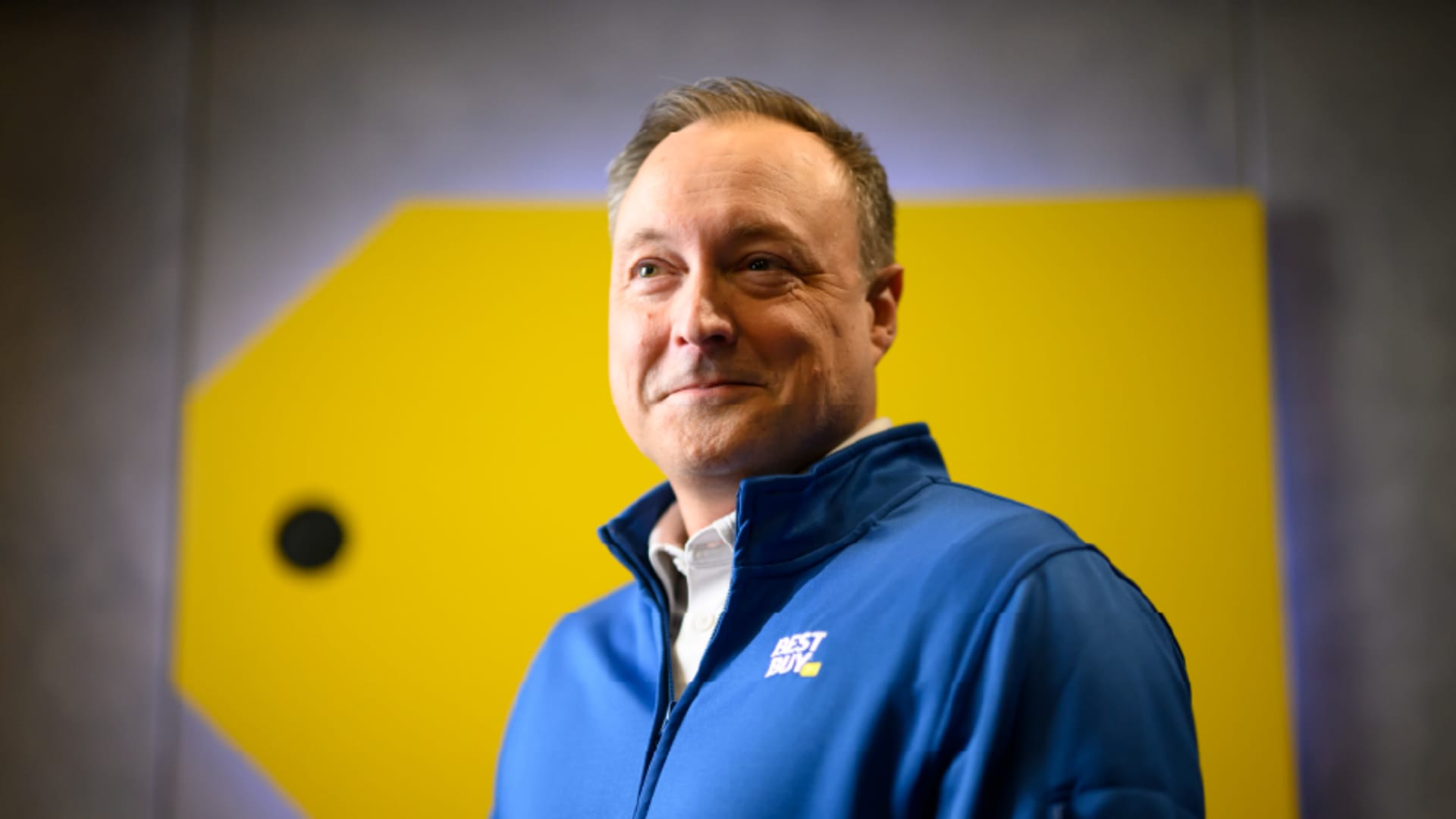

Best Buy is navigating a pivotal transformation as it seeks to rejuvenate its performance under incoming CEO Jason Bonfig. Following a concerning decline in sales, attributed to factors like diminished consumer confidence and a stagnating market, the company is re-evaluating its strategies and operations. Bonfig, who takes over from current CEO Corie Barry this fall, is focusing on enhancing customer experiences and expanding the company’s market reach, including the opening of new small-format stores.
| Article Subheadings |
|---|
| 1) Challenges Facing Best Buy |
| 2) Strategic Initiatives for Growth |
| 3) Emphasis on AI and Innovation |
| 4) The New Store Openings |
| 5) Looking Ahead: Bonfig’s Vision |
Challenges Facing Best Buy
Over recent years, Best Buy has grappled with persistent challenges that have left its stock price weakened and its competitive edge dulled. The consumer electronics retailer has witnessed approximately a 20% decline in stock since reaching a peak in late 2021, when shares were valued at around $138. The decline in sales can largely be traced back to various factors, including decreased consumer confidence, reduced innovation in technology products, and a sluggish housing market that has impacted discretionary spending.
The current fiscal year is shaping up to be a continuing struggle, with Best Buy forecasting comparable sales that could decline between 1% and remain stagnant at best. While the company has recently shown signs of outperforming market expectations in certain quarters, these results are perceived as being juxtaposed against a backdrop of years marked by declining consumer interest in technology products. A significant deterrent has been the soaring tariffs affecting product pricing and the inflated costs of essential components like memory chips, adding further strains to profits.
Strategic Initiatives for Growth
Amid these challenges, Bonfig is laying out a multipronged strategy aimed at revitalizing Best Buy’s brand and sales trajectory. His vision includes four pivotal pillars: advancing the company’s position as a hybrid retail and technology brand, expanding its market reach, improving the overall customer experience, and ensuring that Best Buy retains its essence as a “human-powered” business.
As he assumes the reins of leadership, Bonfig plans to enhance customer engagement by leveraging updated product offerings and personalized services. In particular, he is focused on improving the quality of televisions and seeking innovative ways to upgrade existing customer equipment. This focus on the customer experience is fundamental to Bonfig’s leadership strategy and will provide metrics on defining success for the company.
Emphasis on AI and Innovation
One of the key areas Bonfig is focusing on is the integration of artificial intelligence within Best Buy’s operations. He recognizes the potential of AI not only on the customer service front but also in enhancing corporate efficiency. The company has embarked on partnerships with tech giants to explore cutting-edge solutions, including AI tools for customer interaction, which aim to provide tailored experiences that resonate with modern consumer expectations.
Commenting on this direction, he noted,
“Agentic commerce and commerce through AI platforms is happening today. We’re seeing traffic there, and we want to make sure that the Best Buy experience is represented.”
Bonfig believes that AI will serve as an enhancement rather than a replacement for the human elements that underpin Best Buy’s service ethos, retaining the personal touch that customers value while still benefiting from technological advancements.
The New Store Openings
As part of Bonfig’s strategy, Best Buy is also moving towards the opening of smaller-format stores, which are strategically sized between 12,000 to 15,000 square feet. This marks a departure from its traditional medium-format stores, which typically fit into the 20,000 to 25,000 square foot range. The new store openings in Jonesboro, Arkansas, and Cape Cod, Massachusetts, illustrate this approach as they address market demand while allowing for better geographic and demographic coverage.
Bonfig explained that these smaller stores enable Best Buy to tap into areas where a full-sized store would be economically unfeasible yet still maintain strong consumer interest. He stated,
“When we put a store close to a customer, it changes their behavior digitally and in terms of visits to the store.”
This strategic shift allows Best Buy to be more agile in its market approach, finding suitable locations that meet customer needs while maximizing profitability at the same time.
Looking Ahead: Bonfig’s Vision
As Bonfig prepares for the new season of his leadership, he appears cautiously optimistic about turning the company’s fortunes around. He acknowledges that customer behavior has been influenced by recent market conditions, especially during the pandemic when consumers turned to technology products for their home environments. The reset of the technology life cycle will require Best Buy to rethink its strategies and potentially redefine its market positioning.
Bonfig is committed to building upon the previous strategies laid out by Barry while injecting his own innovative ideas and energy into the company. “Corie had an amazing strategy, and my strategy is built on top of that,” he declared, suggesting a continuity that he hopes will serve to rejuvenate Best Buy’s performance and restore it to a path of sustainable growth.
| No. | Key Points |
|---|---|
| 1 | Best Buy experiences a 20% decline in stock since 2021. |
| 2 | CEO Jason Bonfig emphasizes improving customer experience and market reach. |
| 3 | Integration of AI technologies is a key focus for Best Buy’s growth. |
| 4 | Opening new small-format stores to tap into underserved markets. |
| 5 | Bonfig aims to build upon previous strategies while injecting innovation. |
Summary
As Best Buy braces for a transformative shift under the leadership of Jason Bonfig, the company’s focus on customer experience, the integration of AI, and the opening of small-format stores reflects a proactive strategy aimed at overcoming significant market challenges. This renewed commitment to innovation and consumer engagement is crucial for revitalizing Best Buy’s brand reputation and financial health in an increasingly competitive sector.
Frequently Asked Questions
Question: What are the main challenges Best Buy is facing?
Best Buy is facing declining stock prices, reduced consumer confidence, and increased competition, along with challenges such as rising tariffs and inflation affecting product pricing.
Question: How is Best Buy addressing its sales decline?
Best Buy is focusing on enhancing customer experience, leveraging AI technologies, and opening new smaller-format stores to reach underserved markets.
Question: What is Jason Bonfig’s vision as the new CEO?
Bonfig’s vision includes building on previous strategies, improving market reach, and progressing Best Buy’s commitment to being a human-powered company while integrating modern technologies.
