

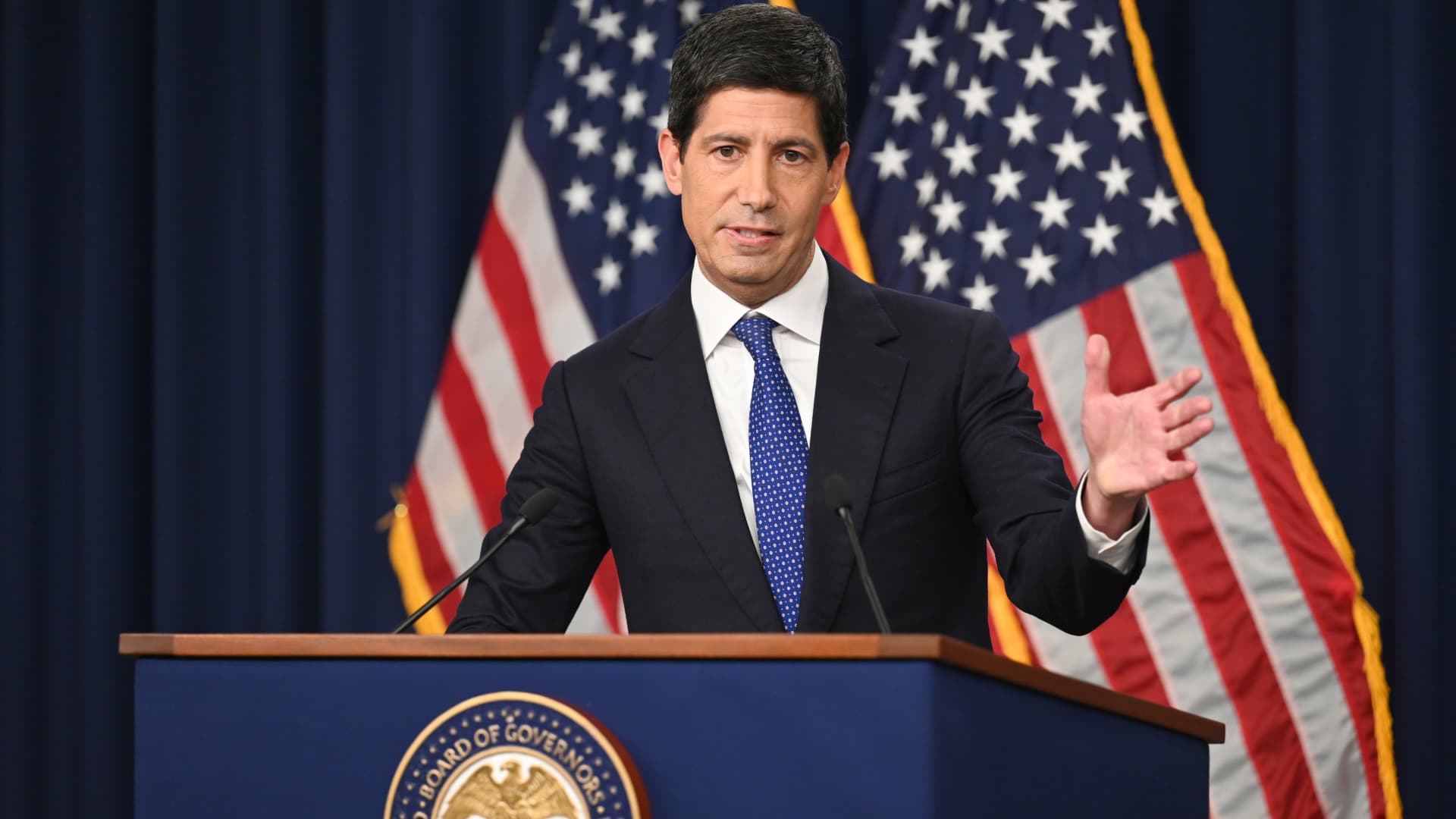

Federal Reserve Chair Kevin Warsh announced a quarter percentage point increase in interest rates during a press conference following the latest Federal Reserve policy meeting. This marked the first rate hike since 2023, leading to various interpretations and speculations regarding the implications for future monetary policy. Warsh’s specific language and framing of the decision raised questions about the Fed’s approach going forward amidst an evolving economic landscape.
| Article Subheadings |
|---|
| 1) Fed’s Decision to Raise Rates Explained |
| 2) Warsh’s View on Neutral Rate |
| 3) Market Reactions and Speculations |
| 4) Future Implications of Current Policy |
| 5) Economic Outlook Following the Rate Hike |
Fed’s Decision to Raise Rates Explained
During a news conference on September 16, 2026, Federal Reserve Chair Kevin Warsh articulated the rationale behind the central bank’s decision to increase its benchmark interest rate by a quarter percentage point. This decision comes after a prolonged period of low rates that had persisted since 2023. Warsh described this action not merely as a tightening of policy but as the removal of “a dose of accommodation,” suggesting a nuanced approach to monetary policy rather than a stark reversal.
The Fed’s decision reflects a shift in the U.S. economy’s dynamics, where signs of strengthening economic indicators have prompted a reassessment of the previously accommodative stance. Warsh’s comments were particularly notable for how they framed the Fed’s perspective on current financial conditions, suggesting that they have become less restrictive, which in turn prompted the need for policy adjustments. The Fed aims to foster a balanced economic environment where inflation is kept in check while promoting growth.
Market analysts are closely observing the Fed’s choice of language as it could indicate the potential for further hikes in the near future. Warsh’s phrase about removing “a dose” of accommodation stood out as a deliberate framing that might signify a more flexible monetary policy approach. It raises questions about how future rate adjustments will correlate with the evolving economic indicators and what thresholds will prompt additional increases.
Warsh’s View on Neutral Rate
Central to the discussion during the press conference was the concept of the neutral rate, a theoretical benchmark that represents a balanced monetary policy stance—one that neither stimulates nor constrains growth. When asked how the current rate of 3.75%-4% stands relative to this neutral rate, Warsh did not endorse this metric as a governing factor in immediate decision-making. Instead, he indicated that while the neutral rate may serve as an academic reference point, it lacks practical applicability in guiding today’s policy decisions.
Warsh’s comments have sparked debate among economists regarding the relevance of the neutral rate—historically viewed as a crucial threshold—for current monetary policy. The distinction he makes between academic utility and practical influence adds a layer of complexity to how the Fed might navigate future economic challenges. Analysts posit that if the Fed indeed measures current rates against a fluid conceptualization of neutral, it may decide to pursue further hikes until it achieves what it deems a non-accommodative environment based on broader economic indicators.
Market Reactions and Speculations
The financial markets reacted swiftly to Warsh’s announcement, leading to speculations about subsequent rate hikes as Wall Street absorbed the implications of the latest monetary policy shift. Notably, Goldman Sachs and Bank of America adjusted their forecasts, now expecting additional hikes in the October and December meetings, respectively. The CME Group’s FedWatch gauge indicated that the market-implied odds of another increase in October had surged to approximately 58%, a noticeable rise from just 42% a week prior.
Economists from various institutions have highlighted that Warsh’s framing of the current policy as still “stimulative” suggests that further rate increases may be necessary to control inflation and stabilize the economic landscape. James Egelhof, chief U.S. economist at BNP Paribas Securities, remarked that if the Fed’s stance continues to be viewed as stimulative, significant rate hikes beyond the expected three might be imperative to prevent overheating and stabilize the unemployment rate.
This speculation surrounding increased rates has injected varying sentiments into market behaviors, where fear of escalating inflationary pressures might drive anticipation of multiple rate hikes within the remaining months of the year. As the Fed navigates this balancing act, observers note that the perceived hawkishness of the Warsh-led Fed might signify a return to a more traditional approach in combating inflationary trends.
Future Implications of Current Policy
As the Federal Reserve moves forward, the implications of Warsh’s comments are crucial in deciphering the central bank’s long-term trajectory regarding interest rates. Should the Fed continue to perceive its policy as requiring the removal of “doses” of accommodation, it may indicate that further increases could take place in the near term—possibly exceeding current market expectations.
Observers point out that such a perspective could lead to a reversal of many of the rate cuts instituted during the tenure of Warsh’s predecessor, Jerome Powell, whose presence on the Fed committee enhances the scrutiny surrounding the current policy direction. The consensus among economists seems to be that the Fed may have less tolerance for maintaining low interest rates, especially if inflation persists beyond desired levels.
The analysts continue to parse through the Fed’s future maneuvers by examining the evolving economic conditions and inflationary trends. If the rate of inflation does not revert to the targeted threshold of 2%, there may be significant pressure for the Fed to implement aggressive tightening measures, thereby ensuring the economy does not veer towards overheating and other imbalances.
Economic Outlook Following the Rate Hike
The overall economic outlook following the rate increase is complex and laden with uncertainties. While some market analysts view the rate hike as a necessary corrective action in light of strengthening economic fundamentals, others remain cautious about potential repercussions such as stalling growth or dampened consumer confidence. The Fed’s primary mission to maintain stable prices while fostering maximum sustainable employment remains a critical focus as they navigate the evolving economic landscape.
As policymakers continue to monitor inflation and economic indicators, the next few months will be formative in shaping the Fed’s forthcoming decisions on interest rate adjustments. Should the inflation rate persistently exceed the 2% threshold, further tightening steps may become unavoidable, evidencing a shift from a primarily accommodative stance to a more proactive approach in combating rising price levels.
The connection between Warsh’s administration and historical Federal Reserve policy has already begun to emerge, where previous strategies are reevaluated against the realities of post-pandemic economic recovery and inflation challenges. The intricate web of challenges facing the Fed reflects the delicate balance of responding to market conditions while adhering to its institutional mandate for financial stability.
| No. | Key Points |
|---|---|
| 1 | Federal Reserve raised benchmark interest rates by a quarter percentage point for the first time since 2023. |
| 2 | Chairman Warsh emphasized the removal of “a dose of accommodation” rather than labeling the move simply as tightening. |
| 3 | Speculation regarding future rate hikes has intensified, with economists adjusting their forecasts upwards. |
| 4 | The concept of the neutral rate was referenced but deemed less relevant to current operational policy decisions. |
| 5 | Continued inflation above target levels may pressure the Fed to implement further rate increases in the months ahead. |
Summary
The decision by the Federal Reserve to raise interest rates signals a significant shift in monetary policy under the leadership of Kevin Warsh. His nuanced framing of the rate increase indicates an intent to adjust the economy’s supportive measures as situations warrant. With increasing inflation concerns, the Fed’s cautious approach hints at forthcoming rate hikes, making it imperative for economic stakeholders to closely monitor these developments in the face of an uncertain economic landscape.
Frequently Asked Questions
Question: What prompted the Federal Reserve to raise interest rates?
The Federal Reserve raised interest rates due to signs of a strengthening U.S. economy and less restrictive financial conditions, aiming to prevent overheating and control inflation.
Question: How does the Fed determine what constitutes a ‘neutral’ rate?
The neutral rate is an aspirational benchmark indicating monetary policy that neither stimulates nor restricts growth. However, recent comments by Chair Warsh suggest that it may not hold practical relevance in operational decisions.
Question: What could be the implications of multiple rate hikes?
If the Federal Reserve continues with rate hikes, it may lead to a tightening of financial conditions, impacting borrowing costs and potentially influencing economic growth and inflation in the longer term.
