

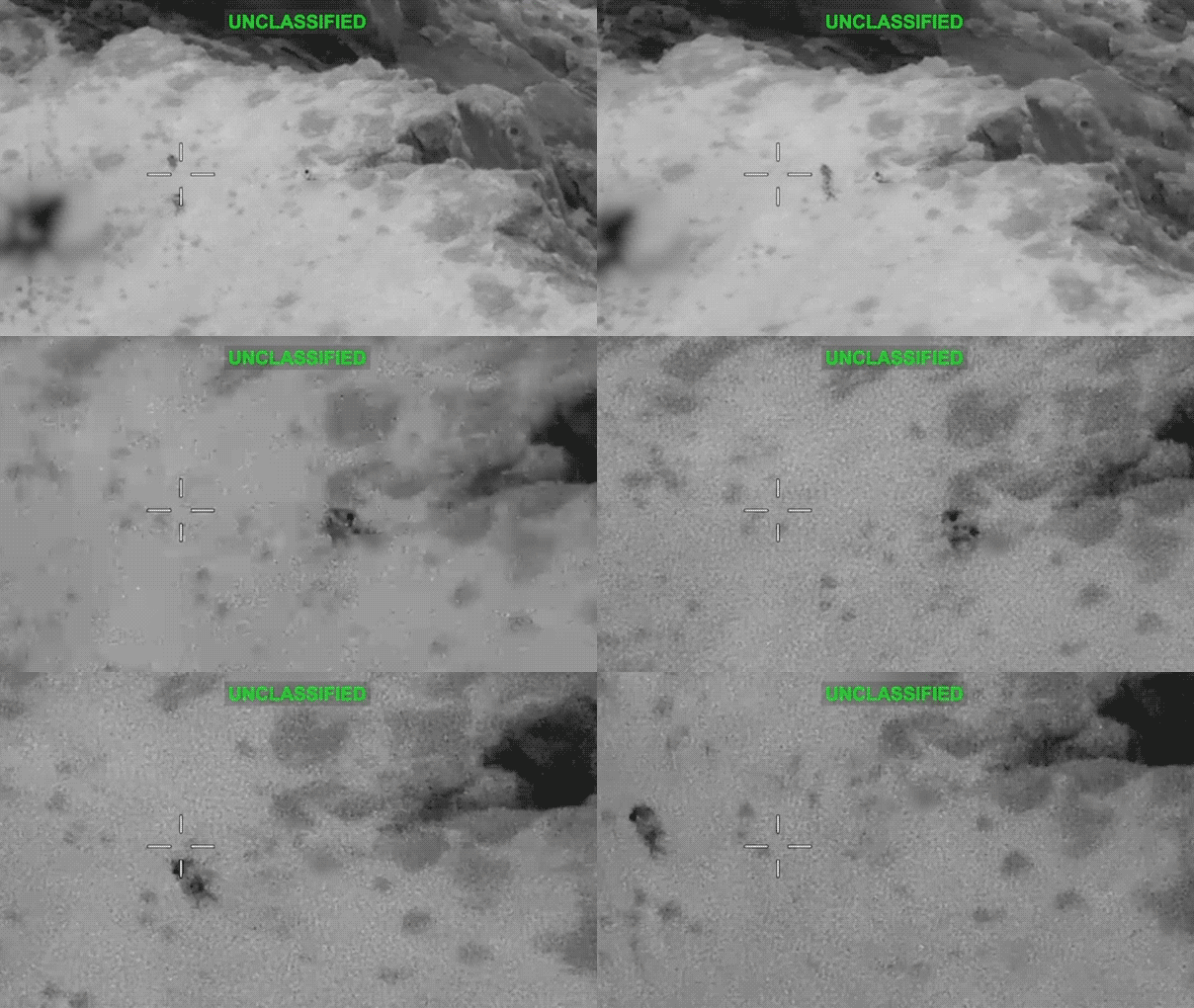

The U.S. military has released footage showing key moments from a large April combat search-and-rescue mission inside Iran. The operation recovered the two-man crew of an F-15E Strike Eagle after the aircraft was shot down by an Iranian shoulder-fired missile. One crew member was rescued within hours, while the other survived nearly two days with serious injuries before reaching American forces.
The mission involved forces on the ground and in the air, including Air Force pararescue operators, helicopters, bombers and drones. The rescue became more complicated when aircraft landing gear became trapped in desert sand, leaving the injured airman and more than 90 U.S. service members temporarily stranded inside Iran.
| 1) | The F-15E crew is separated after the aircraft is shot down |
| 2) | A badly injured airman reaches a mountain ridgeline |
| 3) | American aircraft protect the search and rescue effort |
| 4) | Pararescue operators reach the stranded crew member |
| 5) | A second extraction brings the operation to an end |
The F-15E crew is separated after the aircraft is shot down
The rescue began after an F-15E Strike Eagle, using the call sign Dude 44, was shot down over Iran in April. Its pilot, identified as Dude44 Alpha, and its backseat weapons systems officer, identified as Dude44 Bravo, ejected and landed miles apart. The separation forced U.S. forces to conduct simultaneous efforts to locate and recover both airmen inside hostile territory.
Dude44 Alpha was recovered after slightly more than six hours. Bravo faced a far more difficult ordeal after a damaged parachute caused a hard landing that broke his back, arm and shoulder. He remained isolated for nearly two days while American forces searched for his position.
A badly injured airman reaches a mountain ridgeline
Despite his injuries, Bravo moved away from his landing site and climbed toward a mountain ridgeline about 7,000 feet above the surrounding desert. Newly released video shows the steep cliffs and open valley around his position as helicopters searched for him.
The movement appears to have helped place him in a position where rescuers could eventually reach him, but it also underscored the physical demands of surviving alone with severe injuries. U.S. forces had to locate him while Iranian ground units were also searching in the area.
American aircraft protect the search and rescue effort
The footage shows U.S. helicopters conducting the search while bombers and drones struck Iranian Revolutionary Guard forces near Bravo. Joint Chiefs of Staff Chairman Dan Caine said there was clear intent among Iranian ground forces to find the two American airmen.
The strikes and aerial support were intended to protect the recovery effort and create time for rescue personnel to reach Bravo. The broader mission involved hundreds of service members supporting the operation from the air, with thousands more contributing overall, according to U.S. Central Command Commander Brad Cooper.
Pararescue operators reach the stranded crew member
On April 5, two Air Force pararescue operators, commonly called PJs, reached Bravo on the ridgeline. Two large search-and-rescue aircraft first landed on a makeshift desert runway, after which smaller Little Bird helicopters flew toward the injured airman.
Bravo later described seeing the rescuers as “one of the greatest moments of my life.” He recalled telling them, “Let’s go.” The second rescue effort placed 92 U.S. service members on the ground in Iran, marking the first known deployment of American ground forces there since 1980.
A second extraction brings the operation to an end
Reaching Bravo did not immediately end the mission. The landing gear of the two rescue aircraft became stuck in desert sand, leaving the injured airman and more than 90 other U.S. service members stranded inside Iran.
A clandestine Air Force unit was brought in to extract the group. Bravo was ultimately taken to safety about 50 hours after the F-15E was shot down, with the rescue completed as the sun rose on Easter Sunday. The operation involved an estimated 3,000 to 5,000 service members overall.
| Number | Key Point |
|---|---|
| 1 | An F-15E crew ejected after the aircraft was shot down over Iran. |
| 2 | One crew member suffered major injuries and waited nearly two days for rescue. |
| 3 | The mission used helicopters, bombers, drones and pararescue operators. |
| 4 | Aircraft became trapped in sand after rescuers reached the airman. |
Summary
The newly released footage illustrates the scale and complexity of a rescue mission conducted deep inside Iran. U.S. forces recovered both members of the F-15E crew despite serious injuries, hostile activity and a failed extraction caused by the desert terrain. The operation ended only after a specialized unit removed the stranded personnel.
Frequently Asked Questions
What happened to the F-15E crew?
Both crew members ejected after the aircraft was shot down over Iran. The pilot was rescued after slightly more than six hours, while the weapons systems officer suffered severe injuries and remained stranded for nearly two days.
How was the injured airman found?
He moved toward a roughly 7,000-foot mountain ridgeline, where helicopters and other U.S. aircraft searched for him before pararescue operators reached his position.
How large was the rescue operation?
Ninety-two U.S. service members were placed on the ground, hundreds supported the mission from the air, and an estimated 3,000 to 5,000 service members supported the operation overall.
