

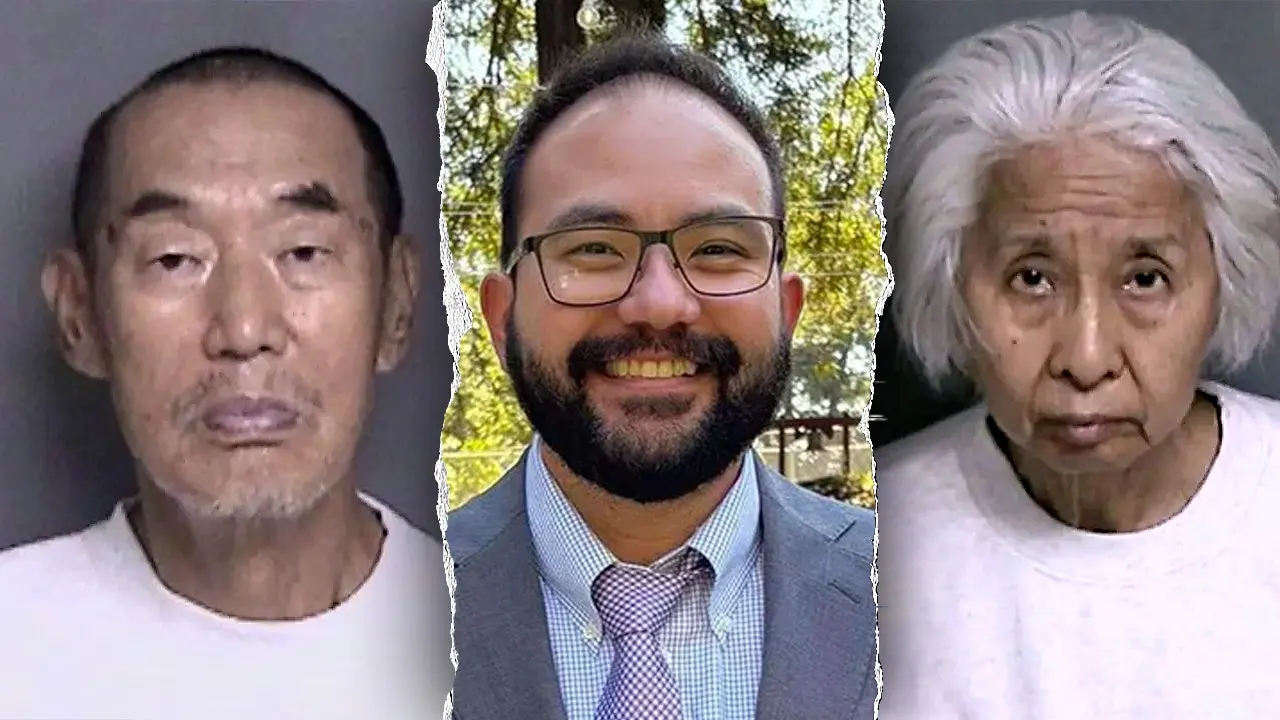

In a shocking development in the alleged murder case of New York Times executive Jonathan McKinsey, his in-laws, Shili Chen and Shouyong Zhang, are embroiled in a contentious legal battle following their arrests on September 26. The couple is accused of facilitating the shooting that took place in a crowded park in Dublin, California. In recent legal filings, Chen alleges that her husband was responsible for the fatal shooting, while her lawyers contend that she was not fully aware of the murder plot against McKinsey and only acted out of perceived self-defense.
As the case unfolds, questions surrounding the couple’s defense strategy and the implications of their actions continue to gain urgency. Both defendants are currently seeking pretrial release, despite the gravity of the charges against them. The couple’s defense has characterized the alleged shooting incident as an isolated occurrence within a turbulent family dynamic, while prosecutors aim to demonstrate a stark disregard for public safety during the attack.
| Article Subheadings |
|---|
| 1) Arrests and Charges: A Timeline of Events |
| 2) Allegations and Defense Claims |
| 3) The Role of Surveillance and Witnesses |
| 4) Personal Background and Family Dynamics |
| 5) The Legal Proceedings Ahead: What to Expect |
Arrests and Charges: A Timeline of Events
On the morning of September 26, Dublin police responded to reports of gunfire at the Dublin Sports Grounds. They discovered Jonathan McKinsey, a 40-year-old engineering executive at the New York Times, lying on the ground with multiple gunshot wounds. Despite efforts to revive him, McKinsey was pronounced dead at the scene. Within moments, law enforcement apprehended Chen and Zhang as they attempted to leave the area in a Honda Civic.
The couple’s arrest followed an intense investigation, wherein multiple witnesses identified them as the perpetrators. Both were subsequently charged with murder and are being held without bail amid evidence suggesting a calculated attack on McKinsey. Prosecutors assert that the couple had a premeditated intent to kill, provoked by ongoing familial disputes and legal entanglements related to McKinsey’s divorce from their daughter, Candice Jang.
Allegations and Defense Claims
In response to the mounting legal pressures, Chen’s legal team filed documents asserting that she was not the “actual killer” as she only fired after McKinsey had already been shot.
“She got out of the car to protect her husband from what she feared was an assault by Mr. McKinsey,”
noted Curtis Briggs, Chen’s lawyer. Meanwhile, Zhang, who allegedly admitted to the shooting after viewing surveillance footage, stated he had not originally communicated his intentions to his wife.
Defense strategies also focus on dismissing the prosecution’s claim of premeditation. Chen’s attorneys argue that she was “kept in the dark” regarding the plan to kill McKinsey, while the prosecution contends ample evidence demonstrates that the couple was waiting for him at the park. The defense aims to counter these assertions by pointing to a lack of concrete evidence that would substantiate the notion that they plotted directly against McKinsey prior to the incident.
The Role of Surveillance and Witnesses
Surveillance footage from the park serves as a crucial piece of evidence in this case. The video allegedly captures Chen and Zhang acting in concert during the shooting. Three witnesses corroborate the claim that they recognized the couple as the shooters. This evidence has contributed significantly to the district attorney’s determination to hold them without bail, citing concerns over potential public safety and flight risk. Law enforcement arrived quickly enough to witness the aftermath, which gives weight to eyewitness reports about the chaos that ensued.
The existence of 911 calls from the scene further reinforces this account, detailing the moments leading up to the shooting and subsequent gunfire. These accounts paint a harrowing picture of the couple’s alleged actions during a public shooting incident, further complicating their defense narrative. The convergence of video evidence and eyewitness testimony creates a substantial challenge for the defense team as they attempt to mount a case for pretrial release.
Personal Background and Family Dynamics
The tragic circumstances surrounding McKinsey’s death reveal a tumultuous family history marked by conflict. Reports indicate that he and Chen’s daughter, Candice Jang, were in the midst of a bitter divorce, intricately intertwined with disputes over child custody and allegations of domestic violence. McKinsey had accused Chen of using anti-LGBTQ slurs towards him and alleged acts of violence committed by Zhang, which adds layers of complication to the family relationships.
Court filings also demonstrate that both McKinsey and Jang were engaged in multiple legal battles at the time of McKinsey’s death, including competing domestic violence restraining orders. These ongoing disputes may have contributed to the heightened tensions that ultimately led to the tragic incident at the park. McKinsey’s allegations and the fallout from these claims create a dramatic backdrop against which the murder case is unfolding.
The Legal Proceedings Ahead: What to Expect
The legal developments in this case are closely monitored as both Chen and Zhang seek pretrial release ahead of what promises to be a complicated legal battle. Their attorneys argue for leniency based on health factors and the isolated nature of the incident. However, the prosecution is poised to counter with arguments emphasizing the potential threat the couple poses, given the nature of the crime and previous conflicts within the family.
Courts may approach the bail hearings with caution, as questions of public safety loom large. Both defendants face serious felony charges that could result in lengthy prison sentences if convicted. As the legal proceedings advance, the attorneys for both parties will work to bring forth evidence that strengthens their case while managing the court’s perception of potential risks associated with their release.
| No. | Key Points |
|---|---|
| 1 | Chen and Zhang were arrested for the alleged murder of their son-in-law, Jonathan McKinsey. |
| 2 | Chen claims her husband is responsible for the shooting, while defense lawyers argue she was not aware of any intent to kill. |
| 3 | Surveillance footage and eyewitness accounts play a crucial role in the prosecution’s argument. |
| 4 | The legal disputes between McKinsey and his former spouse, Candice Jang, set a tense familial backdrop to the case. |
| 5 | Both defendants are seeking pretrial release while facing serious felony charges. |
Summary
The unfolding case against Shili Chen and Shouyong Zhang highlights the tragic consequences of family conflict escalating to violence. Allegations of murder against the couple raise significant questions about the impact of personal disputes and mental states on criminal actions. As both Chen and Zhang prepare to navigate their legal battles, the intersection of law, family dynamics, and public safety remains a focal point of concern for the community.
Frequently Asked Questions
Question: What led to the arrest of Shili Chen and Shouyong Zhang?
The couple was arrested following the fatal shooting of their son-in-law, Jonathan McKinsey, in a public park, which was allegedly witnessed by multiple individuals and captured on surveillance footage.
Question: What are the key defenses being put forth by Chen’s legal team?
Chen’s attorneys argue that she was not aware of any intention to kill and acted in self-defense out of concern for her husband’s safety during the altercation.
Question: How does the family background impact the case?
The case is heavily influenced by the ongoing legal battles between McKinsey and his estranged wife, including allegations of domestic violence and child custody disputes, which contributed to a volatile family atmosphere leading up to the shooting.
