

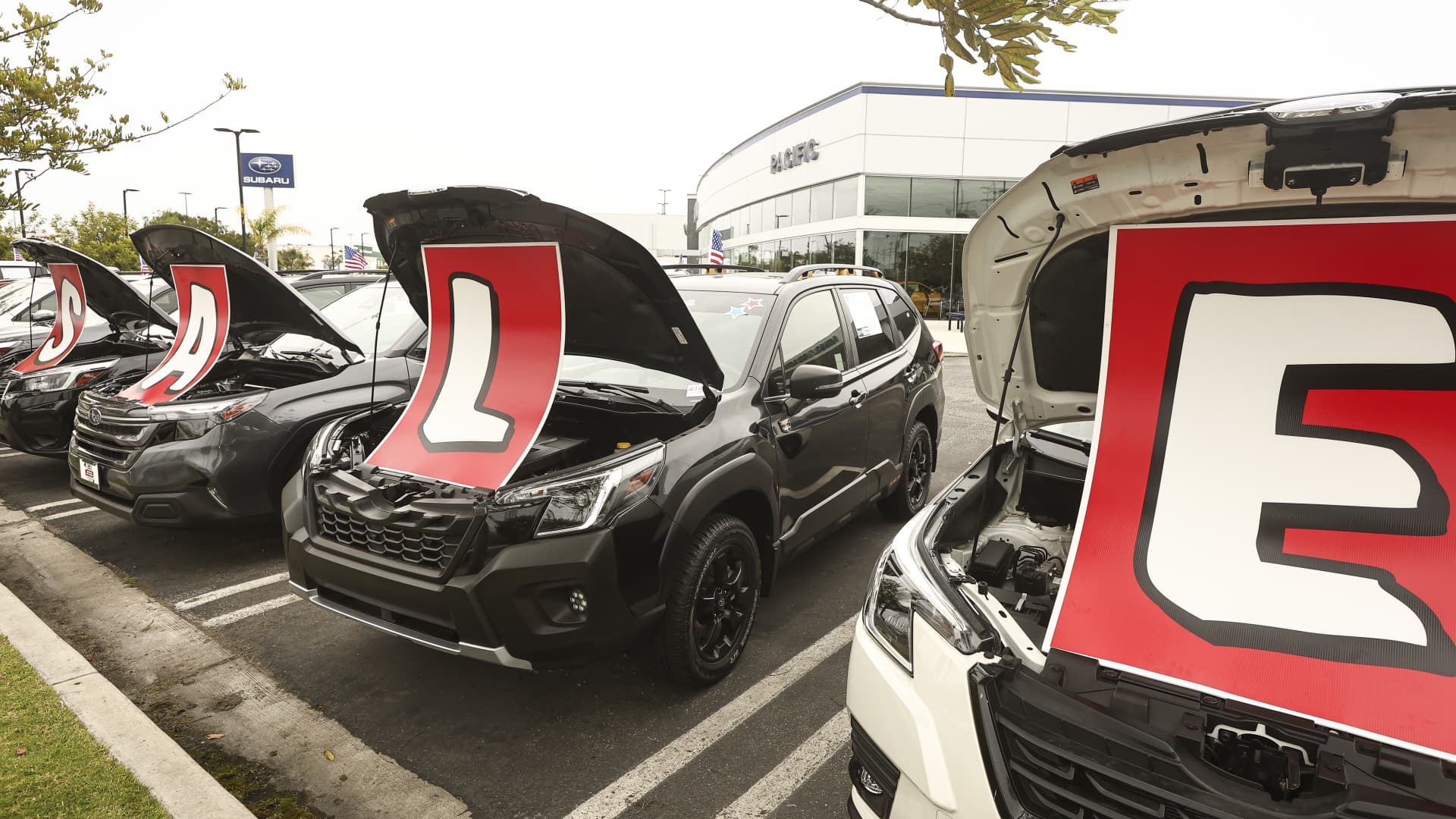

Rising fuel prices and economic pressures are causing significant shifts in consumer behavior regarding vehicle purchases. As indicated by recent data, vehicles priced between $20,000 and $29,999 are selling significantly faster, with a 20% decrease in the number of days it takes for these cars to sell from the first to the third quarter of the year. This trend contrasts sharply with the sales figures for more expensive vehicles, which are experiencing slower sales, indicating a growing concern among consumers about affordability and available inventory.
| Article Subheadings |
|---|
| 1) Trends in Vehicle Sales and Price Segmentation |
| 2) Challenges in the Affordable Vehicle Market |
| 3) Impact of Supply Chain Issues on Inventory |
| 4) Shift in Consumer Preferences |
| 5) The Broader Economic Factors at Play |
Trends in Vehicle Sales and Price Segmentation
The automotive market is currently witnessing a pronounced shift in consumer purchasing patterns as many grapple with escalating fuel prices. The recent data from Edmunds demonstrates that vehicles priced between $20,000 and $29,999 are moving off dealer lots at a remarkably accelerated pace—a decline of 20% in the days it takes to sell these cars from the first to the third quarter of the year. Furthermore, vehicles in the price range of $30,000 to $39,999 are selling 18% faster, while those priced from $40,000 to $49,999 have seen a nearly 12% drop in the time it takes for a sale.
In stark contrast, all vehicle segments priced over $50,000 remain sluggish, with each requiring more than 60 days to sell. This highlights a growing divide in the marketplace: lower-priced vehicles command quicker sales, as consumers may be prioritizing affordability amidst economic uncertainty.
Challenges in the Affordable Vehicle Market
Despite the speed at which cheaper cars are being sold, challenges persist in the availability of affordable vehicles. As stated by Cox Automotive, the average listing price for a new vehicle reached an alarming $49,726 in September, indicating a discrepancy between consumer demand for lower-priced cars and a decreasing inventory of such models. This discrepancy has significantly affected various segments, particularly compact cars and compact SUVs, both of which saw sales plummet by approximately 4% and 8% respectively since the start of 2026.
Analysts attribute this contradictory situation to a shortage of lower-priced vehicles in the market. Mark Strand, Deputy Chief Economist at Cox Automotive, remarked that the market should be assessed with a nuanced perspective, especially as fourth-quarter data begins to reveal further trends. The limited production of certain models, particularly compact SUVs, exacerbates this situation, leading to slower sales in segments that traditionally thrived.
Impact of Supply Chain Issues on Inventory
Supply chain disruptions continue to pose significant hurdles in the automotive market. Key models such as the Toyota RAV4, recognized as the most popular SUV in the U.S., have seen reduced availability as the company transitions production to its Kentucky factory and shifts its entire lineup towards hybrid powertrains—a move driven by overwhelming consumer demand for hybrids. Additionally, Ford has discontinued the popular Ford Escape to prepare for the launch of an upcoming midsize electric pickup truck, further tightening the supply of affordable SUVs.
These challenges faced in the compact car segment highlight another grim reality: the slow erosion of affordable models over the last decade. Sam Fiorani, Vice President of Global Forecasting at AutoForecast Solutions, indicated that major American automakers have pivoted away from compact coupes and sedans in favor of more profitable small crossover SUVs. As a result, there remains no current offering from American manufacturers in the compact sedan market, leading consumers to search for alternatives from foreign automakers.
Shift in Consumer Preferences
As affordability issues rise to the forefront of consumer minds, preferences in vehicle choice are shifting. The current landscape reveals that many buyers are entering the used vehicle market or holding onto their existing cars longer due to economic pressure. Fiorani suggested that customers who once sought compact vehicles are now facing increased difficulty given inflation and rising fuel costs, prompting them to circle back to the used market or opt for longer vehicle retention.
In the present climate, subcompact SUVs have seen a rise in popularity, largely appealing to first-time buyers who prioritize affordability without compromising too much on space or style. However, these subcompact options still account for a small percentage of the overall car market, indicating a mismatch between inventory and consumer preference among the larger buyer demographic.
The Broader Economic Factors at Play
Broader economic trends have also begun to influence consumer choices, as evidenced by financing habits changing within the automotive market. A growing number of buyers are now opting for longer financing terms, with nearly one in four consumers securing 84-month loans—the highest fraction on record. This means that many buyers are entering contracts that extend their financial commitments, often with negative equity from trade-ins playing a supplementary role in escalating overall costs.
High vehicle prices combined with high financing costs are pushing an increasing number of consumers towards the used vehicle market, which has dramatically inflated wholesale prices of compact cars. The combination of economic pressure and shifting financial behavior suggests a turbulent landscape ahead for both consumers and auto dealers alike as they grapple with finding a balance between inventory and demand.
| No. | Key Points |
|---|---|
| 1 | Vehicle sales are increasing among lower-priced models due to rising fuel prices. |
| 2 | Challenges persist in the inventory of affordable vehicles, with compact cars experiencing significant declines in sales. |
| 3 | Supply chain disruptions have considerably impacted the availability of popular models. |
| 4 | Shifting consumer preferences highlight a growing inclination towards used vehicles due to economic pressures. |
| 5 | Economic factors are prompting longer financing terms and increasing negative equity in trade-ins. |
Summary
In conclusion, the current automotive market illustrates a complex interplay between rising fuel prices, changing consumer preferences, and inventory shortages. While lower-priced vehicles are moving rapidly off dealer lots, the overall market is facing serious challenges that reflect broader economic concerns. The increasing trend of using longer financing terms, coupled with a significant shift toward used vehicles, indicates that consumers are adjusting to a new reality where affordability and availability are paramount. As the fourth quarter progresses, observing how these trends evolve will prove crucial for automakers and dealers alike.
Frequently Asked Questions
Question: Why are cheaper vehicles selling faster?
Cheaper vehicles are selling faster primarily due to rising fuel prices and overall economic pressures that make affordability a key concern for consumers. As people prioritize financial stability in their purchasing decisions, lower-priced models become more appealing.
Question: What are the main reasons for declining sales in compact cars?
Declining sales in compact cars can be attributed largely to their eroding availability as automakers pivot to producing more profitable small SUVs, coupled with buyers shifting preferences toward used cars amid rising prices.
Question: How are economic trends affecting vehicle financing?
Economic trends are influencing vehicle financing as more consumers opt for longer payment terms, leading to an increase in 84-month loans, which in turn contributes to higher levels of negative equity in trade-ins.
