

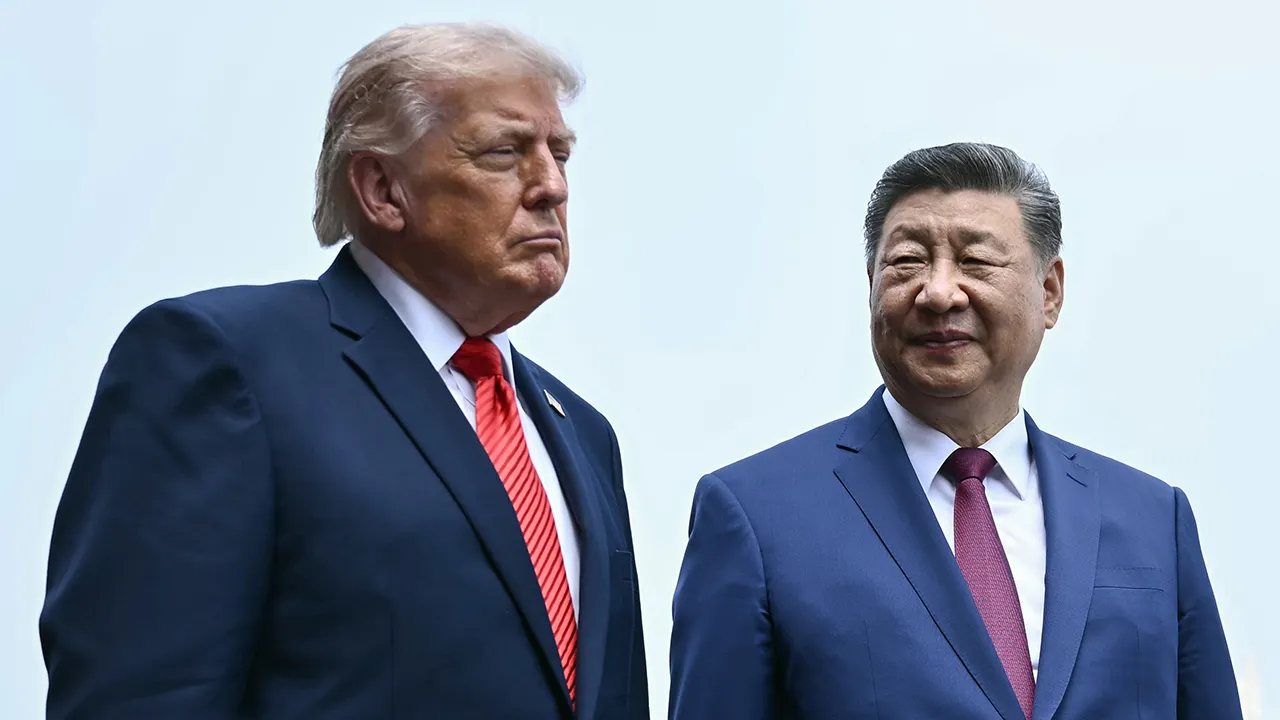

As President Donald Trump prepares for a crucial summit with Chinese President Xi Jinping, a bipartisan group of U.S. lawmakers seeks to remind the public of the Chinese Communist Party’s (CCP) history marked by oppression and brutality. Senators James Lankford, a Republican from Oklahoma, and Angus King, an Independent from Maine, are actively pushing to highlight the CCP’s record over its 105 years of existence. Their initiatives aim to keep the plight of those suffering under the party’s regime at the forefront of discussions as both leaders enter significant negotiations.
Amid growing calls for accountability, Lankford emphasized the need to remember the millions affected by the CCP’s actions, advocating for religious freedom and human rights. The senators’ efforts come at a time when discussions surrounding trade agreements, artificial intelligence, and international cooperation are critically important.
As Trump and Jinping embark on their talks, the juxtaposition of the summit against the backdrop of the CCP’s historical actions raises questions about human rights and ethical considerations in international relations.
| Article Subheadings |
|---|
| 1) Background of CCP’s Brutal Legacy |
| 2) Recent Legislative Efforts to Highlight Human Rights |
| 3) Key Incidents of Oppression and Violence |
| 4) The Political Climate Surrounding the Summit |
| 5) Importance of Trade and AI Discussions |
Background of CCP’s Brutal Legacy
The Chinese Communist Party was founded in 1921 and has been in power since the establishment of the People’s Republic of China in 1949. Over the last century, the CCP has faced widespread accusations of human rights abuses, suppression of dissent, and severe restrictions on freedoms. From the oppression of political dissidents to the persecution of religious groups, the legacy of the CCP is fraught with harrowing accounts of violence and suppression.
Particularly during significant historical movements, such as the Cultural Revolution and the events surrounding Tiananmen Square, countless citizens were subjected to state-sanctioned violence. The party’s role in shaping a coercive society has left deep scars in the collective memory of the Chinese populace. Lawmakers like Lankford and King are striving to ensure that these narratives aren’t forgotten, especially as premier sessions with world leaders could tilt the balance toward economic alliances rather than a focus on humanitarian considerations.
Recent Legislative Efforts to Highlight Human Rights
With the upcoming summit, Senators Lankford and King have introduced resolutions aimed at informing both lawmakers and the public about the CCP’s extensive history of oppression. This joint effort is part of a broader initiative by many legislators who are increasingly concerned about the implications of U.S.-China relations on human rights.
The resolution they proposed stresses the importance of keeping the history of the CCP’s actions in mind as diplomatic relations evolve. Their remarks underscore a crucial stance that while engaging economically with Beijing, the U.S. should also advocate strongly for the rights of individuals suffering under oppressive regimes. “We must not turn a blind eye to the atrocities committed by the CCP,” Lankford remarked, emphasizing the need for America to uphold its fundamental principles of freedom and dignity.
Key Incidents of Oppression and Violence
Throughout its history, the CCP has enacted several violent campaigns to consolidate power and eliminate dissent. The resolution introduced by Senators Lankford and King meticulously details various events that showcase the party’s brutal tactics against both its citizens and perceived enemies. For instance, during the Yan’an Rectification Movement (1942-1945), a mass purge took place where over 10,000 individuals were reportedly executed. This was one of many efforts to concentrate power within the Party and eliminate opposition.
The infamous land reforms from 1949 to 1953 led to mass executions as well, with estimates of fatalities ranging from 200,000 to 5 million as the party enacted policies to redistribute land among the peasantry. Such upheaval has created fear and distrust among the populace, effectively silencing voices that might resist CCP’s authoritarian control. The ongoing campaigns against ethnic and religious minorities, particularly the Uighurs facing alleged detainment and torture in reeducation camps today, exemplifies the continued human rights abuses orchestrated by the party.
The Political Climate Surrounding the Summit
As Trump prepares to welcome Xi at Joint Base Andrews for their summit, the political climate is charged with mixed expectations and concerns. Legislators are anxiously observing how Trump will address various contentious issues during his talks with Xi, especially in light of their allegations regarding human rights violations and trade imbalances.
Concerns about the CCP’s growing influence and aggressive tactics—particularly the crackdown on freedoms in Hong Kong and beyond—have led to calls for a firmer stance from U.S. leadership. Lawmakers hope that by prioritizing discussions on human rights alongside trade and technology, the summit can serve as a turning point for a more principled foreign policy concerning China.
Importance of Trade and AI Discussions
In addition to human rights, critical trade discussions are set to dominate the agenda at the summit. The talks will involve key topics such as trade agreements and the burgeoning field of artificial intelligence (AI), where both nations are vying for dominance. There is a growing bipartisan consensus that the U.S. must engage China in a cooperative manner while also asserting itself against practices perceived as unfair or exploitative.
The intersection of these discussions with human rights remains vital, as lawmakers argue that any beneficial trade agreements must not compromise U.S. values. As America navigates its relationship with China, the outcome of these talks could significantly impact not just the economy but the broader geopolitical landscape.
| No. | Key Points |
|---|---|
| 1 | Trump and Xi are engaged in crucial talks amid concerns regarding human rights abuses by the CCP. |
| 2 | Senators Lankford and King aim to highlight the CCP’s historical brutality during the discussions. |
| 3 | Past incidents of violence committed by the CCP include mass executions and suppression of dissenters. |
| 4 | Lawmakers emphasize the need for ethical diplomacy that addresses both trade and human rights. |
| 5 | The outcome of negotiations may influence the future geopolitical strategy of the U.S. regarding China. |
Summary
The upcoming summit between President Donald Trump and President Xi Jinping serves as a pivotal moment for U.S.-China relations. Lawmakers are pushing for the introduction of a holistic approach to the discussions, urging a focus not only on economic aspects but also on the need for humanitarian considerations. As Trump navigates this complex landscape, the pressing history of the CCP’s actions could shape the future of international relations between the two nations.
Frequently Asked Questions
Question: What specific issues are being raised by U.S. lawmakers regarding the CCP?
Lawmakers are addressing the significant human rights abuses carried out by the Chinese Communist Party, emphasizing the importance of discussing these issues alongside trade relations and technological collaboration.
Question: Why is it important to highlight the CCP’s historical actions during the summit?
Highlighting the CCP’s history of oppression serves to remind U.S. leaders and the public of the ongoing human rights violations, which should inform and influence diplomatic discussions with China.
Question: How can the summit impact U.S.-China relations moving forward?
The outcomes of the summit could redefine the approach the U.S. takes towards China, balancing economic interests with ethical considerations, potentially shifting the geopolitical landscape significantly.
