

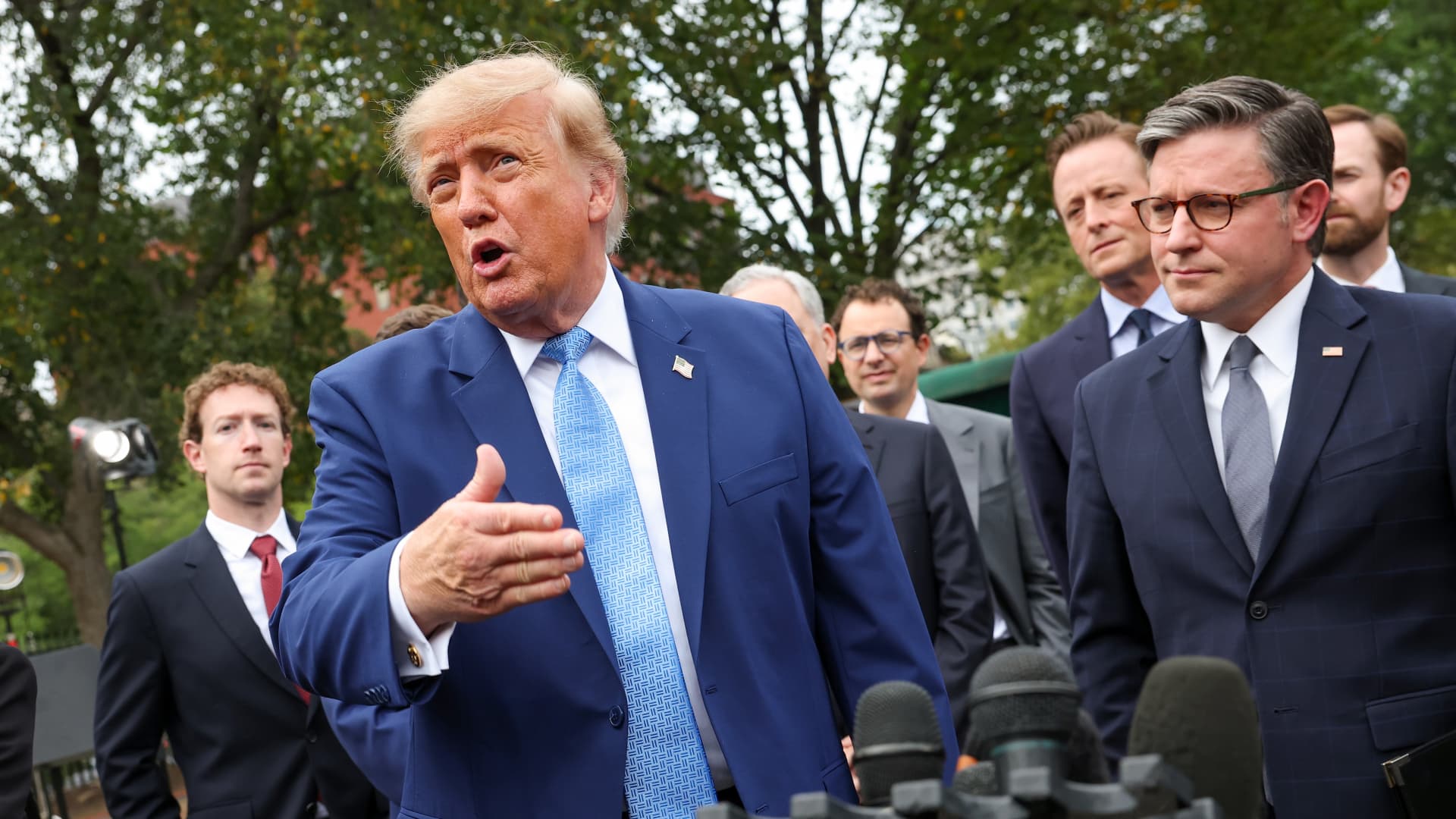

On September 29, 2026, U.S. President Donald Trump announced an executive order mandating that all executive branch departments and agencies refer to artificial intelligence (AI) as “super intelligence.” This change resulted from a lunch meeting between the president and prominent AI leaders, including executives from Nvidia and SpaceX. Despite public apprehension regarding AI’s risks and a dwindling approval of Trump’s overall handling of the situation, the president remains steadfast in promoting AI development as crucial to maintaining U.S. competitiveness against China.
| Article Subheadings |
|---|
| 1) The Executive Order and Its Implications |
| 2) Industry Leaders in Attendance |
| 3) Public Reaction and Polling Data |
| 4) Concerns Over AI Safety and Regulations |
| 5) Summary of Community Commitments |
The Executive Order and Its Implications
On September 29, President Trump signed an executive order titled “Inaugurating The Era Of Super Intelligence.” This order signifies a strategic shift in terminology regarding artificial intelligence, requiring all executive departments and agencies to abandon references to “artificial intelligence” or “AI” in favor of the term “super intelligence.” The White House articulated that the name change aims to acknowledge the “continuously advancing technological frontier” and the potential benefits that the government believes this technology can bring to the American populace. The implications of this executive order are extensive, as it establishes a new framework for official communications and policy interpretations related to AI technology in governmental contexts.
The directive seeks to promote a positive narrative around the industry, attempting to rebrand AI amidst growing public concerns about its potential risks. By labeling it as “super intelligence,” the administration hopes to create an image of progress and innovation that aligns with its broader goals of competing in the global tech landscape, particularly against contenders like China. However, this initiative raises questions about the effectiveness and authenticity of such a rebranding exercise, especially when significant portions of the public express skepticism about AI’s rapid growth and its implications for society.
Industry Leaders in Attendance
The executive order announcement took place during a meeting at the White House featuring notable figures from the technology sector, including Jensen Huang (CEO of Nvidia) and Elon Musk (CEO of SpaceX). Their presence highlights the administration’s reliance on industry voices to shape policy directions around advanced technologies. Trump revealed that the meeting produced a separate document referenced as the “White House Accord on Super Intelligence.” This accord, while not explicitly stating any binding commitment to the new terminology, reflects a consensus among tech leaders about the need for responsible technology development and management.
The attendees of the meeting also included executives from prominent technology firms, such as Sundar Pichai from Google, Mark Zuckerberg from Meta, and Greg Brockman of OpenAI. The participation of these influential figures underscores the significance of collaboration between the government and tech industry in addressing the multifaceted challenges associated with rapidly advancing technologies. While there is a collective acknowledgment of the importance of innovation, there remains a delicate balancing act between fostering technological growth and addressing the accompanying ethical responsibilities.
Public Reaction and Polling Data
Public sentiment regarding the administration’s handling of artificial intelligence remains largely negative. Recent polling conducted by Quinnipiac University shows a mere 25% of respondents approve of Trump’s approach toward AI, with 58% disapproving. This disapproval rating is notably lower than that of Trump’s management of other critical issues in the country, including foreign policy and economic concerns. Analysts suggest that the disconnect between the administration’s ambitious AI goals and public apprehension could complicate the president’s political positioning, particularly with the upcoming midterm elections in sight.
The government’s push towards a rebranding of AI arrives at a time when widespread fears about the technology are mounting among the American public. Concerns focus on privacy, job displacement, and ethical implications of systems powered by AI. Detractors, including some tech industry leaders, emphasize that merely changing terminology does not mitigate the risks associated with technological advancements. Critics argue that a more substantive discussion and clear regulatory framework are essential for safeguarding the public’s interest in tandem with innovation. As skepticism continues to grow, the Trump administration’s ability to address these concerns may significantly impact its public perception and voter support.
Concerns Over AI Safety and Regulations
Despite the optimistic framing of AI development as a pathway to progress, many experts and public figures—including political leaders— have raised alarms about the risks presented by advanced AI technologies. Critics like Senator Mark Warner, a member of the Senate Intelligence Committee, has called Trump’s rebranding insubstantial, aiming to remind the public and lawmakers of the fast-paced evolution of AI and its potential hazards. Warner stated,
“The companies building the most powerful AI systems are warning us that the technology is advancing faster than our safeguards.”
This comment underscores the urgent need for proactive governance to manage the implications of AI technologies.
High-profile critics assert that the administration’s approach may inadvertently compromise safety. Instead of instituting government-mandated regulations to manage AI development, Trump suggests a solution rooted in the belief that industry self-regulation will suffice. Responding to questions concerning potential harm from AI and whether government intervention is warranted, Trump downplayed these concerns by expressing confidence in the integrity and patriotism of those developing AI technologies, stating, “Because we have people that love our country and love the world a lot.” This perspective, while rooted in optimism, raises conflicting views about the responsibilities of corporations to ensure safe operations and the overarching need for regulatory frameworks to address public safety comprehensively.
Summary of Community Commitments
In addition to the executive order, the White House Accord includes commitments from tech leaders to pursue a code of conduct that promotes responsible AI development. The accord emphasizes that each company must take responsibility for the safe evolution of its systems. Signatories agreed to implement stringent internal processes and controls to ensure that technology functions as intended. The document outlines additional layers of control to enhance accountability, which should be instituted through regular meetings among signatories to foster collaborative efforts to establish safety standards.
Moreover, the agreement hints at possible future legislative measures, indicating that some of the commitments could eventually evolve into formal laws or regulations. This prospective evolution suggests a responsive approach should the current voluntary commitments fail to adequately address safety concerns. The tech leaders present view these measures as essential to maintain public trust in their products, aiming to preempt any backlash that may arise from negative public perception.
Nonetheless, the efficacy of these voluntary commitments remains under scrutiny, especially given the ongoing criticism about lacking comprehensive government oversight. The proposed measures are a step toward ensuring accountability, yet the balance between innovation and regulation continues to be a fundamental challenge that lawmakers and industry executives must navigate together.
| No. | Key Points |
|---|---|
| 1 | President Trump mandated all executive branch agencies to use “super intelligence” instead of AI. |
| 2 | Tech leaders including Elon Musk and Jensen Huang participated in the announcement. |
| 3 | Public opinion polls show widespread disapproval of Trump’s AI strategy. |
| 4 | Critics stress the need for stronger regulations surrounding AI technology. |
| 5 | The White House Accord emphasizes responsible technology development commitments by industry players. |
Summary
In summary, President Trump’s executive order and the accompanying actions reflect a significant pivot in the U.S. government’s approach to AI. While the initiative intends to promote a narrative of positivity and advancement in the tech landscape, the persistence of public concern and disapproval indicates a crucial need for comprehensive dialogue on the risks associated with emerging technologies. The collaboration between the government and industry stakeholders, embodied in the White House Accord, presents an opportunity to establish a framework for safety and accountability. Nonetheless, the effectiveness of these measures will ultimately depend on the commitment and collaboration between all parties involved to navigate the complexities of AI development moving forward.
Frequently Asked Questions
Question: What triggered the rebranding of AI to “super intelligence”?
The rebranding was triggered by President Trump’s executive order, which aimed to transform the narrative surrounding AI amidst fears and skepticism expressed by the public about its risks.
Question: What commitments were made by tech industry leaders during the White House meeting?
During the meeting, industry leaders committed to a series of voluntary measures aimed at ensuring responsible technology development, including enhancing internal processes and establishing safety standards.
Question: How has public sentiment shifted regarding the handling of AI by the Trump administration?
Public sentiment has shifted to disapproval, with polls indicating that a significant majority of Americans are concerned about how the administration is managing AI-related issues, reflecting broader worries about safety and ethical practices.
