

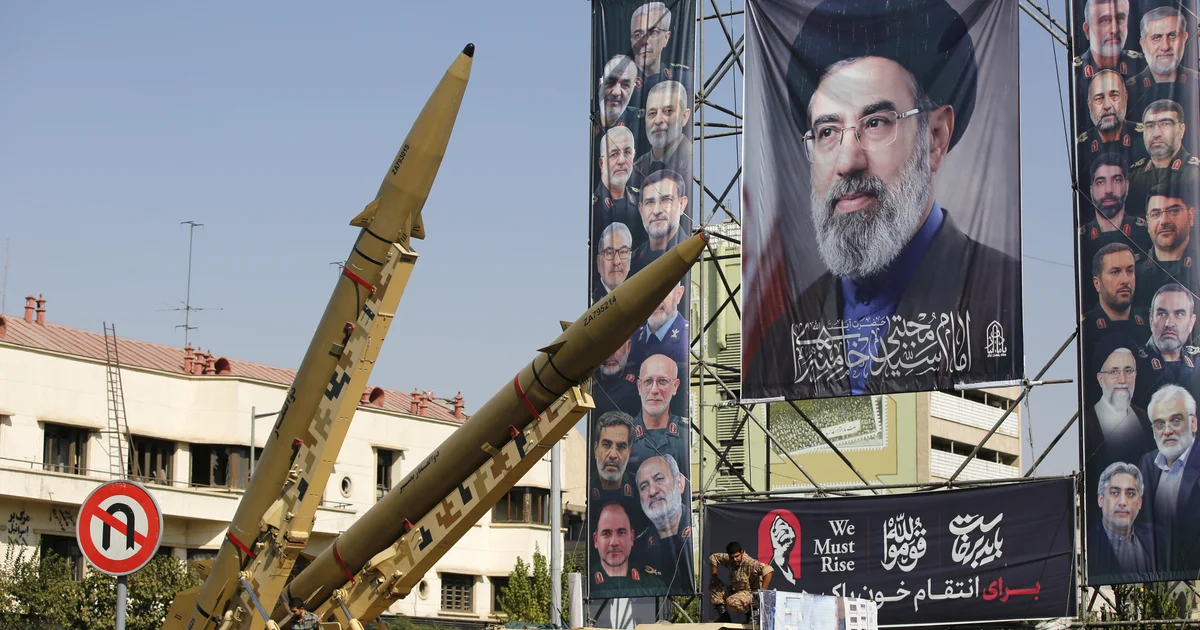

In a significant development in the escalating tensions in the Middle East, Pakistan’s Defense Minister, Khawaja Muhammad Asif, announced that Pakistan is prepared to defend Saudi Arabia against Iran-backed Houthi rebels. This statement highlights the deepening military cooperation between Pakistan, Turkey, and Saudi Arabia, particularly in light of a new mutual defense pact. As Pakistan contemplates its role in this regional conflict, Iran has also expressed its intentions to engage in discussions regarding a proposed ceasefire plan with the United States, amid continuing diplomatic tensions.
| Article Subheadings |
|---|
| 1) Pakistan’s Solidarity with Saudi Arabia |
| 2) Iran’s Proposed Ceasefire Plan |
| 3) U.S. Sanctions on Iranian Entities |
| 4) The Role of Iranian Military Leaders |
| 5) Implications for Regional Stability |
Pakistan’s Solidarity with Saudi Arabia
Pakistan’s commitment to defend Saudi Arabia from Houthi attacks reflects the broader military alliance in the region. This announcement came from Khawaja Muhammad Asif during a press conference held in Rome. The defense minister articulated that Pakistan’s military is ready to employ “whatever means are available” to ensure the security of Saudi Arabia. This declaration is one of the clearest signals of Islamabad’s potential military engagement in what has become a complex regional conflict involving multiple state and non-state actors.
The context of this commitment is rooted in a mutual defense pact recently established with Saudi Arabia and Turkey. The pact is aimed at bolstering cooperative defensive measures against perceived threats from Iran and its allied forces in the region. Notably, Pakistan has traditionally maintained a cautious approach regarding military interventions, especially outside its borders. Nevertheless, Khawaja Muhammad Asif emphasized that the defense arrangement categorically obligates Pakistan to respond to any aggressive actions against Saudi Arabia, further solidifying Islamabad’s strategic alignment with Riyadh amidst growing tensions.
Iran’s Proposed Ceasefire Plan
In a parallel development, Iran’s Foreign Minister, Abbas Araghchi, has initiated discussions with the United States concerning a proposed seven-day ceasefire plan. This plan is intended to create a foundation for trust and facilitate the reopening of the strategically crucial Strait of Hormuz. The proposal, however, is contingent on the U.S. fulfilling certain conditions outlined in a previous understanding that failed to materialize, raising questions about its viability.
According to reports, the primary sticking point in the negotiations appears to revolve around the sequencing of the proposed ceasefire and its implementation. The situation is exacerbated by the U.S. administration’s rejection of the plan, as articulated by President Donald Trump, which complicates any potential for a diplomatic resolution to the ongoing conflicts in the region. Araghchi is set to discuss the feedback received from U.S. officials in Tehran on Wednesday, which could further clarify the path forward for these negotiations.
U.S. Sanctions on Iranian Entities
Amidst the diplomatic maneuvering, the United States Treasury Department has imposed sanctions on ten individuals and businesses implicated in supplying crucial equipment to the Iranian military. These individuals, based in Iran, Beijing, Hong Kong, and Pakistan, are accused of facilitating the procurement of weapons and electronics for Tehran’s military operations.
These sanctions are part of what has been described as Operation Economic Outcast, an initiative by the Trump administration aimed at isolating Iran economically and militarily. Scott Bessent, the U.S. Treasury Secretary, highlighted the administration’s determination to confront and challenge those who support the Iranian regime. The strategic goal is to cripple the Iranian military’s logistical capabilities significantly, thereby attempting to weaken its ability to influence conflicts across the Middle East.
The Role of Iranian Military Leaders
Reflecting on the ongoing geopolitical tension, Maj. Gen. Mohsen Rezaei, head of Iran’s Supreme National Security Council, expressed concerns regarding U.S. President Donald Trump‘s decision-making capacity. He stated that Trump finds himself “trapped in a quagmire” of options between war and negotiations.
In a recent meeting, Rezaei criticized the U.S. administration’s approach to diplomacy, asserting that Trump is struggling to navigate the complexities of the current geopolitical landscape. He framed the situation as one where neither negotiating paths nor military action would lead to a favorable outcome for the U.S. Furthermore, Iranian officials are awaiting an official response from the U.S. regarding their proposals, keenly aware of the political dynamics at play as the U.S. prepares for important midterm elections.
Implications for Regional Stability
The developments in the Middle East signify a critical moment for regional stability, especially considering Pakistan’s recent military commitments. The potential for direct involvement in the conflict raises alarming questions about the escalation of hostilities between dominant regional powers and the risk of a broader confrontation.
Iran’s unwavering stance, coupled with U.S. sanctions and the interplay of military strategies, introduces further complications into the pursuit of peace. The Iranian Revolutionary Guard Corps has declared that any resolution to the conflict hinges on the U.S. admitting defeat, which underscores the challenges ahead for diplomatic engagement. Consequently, as major players navigate a labyrinth of interests and animosities, the outlook for a peaceful resolution remains tenuous.
| No. | Key Points |
|---|---|
| 1 | Pakistan’s Defense Minister announced readiness to defend Saudi Arabia against Houthi rebels. |
| 2 | A new mutual defense pact has been established among Pakistan, Saudi Arabia, and Turkey. |
| 3 | Iran proposed a ceasefire plan to the U.S., aiming for trust-building measures. |
| 4 | U.S. Treasury imposed sanctions on individuals and companies linked to Iran’s military procurement. |
| 5 | Iranian military leaders have criticized the U.S. president for indecision and emphasized the need for harsh concessions. |
Summary
The unfolding situation in the Middle East illustrates not only the increasing military alignment of Pakistan with Saudi Arabia but also the complex and often fragile interplay of diplomacy and military readiness among key regional players. As both Pakistan and Iran navigate their respective commitments and strategies in the face of external pressures, the potential for escalation remains high. The intersection of military actions and diplomatic engagements could define the future trajectory of peace or conflict in the region, making it imperative for stakeholders to approach negotiations with caution and resolve.
Frequently Asked Questions
Question: What is the mutual defense pact between Pakistan, Saudi Arabia, and Turkey?
The mutual defense pact represents a formal agreement among the three nations to collaborate militarily in response to regional threats, particularly focusing on countering Iranian influence and actions in the Middle East.
Question: What are the implications of U.S. sanctions on Iranian entities?
The U.S. sanctions aim to undermine Iran’s military capabilities by isolating it economically and limiting its access to critical weapons and technology needed for military operations.
Question: How is the Iranian government responding to U.S. military strategies?
The Iranian government, through its military leaders, is positioning itself to resist U.S. influence and intervention, framing the conflict as one that requires concessions from the U.S. and its allies for any potential peaceful resolution.
