

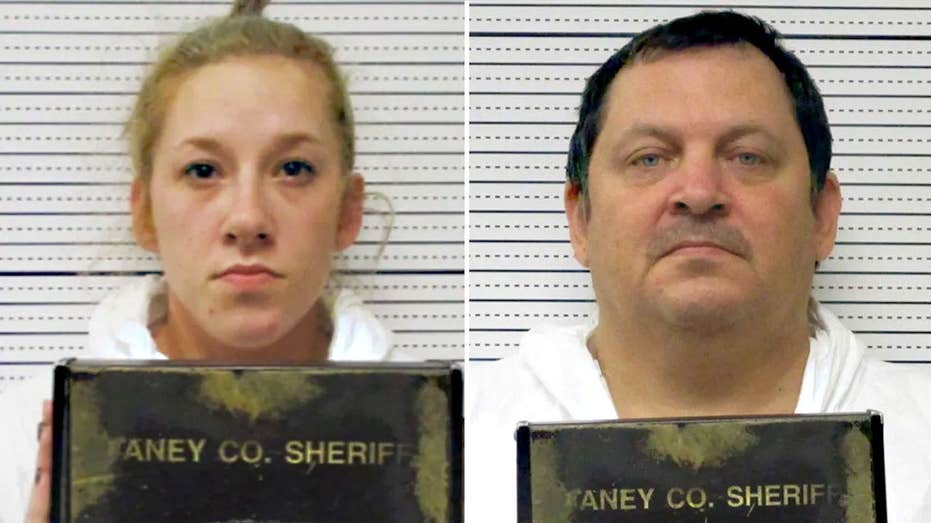

Sydney Loofe disappeared in Nebraska in November 2017 after leaving for a second date with a woman she met on Tinder. Investigators later connected the date to Bailey Boswell and Aubrey Trail, who were convicted in Loofe’s killing and the disposal of her remains. A three-part true-crime documentary examines the investigation and women’s accounts of Trail’s alleged control.
| 1) | A promising Tinder date ends in a disappearance |
| 2) | Friends and investigators reconstruct the final hours |
| 3) | Evidence leads police to Trail and Boswell |
| 4) | Claims of witchcraft and coercive control emerge |
| 5) | Convictions bring different sentences |
A promising Tinder date ends in a disappearance
Sydney Loofe, 24, lived alone in Nebraska and worked as a cashier at a home improvement store. Friends said she hoped to find a relationship after matching with a Tinder user who identified herself as Audrey. The account was an alias used by Bailey Boswell.
The women met for a first date and arranged to meet again. On Nov. 15, 2017, Loofe left for that second date and was never seen alive again. When she failed to report for work, her family requested a welfare check. Police found her car at home, along with her work clothes and purse, while her cat had not been fed.
Friends and investigators reconstruct the final hours
Loofe’s friend Brooklyn McCrystal created a Tinder profile to locate Audrey. After matching with the account, McCrystal exchanged phone numbers and gave the information to police. Friends also provided Loofe’s final Snapchat post, a selfie captioned “Ready for my date.”
Loofe’s phone last registered near the apartment where Boswell lived with Aubrey Trail. Investigators examined cellphone movements, hotel records and surveillance footage to establish where the couple traveled after Loofe disappeared.
Evidence leads police to Trail and Boswell
Police learned that Boswell was using a burner phone registered under a false name. Hotel surveillance and identification during check-in showed that she was traveling with Trail. A search of their apartment found a strong smell of bleach, but the pair had already paid rent and left.
On Nov. 29, Boswell and Trail posted a video denying involvement. Boswell said she had gone on two dates with Loofe and dropped her off at a friend’s home. The couple went on the run and were arrested near Branson, Missouri, on Nov. 30 on unrelated federal fraud warrants.
On Dec. 4, investigators searching a rural roadside ditch near Edgar, Nebraska, found Loofe’s keys, phone, a label bearing her name and part of her remains. Prosecutors later said Trail strangled Loofe with an electrical cord, dismembered her body into 14 pieces and disposed of the remains in roadside ditches. Surveillance showed Trail and Boswell buying tools at a home improvement store on the day of the killing.
Claims of witchcraft and coercive control emerge
At trial, witnesses described Trail as a con man who called himself a powerful warlock and claimed to lead a sex cult. Prosecutors said he and Boswell used dating apps to meet women and sought relationships involving sex, crime and supposed occult practices. Trail initially called the witchcraft discussions role-playing, but investigators quoted him as saying that killing increased witches’ power.
Several women described rules and abuse they attributed to Trail. They said he demanded obedience, restricted contact with other men and used threats or violence to maintain control. One witness said Trail required women to remain naked and ask permission for ordinary activities. The documentary’s filmmakers said these accounts helped explain how the pair operated.
“I don’t regret killing Sydney. I don’t regret killing somebody, but I regret killing … I picked the wrong person.”
A filmmaker who spoke with Trail attributed the statement to him and presented it as evidence of his lack of remorse and belief that Loofe’s close network helped expose the crime.
Convictions bring different sentences
Aubrey Trail was convicted in 2019 of first-degree murder and conspiracy to commit first-degree murder. He also pleaded no contest to improperly disposing of human skeletal remains and was sentenced to death in 2021. He remains on death row at the Tecumseh State Correctional Institution in Nebraska.
Bailey Boswell was convicted in 2020 of first-degree murder, conspiracy to commit first-degree murder and improper disposal of human skeletal remains. She was sentenced the following year to life in prison without parole.
| Number | Key Point |
|---|---|
| 1 | Loofe disappeared after a second Tinder date on Nov. 15, 2017. |
| 2 | Digital evidence and information from her friend helped identify Boswell. |
| 3 | Investigators found Loofe’s remains in a rural Nebraska ditch on Dec. 4, 2017. |
| 4 | Trail and Boswell were convicted in the murder and disposal of the remains. |
| 5 | Trail received a death sentence, while Boswell received life without parole. |
Summary
The investigation relied on the persistence of Loofe’s family and friends, digital evidence and coordinated police work. Those efforts identified Boswell and Trail, established their movements and led investigators to Loofe’s remains. Their convictions ended the criminal case with sharply different sentences.
Frequently Asked Questions
Who was Sydney Loofe?
Sydney Loofe was a 24-year-old Nebraska cashier who disappeared after meeting Bailey Boswell for a second date in November 2017.
How were the suspects identified?
Information obtained by Loofe’s friend through Tinder, cellphone data, hotel records and surveillance helped investigators identify Boswell and connect her to Aubrey Trail.
What sentences did Trail and Boswell receive?
Trail was sentenced to death after his murder conviction. Boswell was sentenced to life in prison without parole after her convictions.
What role did the documentary play?
The three-part true-crime documentary brought together interviews with Loofe’s loved ones, investigators and women who described the couple’s alleged coercive conduct.
